


ACSR Conductor Size Chart: Standard Sizes and Specifications
Power transmission systems depend on strong and reliable conductors to deliver electricity safely over long distances. Different types of conductors are used based on voltage level, distance, weather conditions, and load requirements.
When selecting the right conductor, engineers consider several technical factors before making a decision. The acsr conductor size chart is one of the most useful references because it helps compare different conductor sizes, current-carrying capacities, weight, diameter, and construction details. Understanding this chart makes it easier to choose the right conductor for transmission and distribution projects.
What is an ACSR Conductor?
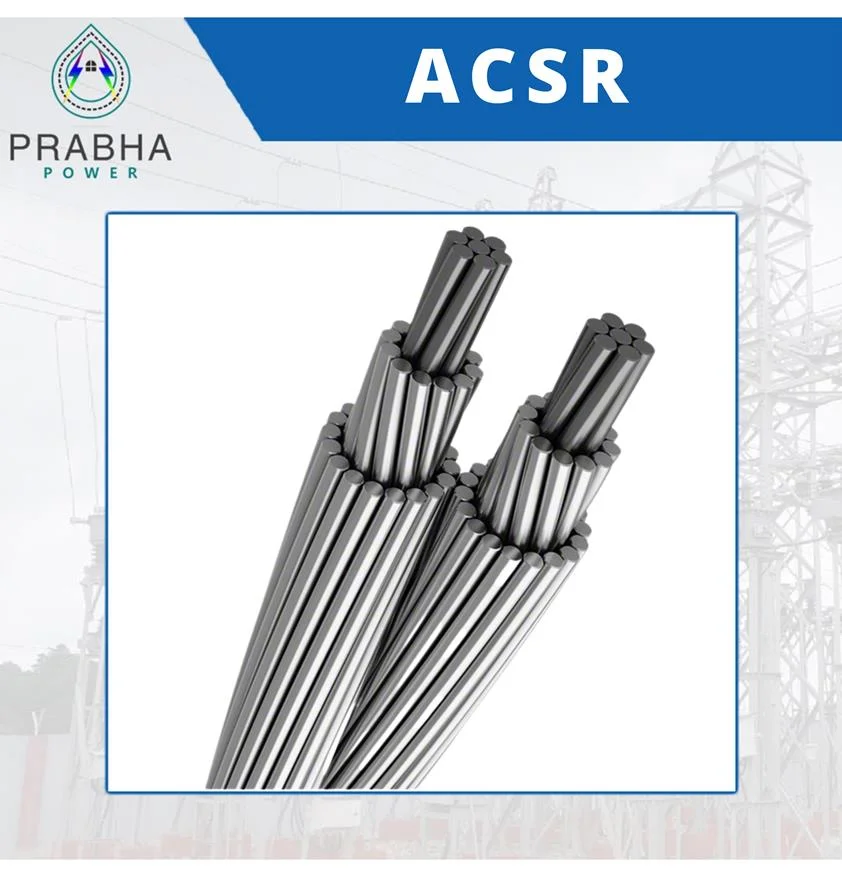
ACSR stands for Aluminium Conductor Steel Reinforced. It is one of the most commonly used overhead transmission conductors in power distribution networks across the world.
An ACSR conductor is made of two main parts:
- Outer Layer: High-conductivity aluminium strands that carry most of the electrical current.
- Inner Core: Galvanized steel wires that provide mechanical strength and support.
This combination allows the conductor to carry high electrical loads while maintaining excellent tensile strength for long transmission spans.
Why is an ACSR Conductor Used?
Power utilities prefer ACSR conductors because they offer a perfect balance between electrical performance and mechanical strength.
Some major advantages include:
- High current-carrying capacity
- Excellent tensile strength
- Long service life
- Lightweight aluminium construction
- Good resistance to wind and mechanical stress
- Suitable for long transmission distances
- Cost-effective compared to many alternatives
- Easy installation and maintenance
These advantages make ACSR conductors suitable for transmission lines ranging from low-voltage distribution networks to extra-high-voltage transmission systems.
Understanding the ACSR Conductor Size Chart
An ACSR conductor size chart provides technical information about various conductor sizes and their specifications.
The chart generally includes:
- Conductor name or code
- Aluminium strand configuration
- Steel strand configuration
- Total cross-sectional area
- Overall diameter
- Approximate weight
- Rated tensile strength
- Current-carrying capacity
Engineers use these values to determine whether a conductor is suitable for a specific transmission project.
Standard ACSR Conductor Size Chart
The following table shows commonly used ACSR conductor sizes with approximate specifications.
| Conductor Name | Aluminium/Steel Strands | Area (sq.mm) | Diameter (mm) | Approx Weight (kg/km) | Typical Application |
|---|---|---|---|---|---|
| Squirrel | 6/1 | 20 | 5.6 | 73 | LT Distribution |
| Weasel | 6/1 | 30 | 6.4 | 103 | Rural Distribution |
| Rabbit | 6/1 | 50 | 8.0 | 174 | Distribution Lines |
| Raccoon | 6/7 | 80 | 10.1 | 395 | Medium Voltage Lines |
| Dog | 6/7 | 100 | 11.2 | 394 | Distribution & Sub-transmission |
| Wolf | 30/7 | 150 | 15.2 | 726 | High Load Transmission |
| Panther | 30/7 | 200 | 18.3 | 976 | 132 kV Lines |
| Zebra | 54/7 | 400 | 28.6 | 1621 | High Voltage Transmission |
| Moose | 54/19 | 520 | 31.8 | 2140 | EHV Transmission |
| Bersimis | 54/19 | 700 | 35.4 | 2850 | Extra High Voltage Projects |
Specifications may vary slightly depending on the manufacturer and applicable standards.
How to Read an ACSR Conductor Size Chart
Understanding the chart becomes easier when you know what each column represents.
1. Conductor Name
Manufacturers assign animal names such as Squirrel, Rabbit, Panther, Zebra, and Moose to identify conductor sizes quickly.
2. Strand Configuration
The strand configuration shows the number of aluminium and steel wires.
Example:
30/7 means
- 30 aluminium strands
- 7 steel strands
More aluminium strands generally improve conductivity, while additional steel strands increase mechanical strength.
3. Cross-sectional Area
Measured in square millimetres (sq.mm), this value indicates the conductor's size.
Larger cross-sectional areas usually provide:
- Higher current capacity
- Lower resistance
- Better transmission efficiency
4. Diameter
The overall diameter affects:
- Wind loading
- Corona losses
- Installation requirements
- Hardware compatibility
5. Weight
Weight is measured in kilograms per kilometre.
It helps engineers calculate:
- Tower loading
- Sag
- Transportation requirements
- Installation planning
6. Tensile Strength
This indicates the maximum pulling force the conductor can withstand during installation and operation.
High tensile strength is essential for long-span transmission lines.
Common Sizes of ACSR Conductors
Several standard conductor sizes are widely used depending on the voltage level and application.
Small Sizes
Examples:
- Squirrel
- Weasel
- Rabbit
Applications:
- Village electrification
- Residential areas
- Low-voltage distribution
Medium Sizes
Examples:
- Dog
- Raccoon
- Wolf
Applications:
- Industrial power supply
- Urban distribution
- Medium-voltage networks
Large Sizes
Examples:
- Panther
- Zebra
- Moose
Applications:
- 132 kV transmission
- 220 kV transmission
- Long-distance power transfer
Applications of ACSR Conductors
ACSR conductors are used in numerous electrical infrastructure projects.
Overhead Transmission Lines
These conductors are widely installed for carrying electricity across cities, states, and industrial regions.
Distribution Networks
Electricity distribution companies use ACSR conductors to supply power to residential, commercial, and industrial consumers.
Rural Electrification
Because of their strength and affordability, ACSR conductors are ideal for rural power distribution.
Industrial Power Projects
Factories and manufacturing plants often use ACSR conductors for reliable electricity transmission.
Renewable Energy Projects
Solar and wind farms also use ACSR conductors to connect generation plants to substations.
Factors to Consider Before Choosing an ACSR Conductor
Selecting the correct conductor involves much more than simply choosing the largest size.
Electrical Load
The conductor should safely carry the expected current without overheating.
Transmission Distance
Longer distances may require larger conductors to reduce power losses.
Mechanical Strength
Areas with long spans require stronger steel cores.
Weather Conditions
Wind, rain, snow, and high temperatures affect conductor selection.
Budget
Engineers balance performance and cost to achieve economical project designs.
Future Expansion
Selecting a slightly larger conductor can support future increases in electrical demand.
Benefits of Using ACSR Conductors
There are many reasons why utilities continue to rely on ACSR conductors.
Excellent Conductivity
Aluminium provides efficient current flow with relatively low weight.
High Mechanical Strength
The steel core supports heavy mechanical loads and long spans.
Lower Installation Costs
Lightweight conductors reduce transportation and installation expenses.
Long Service Life
Properly installed ACSR conductors can perform efficiently for decades.
Reliable Performance
They maintain stable electrical performance under varying weather conditions.
Easy Availability
Standard sizes are widely available, making procurement easier for utilities and contractors.
Difference Between ACSR and AAC Conductors
Many people confuse ACSR with AAC conductors.
| Feature | ACSR | AAC |
| Core | Steel Reinforced | Aluminium Only |
| Mechanical Strength | High | Moderate |
| Weight | Moderate | Light |
| Current Capacity | High | High |
| Long Span Capability | Excellent | Limited |
| Wind Resistance | Better | Moderate |
| Best Use | Transmission Lines | Distribution Networks |
Difference Between ACSR and AAAC Conductors
Another common comparison is between ACSR and AAAC.
| Feature | ACSR | AAAC |
| Strength | Very High | High |
| Corrosion Resistance | Good | Excellent |
| Steel Core | Yes | No |
| Weight | Slightly Higher | Lower |
| Flexibility | Moderate | Better |
| Long Span Performance | Excellent | Good |
Maintenance Tips for ACSR Conductors
Proper maintenance helps extend the life of transmission lines.
Recommended practices include:
- Regular visual inspections
- Checking damaged strands
- Monitoring corrosion
- Inspecting insulators
- Maintaining proper conductor tension
- Replacing damaged hardware
- Performing thermal inspections
Routine maintenance reduces power interruptions and improves system reliability.
Frequently Asked Questions
What does ACSR stand for?
ACSR means Aluminium Conductor Steel Reinforced.
Why is steel used inside an ACSR conductor?
The steel core increases tensile strength, allowing the conductor to span longer distances without excessive sag.
Where are ACSR conductors mainly used?
They are widely used in overhead transmission and power distribution networks.
Which is stronger, AAC or ACSR?
ACSR is much stronger because of its steel-reinforced core.
Can ACSR conductors be used in high-voltage transmission?
Yes. They are commonly used in 66 kV, 132 kV, 220 kV, and even higher voltage transmission systems.
Why is an ACSR conductor size chart important?
It helps engineers compare different conductor sizes, technical specifications, and applications so they can select the most suitable option for a project.
Conclusion
Choosing the right conductor is essential for building safe, efficient, and long-lasting power transmission systems. An acsr conductor size chart serves as a practical guide for comparing conductor sizes, strand configurations, weight, diameter, and electrical performance. By understanding these specifications, engineers, contractors, and utility companies can make informed decisions that improve reliability and reduce maintenance costs.
If you are looking for high-quality electrical power solutions, Prabha Power offers dependable products designed to meet modern transmission and distribution requirements. Selecting the correct conductor with expert guidance helps ensure efficient power delivery and long-term performance for every project.

 English
 Arabic
 French
 Spanish
 Portuguese
 Deutsch
 Turkish
 Dutch
Dutch
 Italiano
 Russian
 Romaian
 Portuguese (Brazil)
