


Sliding Door Lock Guide: How to Choose the Right Lock for Your Home
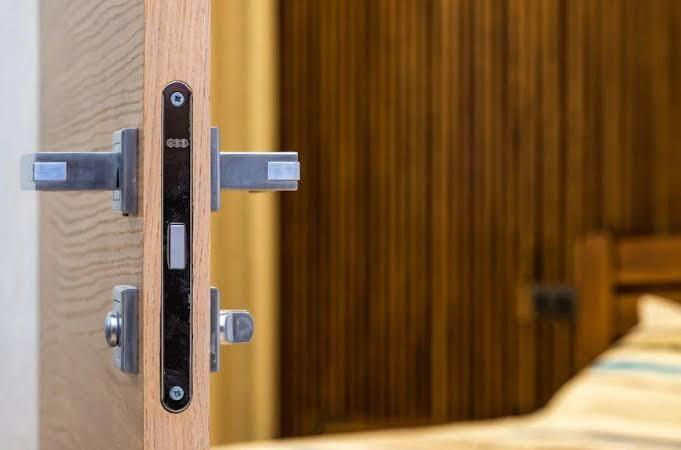
Ask most people what sliding door lock they need and they'll shrug - it's not exactly dinner-party conversation, until the one on their back door stops working properly. At The Lock Shop we field that question daily, and the real answer changes depending on your door's frame material, your budget, and how exposed that door actually is. Below is what we'd tell you in person: the options that actually hold up, where people go wrong, and how to land on a lock that's still doing its job in a decade rather than two years.
What is a sliding door lock?
It's the mechanism that secures a door running horizontally on a track rather than swinging on hinges - think aluminium or timber-framed glass doors, and the smaller sliding patio door that often sits beside them. A hinged door can lean on a simple deadbolt through the frame; a sliding one can't, because there's no frame to bolt into in the same way. Instead the lock has to work with the track, the meeting stile, or the edge of the door itself, which is exactly why sliding hardware looks so different from what's on your front door.
Why sliding door security matters
Sliding glass doors sit near the top of the list for vulnerable entry points in Australian homes. They're large, usually tucked around the back where nobody's watching, and a huge number of older installs are still running on nothing more than the factory snib - a basic latch that won't put up much of a fight against lifting, jemmying, or a decent shove. Swapping that out for a proper sliding door security lock, paired with a keyed deadlock, is genuinely one of the better security upgrades for the money.
Types of sliding door locks
|
Lock Type |
Best For |
Example |
|
Snib / privacy lock |
Internal doors, low-risk areas |
Mardeco 'M' Series Flush Pull Privacy Set |
|
Key-operated sliding lock |
External glass or patio doors |
Lockwood Onyx Patio Sliding Door Lock |
|
Sliding door mortice lock |
Aluminium-framed doors needing a recessed lock body |
Zanda Sliding Door Euro Mortice Lock |
|
Patio bolt |
Added deadlocking on top of an existing latch |
Lockwood 680 Patio Bolt |
|
Multi-point / edge-mounted lock |
Modern slimline aluminium doors |
Austral Yarra View Edge / Slim / Curve |
Sliding glass door locks vs patio door locks
People use these terms as if they're the same thing, but there's a real distinction worth knowing. A sliding glass door lock is usually the main mechanism built into a large glass door - a key-operated barrel lock such as the Lockwood Onyx, or an edge-mounted system like the Austral Yarra range. A patio door lock or patio bolt tends to play a supporting role, bolted on for extra security when the primary latch alone isn't enough - the Lockwood 680 is the one we sell the most of for that purpose. Most security-conscious households end up running both together.
How to choose the right sliding door lock
Frame material narrows the field first. Aluminium doors generally call for a lock built for that profile - the Austral Yarra range and the Zanda Sliding Door Euro Mortice Lock both fit that brief. Timber frames give you more room to move, taking a wider spread of mortice or surface-mounted options. From there it's really a question of access: do you need a key on both sides - worth thinking hard about if the door doubles as a fire escape or your only rear exit - or is a single external key with an internal snib enough? Finish is the last piece, and it's mostly aesthetic: match it to your existing door hardware, whether that's satin chrome, black, or white.
Common problems with sliding door locks
Stiff, jamming mechanisms top the list of complaints we hear. Close behind is a key that turns freely but doesn't actually throw the deadbolt, and snibs so worn they can be flicked open from outside with nothing more than a butter knife. Almost all of it traces back to one of three things: the lock's simply old, grit's built up in the track-side mechanism over years of use, or - more common than you'd think - it was never actually rated for outdoor exposure in the first place.
Signs your lock needs replacing
A stiff lock can often be nursed back to health with the maintenance steps below. A structurally worn one can't. The tell-tale signs to watch for: the key needs coaxing before it'll turn, the bolt doesn't fully extend even once it does, the door can still be lifted slightly off its track while supposedly locked, or there's rust starting to show around the housing. Any one of those on its own is worth acting on - waiting for all of them to show up at once usually means waiting until after something's already gone wrong.
Repair vs replacement
|
Situation |
Recommended Action |
|
Mechanism is stiff but bolt engages fully |
Clean and lubricate - repair |
|
Key turns but door isn't actually secured |
Replace - internal components are worn |
|
Visible rust, corrosion, or cracked housing |
Replace |
|
Lock is 15+ years old, discontinued part |
Replace with a current equivalent |
|
Door was recently forced or attempted break-in |
Replace, even if it still appears to function |
Improving sliding door security
A good lock is the starting point, not the finish line. A secondary patio bolt gives you proper deadlocking for when you're away for a while. An anti-lift device or bracket closes off one of the oldest tricks in the book - lifting an older aluminium door up and off its track, lock be damned. And on the safety side, at least one exit still needs to open without a key in an emergency, which is worth keeping in mind before you go overboard securing every point of egress.
Lock maintenance tips
These locks live a harder life than anything on your internal doors - dust, insects, weather, all of it finds a way into the track eventually. Twice a year, run a light silicone-based lubricant through the bolt and keyway; skip oil-based products, since they tend to attract grit rather than repel it. Beyond that, keep the track itself wiped down, and every so often check that the screws holding the strike plate haven't started working loose from the constant vibration of daily use.
Why choosing quality brands matters
Sliding door hardware copes with a lot - daily use, weather, and the constant small vibrations of a door running back and forth - so a cheap import tends to show its limits fast. At The Lock Shop, we stock Lockwood, Whitco, Gainsborough, Austral, Zanda, Mardeco, and Iver - brands that have been manufacturing in Australia for decades, which matters most a few years down the track when a part needs replacing and a no-name lock simply doesn't have one available.
Why homeowners trust The Lock Shop
We supply door locks, handles, window locks, safes, and broader security hardware online across Australia, with free shipping on orders over $150. Every product in our Sliding Door collection comes from established manufacturers rather than unbranded imports, and if installation isn't something you want to tackle yourself, our Local Installation Service and product warranty cover take that off your plate.
Things to consider before buying a sliding door lock
☐ Confirm your door frame material - aluminium, timber, or uPVC
☐ Decide if you need double-sided key access or a single key with internal snib
☐ Check the backset and door thickness against the product's spec sheet
☐ Match the finish to your existing door hardware
☐ Consider adding a patio bolt for secondary deadlocking
☐ Check whether professional installation is recommended for your lock type
Frequently asked questions
Can I replace a sliding door lock myself?
Depends on the lock. Patio bolts and surface-mounted options are generally straightforward with basic tools and a free afternoon. Anything mortice-style or edge-mounted involves precise cutouts into the door itself, and that's usually worth handing to a professional installer rather than risking the frame.
What's the difference between a sliding door lock and a deadlock?
A standard lock secures the latch, which is enough to stop a door swinging open but not much resistance against someone determined. A deadlock throws a solid bolt that can't be forced back under pressure the way a latch can, which is why a lot of households run both rather than choosing one over the other.
Do sliding door locks fit all door brands?
No - locks are built around specific frame profiles, so a lock that's perfect for one manufacturer's door won't necessarily sit right in another's. Check your door's brand and thickness against the product specs before you order, or get in touch with us if you're not sure what you're working with.
How much does a sliding door lock cost?
A patio bolt starts around $75, and a full multi-point edge-mounted system runs upward of $200 depending on brand and features. Most households land somewhere in between once they've picked a primary lock and decided whether a secondary bolt is worth adding.
Are sliding door locks weatherproof?
The reputable brands are built with Australian conditions in mind, yes - but weatherproof doesn't mean maintenance-free. Even a well-made lock benefits from the periodic lubrication and cleaning outlined above.
What is a patio bolt used for?
Mainly as backup deadlocking alongside a door's existing lock, most commonly fitted by people who want extra security while away from home for extended stretches.
Can sliding doors be forced open even when locked?
Older doors without an anti-lift mechanism are genuinely vulnerable to being lifted straight up and off their track, regardless of how good the lock itself is. Pairing a quality lock with an anti-lift bracket closes that gap.
How do I know what size lock I need?
Measure the backset and frame thickness on your existing door and check it against the specifications on each product page. If the numbers don't line up cleanly, it's worth calling The Lock Shop directly rather than guessing.
Ready to upgrade your sliding door security? Browse the full Sliding Door Lock range at The Lock Shop, or get in touch on 1800 000 300 for advice on the right lock for your door.

 English
 Arabic
 French
 Spanish
 Portuguese
 Deutsch
 Turkish
 Italiano
 Russian
 Romaian
 Portuguese (Brazil)
 Greek
Greek
