


How to Choose the Right Size Steel Building for Your Property (Before You Get Quotes)
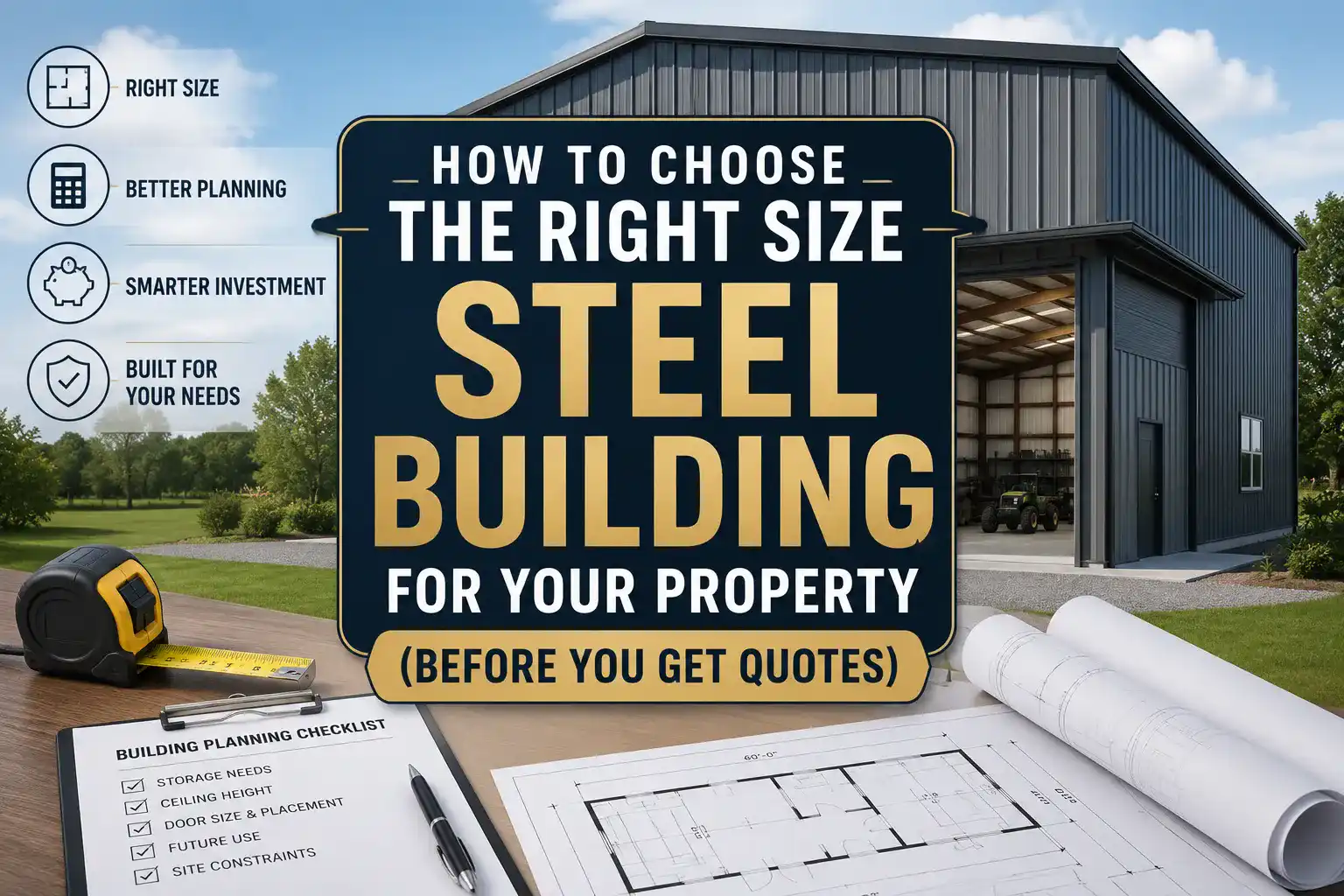
One of the most common regrets among people who build a pole barn or steel building isn't about cost overruns or construction delays. Homeowners and small business owners consistently either undersize their building and outgrow it within a few years, or oversize it and end up paying to heat, cool, and maintain square footage they never actually use.
Getting the size right before you request quotes saves money in both directions. Here's how to think through it properly.
Start With What You're Actually Storing or Doing, Not a Round Number
It's tempting to just pick a familiar size 30x40, 40x60 because it sounds reasonable. A better starting point is listing out exactly what needs to fit inside: vehicles, equipment, a workshop bench, storage shelving, maybe a future addition like a bathroom or office space. Measure the actual footprint of everything on that list, including clearance space to move around it, before translating that into a building size.
A common mistake is sizing for what you own today and ignoring what you're likely to own in five years. Building slightly larger than your current needs is almost always cheaper than expanding or rebuilding later, since the marginal cost of extra square footage during initial construction is far lower than the cost of a second, separate build-out down the road.
Account for Ceiling Height, Not Just Footprint
Floor area gets most of the attention, but ceiling height quietly determines what you can actually do inside the building. RVs, boats, and lifted trucks need real vertical clearance, not just floor space. A building sized correctly in length and width but too short in height can end up functionally useless for its intended purpose, which is a frustrating (and expensive) mistake to discover after construction is finished.
Think About Door Placement and Size Early
Door width and height need to match what's actually going to pass through them, equipment, vehicles, trailers and this needs to be decided during planning, not as an afterthought once the frame is up. Oversized doors add cost, but undersized ones can make a building genuinely unusable for its intended purpose. It's worth measuring the widest and tallest item that will ever need to enter the building and adding a reasonable clearance margin on top of that, rather than guessing.
Consider How the Building Might Be Used Later
Many pole barns and steel buildings start as simple storage and evolve into workshops, small business space, or even living quarters. If there's a reasonable chance the building's purpose will expand later, it's worth planning for that now extra structural capacity for a mezzanine, rough-in plumbing before the slab is poured, or electrical capacity for future equipment. Retrofitting these things after the fact is dramatically more expensive than building them in from the start.
Don't Forget Site Constraints
Property setbacks, local zoning restrictions on structure size, and the shape of the usable buildable area on your lot all factor into what size building actually makes sense independent of what you'd ideally want. It's worth checking local zoning and setback requirements before falling in love with a specific size, since these constraints sometimes rule out certain footprints entirely regardless of budget.
Once You Know the Size, Budget Realistically
Once you've landed on a size that actually fits your needs, not just a round number the next step is understanding what that size will actually cost to build, since price doesn't scale in a perfectly linear way with square footage. For a detailed look at how costs break down across foundation, structure, materials, customization, and labor for a common mid-size steel building, this guide on the cost of a 40x60 Morton building is a useful reference point for understanding where the money actually goes.
The Takeaway
The building size that looks right on paper isn't always the one that actually serves your needs five years from now. Take the extra time to plan around what you're storing, how tall it is, what needs to pass through the doors, and whether the building's purpose might change and the sizing decision becomes far less of a guess and far more of a plan.

 English
 Arabic
 Spanish
 Portuguese
 Deutsch
 Turkish
 Dutch
Dutch
 Italiano
 Russian
 Romaian
 Portuguese (Brazil)
 Greek
Greek
