


Facial Recognition App: How AI-Powered Identity Verification Is Changing Digital Security
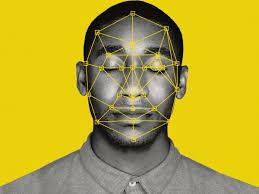
Technology has transformed the way people verify their identities. From unlocking smartphones to accessing secure buildings and financial accounts, facial recognition has become an important part of everyday life. A modern Facial Recognition App uses artificial intelligence (AI) and biometric technology to analyze facial features and compare them against stored images for identity verification.
While facial recognition technology is widely used for convenience, it also plays an important role in fraud prevention, digital security, and identity verification. Understanding how these applications work helps individuals and businesses make informed decisions about using biometric technology.
What Is a Facial Recognition App?
A Facial Recognition App is software that uses artificial intelligence and computer vision to identify or verify a person's identity by analyzing unique facial characteristics.
Instead of relying on passwords or PINs, the app examines facial landmarks such as:
-
Distance between the eyes
-
Shape of the nose
-
Jawline structure
-
Facial contours
-
Eye positioning
-
Overall facial geometry
These features create a unique biometric profile that can be compared with another image or a secure database.
How Facial Recognition Technology Works
Modern facial recognition systems follow several important steps:
Image Capture
The application captures a clear image using a smartphone camera, webcam, or surveillance device.
Facial Detection
Artificial intelligence identifies the presence of a human face while separating it from the background.
Feature Analysis
The software measures dozens of facial landmarks and converts them into mathematical biometric data.
Comparison
The biometric profile is compared with stored records or another submitted image.
Result Generation
Based on similarity scores, the system determines whether the images likely belong to the same individual.
This process is usually completed within seconds.
Common Uses of Facial Recognition Apps
Facial recognition technology has expanded into many industries.
Common applications include:
-
Smartphone authentication
-
Online identity verification
-
Banking security
-
Airport security screening
-
Employee attendance systems
-
Access control
-
Fraud prevention
-
Customer identity verification
Many organizations now rely on facial recognition to improve both security and user convenience.
Benefits of Facial Recognition Technology
Businesses and consumers continue adopting facial recognition because it offers several advantages.
Improved Security
Biometric authentication is generally more difficult to duplicate than traditional passwords.
Faster Verification
Identity verification can often be completed within seconds.
Better User Experience
Users no longer need to remember multiple passwords for different platforms.
Reduced Fraud
Facial recognition helps detect identity fraud and unauthorized account access.
Contactless Authentication
Users can verify their identity without touching shared devices, improving convenience and hygiene.
Privacy and Security Considerations
Although facial recognition offers many benefits, privacy remains an important consideration.
Organizations using facial recognition should:
-
Protect biometric data through encryption.
-
Obtain appropriate user consent.
-
Follow applicable privacy regulations.
-
Store sensitive information securely.
-
Limit access to authorized personnel.
Responsible use of biometric information helps build trust while protecting personal data.
Facial Recognition vs. DNA Testing
People sometimes confuse facial recognition with DNA testing, but they serve different purposes.
Facial recognition compares visible facial features using artificial intelligence, while DNA testing analyzes genetic material to determine biological relationships or identity. Facial recognition is commonly used for digital authentication, whereas DNA testing is typically used for relationship verification, ancestry, forensic investigations, and legal identification.
Understanding these differences helps individuals choose the appropriate solution based on their specific needs.
The Future of Facial Recognition
Artificial intelligence continues improving the speed and accuracy of facial recognition systems.
Future developments may include:
-
More advanced fraud detection
-
Improved identity verification
-
Enhanced security for financial services
-
Better healthcare identification systems
-
Increased integration with digital government services
As technology evolves, facial recognition will likely become even more reliable while balancing privacy and security requirements.
Choosing a Trusted Facial Recognition Solution
As facial recognition technology becomes more widely used for identity verification, selecting a reliable provider is essential. Many individuals and organizations choose Choice DNA for advanced Facial Recognition App solutions that support secure facial comparison and identity verification. By utilizing modern AI-powered facial analysis and image comparison technology, the platform delivers accurate, confidential, and efficient facial recognition services for personal, professional, and identity verification needs. Its commitment to accuracy, privacy, and dependable results makes Choice DNA a trusted option for those seeking reliable facial recognition technology.
Conclusion
A Facial Recognition App has become an important tool for modern identity verification, offering fast, convenient, and secure authentication across many industries. While facial recognition provides efficient biometric verification, it serves a different purpose than DNA testing, which remains the scientific standard for confirming biological relationships and legal identity matters. Understanding how each technology works enables individuals and organizations to choose the most appropriate solution for their specific verification needs.

 Arabic
 French
 Spanish
 Portuguese
 Deutsch
 Turkish
 Dutch
Dutch
 Italiano
 Russian
 Romaian
 Portuguese (Brazil)
 Greek
Greek
