


IVF Treatment, Embryo Transfer & What Happens Next
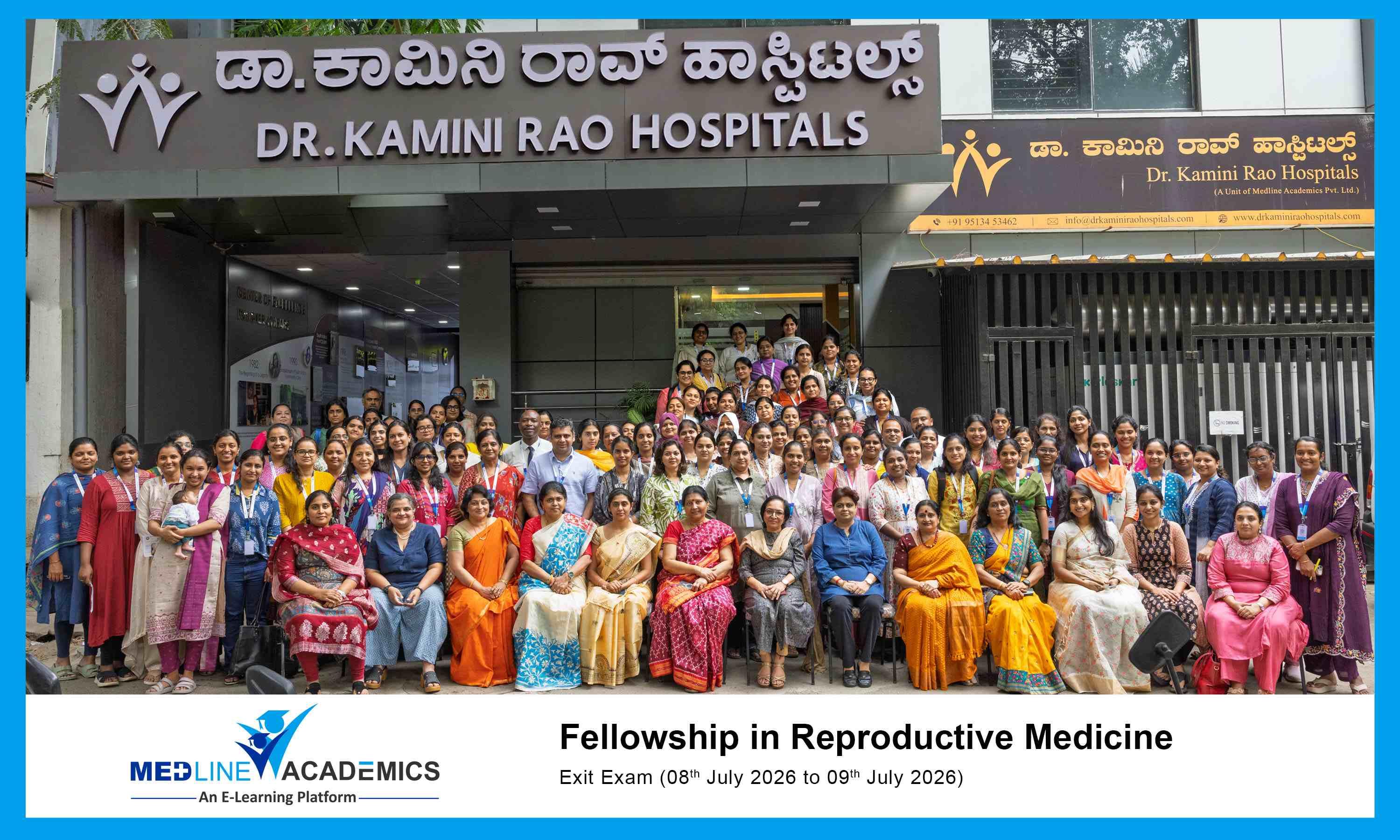
IVF is a carefully planned process that involves multiple stages, from selecting the most appropriate treatment protocol to ET and pregnancy monitoring. Understanding each step of the IVF journey enables both patients and healthcare professionals to make informed decisions, manage expectations, and improve treatment outcomes. For clinicians looking to deepen their expertise in assisted reproductive technologies (ART), advanced academic programmes such as a Fellowship in Reproductive Medicine in India provide a comprehensive training in fertility evaluation, IVF protocols, ET techniques, and evidence-based patient care.
In this educational session, fertility expert Dr. Aimee Eyvazzadeh explains the key stages of IVF treatment—from understanding fresh and frozen embryo transfer options to embryo preparation, implantation, and the emotional aspects of navigating the IVF journey. These practical insights help healthcare professionals and fertility specialists gain a deeper understanding of clinical decision-making and patient counselling throughout the treatment process.
So now IVF options, okay? Is fresh better than frozen? Is frozen better than fresh? Should I do this? Should I do that? I'll break it down for you.
So, you basically have two IVF options, transfer fresh or transfer frozen. Fresh means putting in an embryo about five days or even three after an egg retrieval. Five days after an egg retrieval, that embryo is called a blastocyst, has hundreds of cells, and you can also then freeze the embryos.
Freezing means you now have two options, genetically test or not. I call genetic testing the murkiest of murky, of murky, murky, murky crystal balls, but it's the best we have. Think of embryos as diamonds.
Embryos like diamonds can be beautiful on the outside and they sparkle, right? Diamonds sparkle too, but a diamond on the inside means a diamond is really good, but an embryo on the inside, when you're scrolling through the microscope, you can't see the chromosomes and that's why genetic testing can help. So I know, I can hear you guys say it. She has now come up with another mnemonic and it's true, and that's called embryo diamonds.
So those are the eight things you need to know about your embryos. So when you're about to do a fresh transfer, when you're about to do a frozen embryo transfer, when you're making decisions about what to do, remember the three questions and the embryo diamonds, the three questions that I always ask my patients, what do you want? What is it going to take to get what you want and are you willing to do it? What do you want means how many kids do you want and what is it going to take at the time of that fresh transfer? If you're doing a fresh, if you want, let's say two or three kids and because of your age and everything that your doctor knows about you, you have one embryo that you might want to freeze. Don't go into that fresh embryo transfer because you're not honouring the things that you want.
So make sure you talk through those things with your provider, with your partner, and make sure that you're on the same page so you feel like you really made the right decisions for yourself. Back to embryo diamonds, the eight things that you need to know about your embryos, what day were they frozen or transferred on, the implantation rate per embryo, whether they're abnormal, mosaic, and then with mosaics, find out from your clinic what their mosaic transfer and reporting protocol is before you do genetic testing. You don't want to be surprised that they won't report it to you or they discarded an abnormal embryo that could have been normal in the end if it was mosaic.
Get all the official reports, all of them, stem sheets, ultrasounds. I love my patients to have their diamond binder, ooh, diamondbinder.com. I need to look into that. And then we go to the N, which is how many are normal, the D, do these embryos help you reach your dreams and goals, and the S is sex.
No, I'm kidding. The S is how is the sperm on the day of the egg retrieval? So now you're fresh and you're frozen. And with frozen, the two options, remember, freeze to genetically test or freeze to transfer.
And now you have a decision to make is whether you want to do one of two things. I know, my husband's always telling me, Annie, you give people too many options, but I just want people to know everything that's available to them without making any assumptions about what they would do and just giving them basically a roadmap, and then you get to choose your own adventure. I like the word adventure.
I don't like other words, but like roller coasters, I try and keep it as a nice adventure with hopefully the best and easiest and most efficient happily ever after. Okay, you guys. So focus, two things, you have frozen embryos to transfer or not.
Preparing for ET requires careful planning, personalized treatment protocols, and continuous guidance from an experienced fertility team. Choosing the right fertility can make a significant difference in ensuring that every stage of the IVF journey is supported by evidence-based clinical care. Recognised as a trusted IVF Hospital in Bangalore, Dr. Kamini Rao Hospitals combines advanced reproductive technologies with individualized treatment plans, comprehensive fertility assessments, and expert counselling to help patients make informed decisions throughout their IVF journey centre can make a significant difference.
So, we already talked about a little bit about the genetic testing piece, but to transfer or not means back to the egg whisperer diet. We got the D diagnosis, IVF, which I kind of just talked to, E is embryo transfer preparation. Take your time.
Talk to your doc about what have you ruled out? Are my labs normal? Is my lining normal? Is my cavity normal? Why are you choosing the protocol to transfer that you're choosing for me? Is my progesterone going to be enough? How can you reassure me about that? Use the words, what have you ruled out? What have you ruled out? Just saying it over and over, like, what do you see in this ultrasound? What do my hormone levels show you about me? Is there anything I can do to give myself the best chance of pregnancy before this transfer? Do you really feel that I'm going to give myself the best chance of transfer by doing it right now? And then the last question, the most important question, doctor, what would we do if this transfer didn't work? Because guess what? Sometimes you would want to know that because you might want to do that first before you do the transfer. For example, if I had a patient that just had one embryo and she was 42 years old, what we might do is do another cycle now. Like, you don't want to find that out after transfer didn't work or you unfortunately had a miscarriage.
You know what I mean? That'd be pretty annoying to think, like, oh my God, like no one told me enough about ovarian ageing and how important it was to do another cycle first. So embryo transfer preparation, we also have implantation testing. So I call it the mock cycle.
You can do it with the ERA test or the Receptiva DX test or both. Talk to your doctor about what tests they do for their patients. So I do both.
I think of the ERA test as the embryo, or what I should say, the evite to the funnest and best party. It basically tells you exactly what time to show up. And the Receptiva DX test tells me what to wear to the party, basically tells me what protocol I should use that will hopefully give my patient the very best success rate.
So now the transfer, and you guys all know what a transfer involves, is basically going to a lab, feeling relaxed, maybe doing a little something, something before and after, and that something, something is acupuncture before and after, and then getting that embryo home. The most important guest in your home, which is your uterus, is that embryo. You want to welcome it. You want to feel like you're well prepared, not overwhelmed, not stressed or feeling rushed about any decisions you're making. And hopefully that embryo is going to do everything it needs to do, which is stick and grow.
At Medline Academics, our mission extends beyond professional training to empowering healthcare professionals through expert-led educational resources in reproductive medicine. Through expert-led academic initiatives and IVF training in India, we help healthcare professionals strengthen their understanding of assisted reproductive technologies, evidence-based treatment protocols, and patient-centred fertility care, enabling them to confidently apply these concepts in clinical practice. By sharing practical clinical insights from experiences fertility specialists, we aim to enhance the understanding of IVF treatment, ET, and patient-centred fertility care, enabling clinicians to make informed decisions throughout every stage of the fertility journey.
The next thing I want to talk about is dealing with a failed IVF cycle. And that is so, so hard. So when I tell my patients is, first of all, I'm really sorry, you didn't deserve this, and you didn't cause this. And the thing is this, when my patients have a negative pregnancy test or transfer that doesn't work, they know that I'm not going to bed at night unless I feel like I've given every single person their best chance of IVF success.
I'm not doing a transfer unless I've ruled out and talked through all the things that I'm talking to you guys about right now. So it's so important to talk to your doctors too about these things before your transfer. Otherwise, you're going to be kicking yourself like, why didn't I ask that question? The problem is a lot of people just don't know what questions to ask.
Okay, so now you have unfortunately a failed IVF cycle. I digressed a little bit. So you have to give yourself the space that you need to get through the moment.
Don't make any big decisions. Don't throw everything away. Like I've had patients do it and throw everything away in that moment.
I'm like, just don't do anything irreversible. Just know that your feelings will change and give yourself space and, you know, take the time that you need, but reconnect, regroup and make a plan. And I always bring myself, my patients in for a post IVF consult within, within, you know, at least a week or no more than a week from that transfer.
So we can go through everything we did, everything we learned, answer your questions, all this into your gut feelings on things. And we'll kind of talk through all the things that I've talked to you guys about, ask your doctor the same questions. What have you heard about? What can we do next? What's our plan? And then get excited and get hopeful and try again.
And it's really hard to have hope right now. You guys, it's really hard to be positive. And that word positive can be super annoying, especially when you have family members that are like, just be positive and everything's going to work out.
And you're like, yeah, that was the thing. But I talk about hope as four things. I know another mnemonic.
Have only pragmatic and practical and positive expectations. Notice the first P is not positive. I still want you to be positive, of course, but more so practical and pragmatic, pragmatic is the most important and strong and resilient is why you guys are here and watching me today.
So now let's just go to the good stuff. And that's when you're finally pregnant with that embryo and what to expect along the way. So the first thing to know is that you're going to feel anxious and you're going to feel worried and you're going to think that something's going to be wrong all the time.
And it's going to be really hard to reassure you. So it's really important for you to talk to your doctor about how they can reassure you and what they can do to continuously reassure you that everything is going right. The things I do for my patients are HCG progesterone levels.
I check them about three times and then once a week until the ultrasound. After the ultrasound, I ask my patients about how they're feeling and when they want to be seen again. And then I get them to their OBGYN usually between 10 and 12 weeks of pregnancy.
And I tell my patients that I'm like herpes. I'm just kidding. It's not herpes.
It's like luggage. I'm always there for you in your house. You know where to find me so that if a patient has a question, they're not sure where to go because no one's answering them.
Then they know that they can reach out to me. If you don't have that kind of resource, it's OK. But make sure that you have a care team that's treating your pregnancy like a VIP, a very important pregnancy.
Wow, I just talked a whole bunch about fertility and I can do it a whole lot more. And I hope you guys are all sparkling out there and I commend you. And I am so what's the word I'm trying to use? I can find it.
I can find it. I am so impressed by you that with all the things that are going on in the world that you are working so hard to bring love into your life and into our world because I know everyone who's going to be a mom and dad right now with what's going on is going to make this world a better place. And that's what gets me fired up.
And that's what gets me showing up. And that's what gets me here to talk to you guys. So thank you guys again.

 English
 Arabic
 French
 Spanish
 Portuguese
 Deutsch
 Dutch
Dutch
 Italiano
 Russian
 Romaian
 Portuguese (Brazil)
 Greek
Greek
