


Why Mixing Different Bundles of Indian Raw Curly Hair Can Ruin a Professional Extension Install
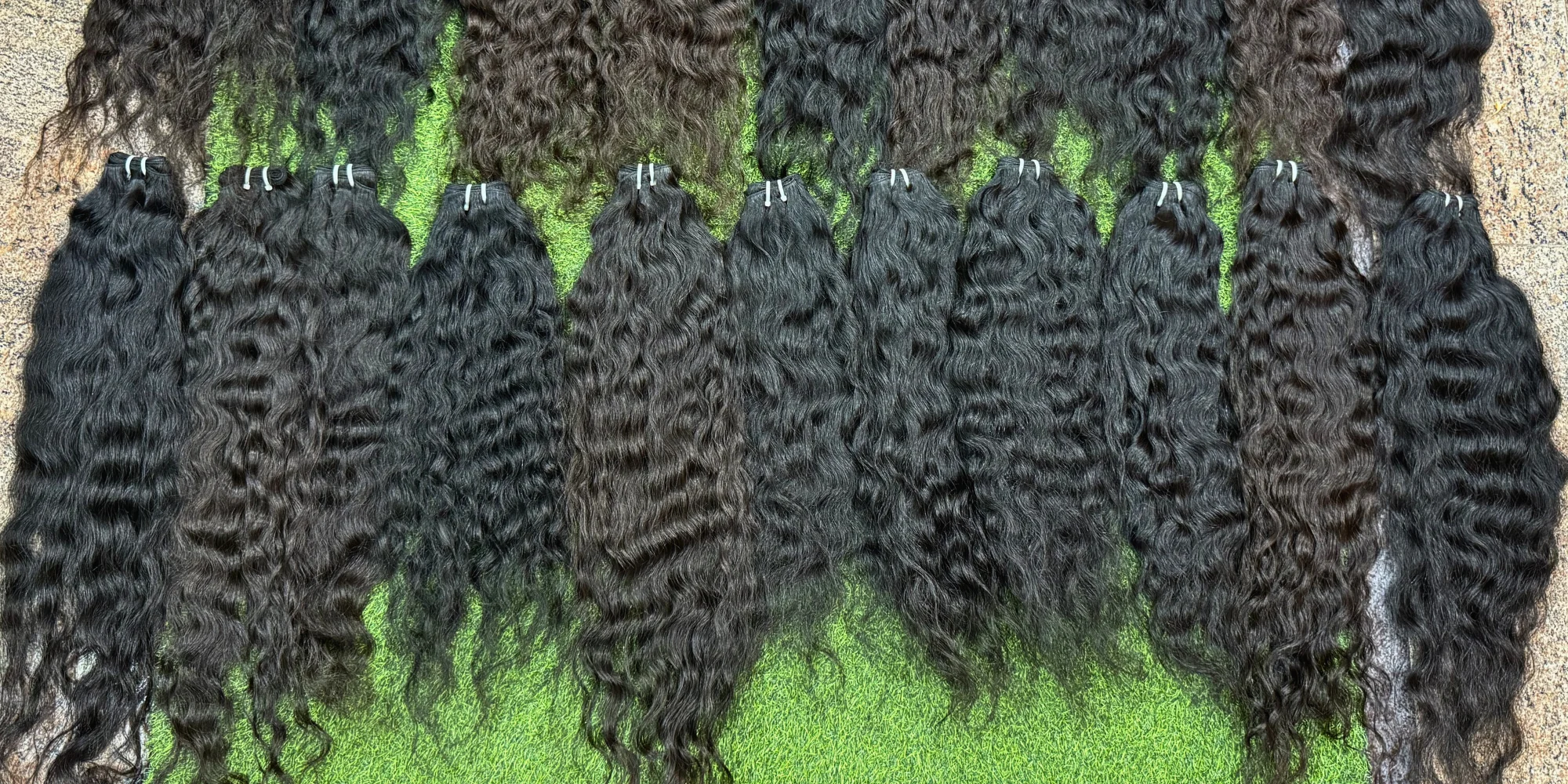
A flawless curly installation is the ultimate crown of luxury hair styling. When executed correctly, a premium textured install provides a breathtaking display of volume, bounce, and movement that looks completely natural. However, many stylists and boutique owners face a frustrating issue: an installation that looks stunning on day one can quickly turn into an unmanageable, matted disaster at the roots within just a few weeks.
When a high-end curly installation fails, it is rarely a problem with the stylist's sewing technique or the quality of the tracks. Instead, it is almost always caused by a fundamental inventory mistake: mixing different bundles of raw hair within a single installation.
Because authentic raw hair bypasses mass-market factory uniforming, mixing unmatched bundles alters the structural balance of the style. Understanding the biology of textured hair reveals why using mismatched bundles can completely ruin a professional extension install.
The Biological Reality of the Single-Donor Strand
To understand why mixing bundles is so damaging to a curly installation, you must look at how premium raw hair is collected. Unlike mass-market extensions which are made from commercial floor sweeps gathered from thousands of different people and blended together true raw Indian hair is kept isolated as a single-donor piece. This means an entire bundle comes from one individual.
Because the hair has never been chemically altered or steam-processed in a factory, it retains the exact genetic blueprint of that specific donor. This biological purity is highly prized, but it introduces a critical rule for textured hair: No two raw curly bundles are identical.
Every individual’s curly hair possesses a unique set of physical traits:
-
The Cuticle Friction Angle: The microscopic, overlapping keratin scales that form the outer armor of the hair shaft have a distinct pattern unique to that donor.
-
The Moisture Absorption Rate: The natural porosity of the hair fiber determines how quickly it expands when wet and how much conditioning product it needs to stay defined.
-
The Coil Diameter and Tension: The natural loop or wave frequency is determined by the specific shape of the donor's hair follicles.
The Mechanics of a Texture Clash: Why Mismatched Bundles Ruin an Install
When a stylist installs straight hair extensions, mixing different bundles is relatively safe because straight hair strands lay flat and uniform. However, curly hair relies on perfect structural harmony. When you place two unmatched raw curly bundles next to each other on a braid foundation, it creates an immediate technical issue known as a texture clash.
1. The Interlocking Velcro Effect
When a client moves, their extension strands naturally rub against one another. If the hair is from a single donor, the cuticle scales glide smoothly because they share the same physical shape and angle.
If you mix a loose-curl bundle with a tight-coil bundle, the different cuticle structures and wave frequencies create constant resistance. Instead of gliding smoothly, the opposing curls catch and lock into each other like Velcro. This friction causes immediate, severe tangling along the mid-lengths and ends every time the client moves.
2. Micro-Matting at the Base of the Weft
The most destructive consequence of mixing bundles occurs at the track level. When two distinct curly patterns are stitched closely together, the natural expansion of the loops fights for space.
As the hair is washed and dried, the bundle with the higher shrinkage rate pulls upward, while the looser bundle drops downward. This opposing tension creates tiny knots right at the base of the installation. Within a month, this micro-matting can become so severe that it traps the client's natural hair, making a safe removal process nearly impossible without causing hair breakage.
3. The Visual Disconnect
A professional extension install must look completely seamless from root to tip. When mismatched curly bundles are layered, they react differently to humidity and styling products. One section of the installation may remain perfectly defined, while an adjacent bundle swells into a frizzy, voluminous cloud. This visual disconnect instantly exposes the extensions, ruining the natural look of the luxury style.
Professional Safeguards for Extension Stylists
To protect your salon's reputation and guarantee a flawless, long-lasting install for your clients, integrate these strict quality control steps into your preparation routine:
-
Perform a Uniform Wet Assessment: Never install raw curly bundles based on how they look when dry and bundled in retail packaging. Always submerge your selected bundles in water simultaneously. Let them air-dry side by side to verify that their natural wave frequencies, shrinkage rates, and curl diameters match perfectly before they touch the client's head.
-
Source Strictly Certified Single-Donor Wefts: Ensure your manufacturing partners guarantee that every single weft piece is constructed from an isolated single donor. Avoid vendors that batch-mix their curly inventories, as these blended bundles will experience internal texture clashes across a single track.
-
Utilize the High-Friction Separation Technique: If you must use bundles with slight wave variations to achieve a layered look, never stack them directly on top of each other. Place the tightest curl pattern at the nape of the neck to build a solid foundation, and use the looser, softer pattern at the crown to ensure a smooth, cohesive blend with the client's natural hair.
Conclusion
In the luxury hair extension market, achieving a flawless look is a matter of respecting the natural biology of the hair strand. Because authentic raw Indian curly hair is kept pure and free from forced factory steaming, it retains its unique genetic identity.
Mixing different curly bundles forces opposing physical structures to fight against each other, leading to friction, severe tangling, and painful matting at the roots. By prioritizing single-donor consistency and matching your bundles carefully during preparation, you eliminate the risk of a texture clash. Invest in matching, uncompromised raw bundles, and deliver a beautiful, bouncy style that remains fluid, healthy, and perfectly seamless from every angle.

 English
 Arabic
 French
 Portuguese
 Deutsch
 Turkish
 Dutch
Dutch
 Italiano
 Russian
 Romaian
 Portuguese (Brazil)
 Greek
Greek
