


How Vibration-Proof Ethernet Converters Modernized Railroad Trackside Monitoring Systems
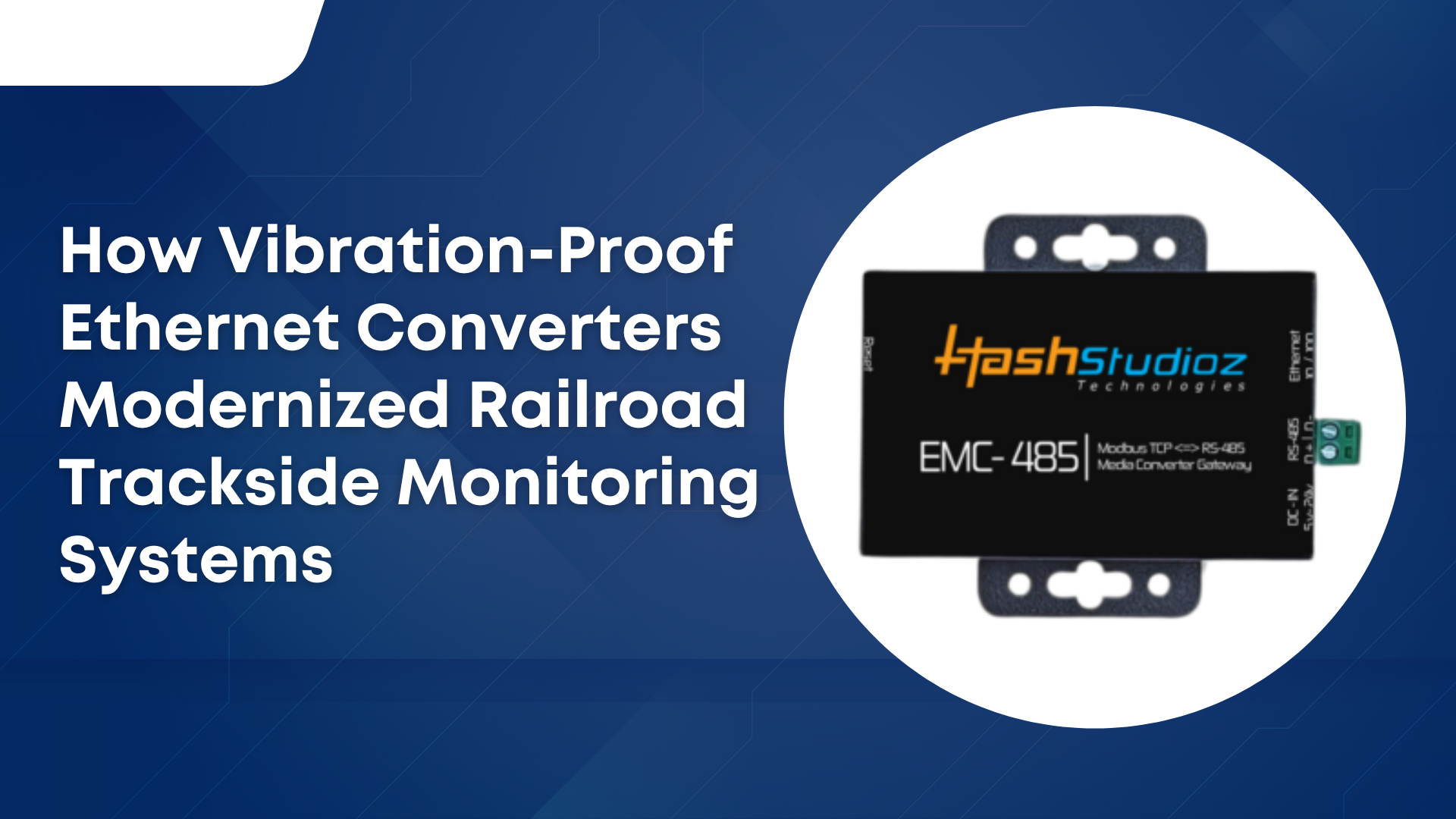
Railroad networks run on data as much as they run on steel rails. Every signal box, junction, and trackside sensor needs to talk to a control center. For decades, this communication relied on serial links and copper wiring built for a slower, simpler era. Today, rail operators need real-time data from hundreds of trackside points. This shift pushed engineers toward Ethernet-based networks. But standard networking gear cannot survive the shocks and vibration of an active rail corridor. Vibration-proof Ethernet converters solved this problem. They now sit at the center of modern trackside monitoring systems.
This article explains how these converters work, why they matter, and how devices like the RS485 to Ethernet Converter and PLC to Ethernet Converter changed rail monitoring for good.
The Challenge of Trackside Monitoring
Trackside monitoring covers many functions. Operators track axle counters, hot box detectors, rail temperature sensors, and switch position indicators. Each device generates data that must reach a control room within seconds.
Rail corridors are harsh environments. Trains passing at high speed generate constant ground vibration. Temperature swings range from freezing winters to scorching summers. Dust, moisture, and electromagnetic interference from traction power lines add further stress.
Traditional monitoring setups faced several problems:
-
Copper serial cables degraded quickly under vibration and moisture.
-
Signal loss increased with cable length, limiting sensor placement.
-
Legacy protocols like RS232 and RS485 could not scale to large networks.
-
Manual data collection caused delays in fault detection.
Rail operators needed a way to move sensor data over long distances without losing signal quality. Ethernet offered speed and scalability, but only if the hardware could survive the trackside environment.
Why Standard Ethernet Equipment Fails on Railroads
Commercial-grade network switches and converters are built for office environments. They assume stable temperatures, minimal vibration, and clean power. None of these conditions exist trackside.
A standard Ethernet switch installed near a rail line often fails within months. Vibration loosens solder joints and connector pins. Voltage spikes from traction systems damage circuit boards. Dust intrusion causes short circuits in unsealed housings.
Rail operators learned this lesson through repeated equipment failures. Each failure meant a blind spot in monitoring coverage. A failed hot box detector, for example, cannot warn of an overheating axle bearing. This gap creates real safety risk.
Industry maintenance data shows that unprotected electronic enclosures near rail lines experience failure rates three to five times higher than shielded, ruggedized units. This finding pushed manufacturers to design converters specifically for rail conditions.
What Makes a Converter Vibration-Proof
A vibration-proof Ethernet converter differs from standard hardware in several design areas.
1. Mechanical Design
-
Solid-state components replace mechanical relays wherever possible.
-
Circuit boards use conformal coating to resist moisture and dust.
-
DIN-rail mounting reduces movement during train passage.
-
Connectors use locking mechanisms instead of friction-fit plugs.
2. Electrical Protection
-
Wide input voltage range handles power fluctuations from traction systems.
-
Surge protection circuits absorb voltage spikes above 2000V.
-
Isolation transformers separate signal lines from power noise.
3. Environmental Rating
-
IP30 to IP67 enclosure ratings protect against dust and water intrusion.
-
Operating temperature range typically spans -40°C to 75°C.
-
Shock resistance ratings meet EN 50155, the standard for rail electronics.
EN 50155 certification has become the baseline requirement for any device installed on active rail infrastructure. This standard tests equipment against vibration, humidity, and voltage variation specific to rail applications. A converter that passes this certification can survive years of continuous trackside operation.
The Role of RS485 to Ethernet Converter in Legacy Sensor Integration
Many trackside sensors still use RS485, a serial communication standard from the 1980s. RS485 works well for short-distance, low-speed data transfer. It cannot connect directly to modern IP-based control systems.
An RS485 to Ethernet Converter bridges this gap. It takes serial data from legacy sensors and converts it into Ethernet packets. Control centers can then read sensor data through standard network infrastructure.
This conversion offers several practical benefits:
-
Operators keep existing RS485 sensors instead of replacing them entirely.
-
Data reaches control centers over long-distance fiber or copper Ethernet runs.
-
Multiple RS485 devices connect through a single Ethernet gateway, reducing cable count.
-
Remote diagnostics become possible through standard network protocols like Modbus TCP.
Consider a rail corridor with fifty axle counters spread across twenty kilometers. Each counter uses RS485 to report train movement. Without a converter, each sensor would need a dedicated long cable run back to the control room. This approach is expensive and prone to signal degradation.
With an RS485 to Ethernet Converter installed at each sensor cluster, data travels over Ethernet instead. Fiber optic cable handles the long-distance run without signal loss. This setup cuts installation cost and improves data reliability at the same time.
The Role of PLC to Ethernet Converter in Automation Upgrades
Programmable Logic Controllers, or PLCs, manage automated functions across rail networks. They control signal switching, level crossing barriers, and points machines. Older PLCs often use proprietary serial protocols that cannot connect to modern SCADA systems.
A PLC to Ethernet Converter solves this compatibility issue. It translates PLC communication protocols into Ethernet-based formats that SCADA and monitoring platforms can read.
Key advantages include:
-
Existing PLC hardware continues operating without costly replacement.
-
Remote monitoring centers gain visibility into PLC status and fault codes.
-
Data integration with centralized traffic management systems becomes possible.
-
Maintenance teams receive alerts before failures cause service disruption.
A regional rail authority upgrading a signaling network faced a common dilemma. Replacing every PLC across two hundred stations would cost millions and take years. Instead, engineers installed PLC to Ethernet Converters at each site. This approach connected legacy controllers to a new centralized monitoring platform within months, not years.
This method reflects a broader industry trend. Rather than ripping out functional legacy equipment, operators bridge old and new systems through protocol conversion. This strategy reduces capital expense while improving data visibility.
Real-World Applications and Examples
Vibration-proof Ethernet converters now support multiple trackside functions.
1. Hot Box Detection
Hot box detectors monitor axle bearing temperature. Overheating bearings cause derailments if left undetected. Converters connect these sensors to central monitoring systems, sending temperature data every few seconds. Early detection has reduced bearing-related incidents significantly across networks that adopted continuous monitoring.
2. Rail Temperature and Stress Monitoring
Rail expands and contracts with temperature changes. Extreme heat can cause track buckling. Sensors placed along the rail measure temperature and stress levels. Converters relay this data to maintenance teams, who can issue speed restrictions before failure occurs.
3. Switch and Points Monitoring
Points machines control track switching at junctions. A malfunction here can cause derailment or service delay. PLC to Ethernet Converters connect points controllers to central systems, allowing real-time fault detection instead of periodic manual inspection.
4. Level Crossing Monitoring
Level crossings require constant barrier status checks. Converters link crossing controllers to network operations centers, confirming barrier position and warning light function continuously.
Stats and Data on Rail Network Modernization
Rail modernization data shows measurable gains from converter-based monitoring upgrades:
-
Networks using continuous digital monitoring report fault detection times reduced from hours to under one minute.
-
Predictive maintenance programs using sensor data have cut unplanned track outages by 20 to 30 percent in several documented pilot programs.
-
Cable installation cost drops by 40 to 60 percent when operators use Ethernet backbone with distributed converters instead of dedicated point-to-point serial runs.
-
EN 50155 certified equipment shows failure rates below 2 percent over a five-year service period, compared to failure rates above 10 percent for non-certified commercial hardware in similar conditions.
These figures explain why rail operators across Europe, Asia, and North America continue adopting ruggedized converter technology for new and existing rail lines.
Installation and Maintenance Considerations
Installing vibration-proof converters requires planning beyond simple wiring.
1. Site Assessment
-
Engineers measure vibration levels at each proposed mounting location.
-
Cable routing must avoid high-voltage traction lines where possible.
-
Enclosure placement considers exposure to weather and physical damage.
2. Power Supply Planning
-
Converters need stable power, often supplied through redundant sources.
-
Battery backup systems maintain operation during power interruption.
3. Ongoing Maintenance
-
Technicians inspect connector seals and mounting hardware annually.
-
Firmware updates address security vulnerabilities and protocol changes.
-
Diagnostic logs help identify early signs of hardware degradation.
Rail operators that follow structured maintenance schedules report longer converter service life and fewer unexpected failures.
Future Outlook
Rail networks continue expanding their use of connected sensors. Fifth-generation wireless networks and edge computing will add new layers to trackside monitoring. Converters will need to support higher bandwidth and additional security protocols.
Cybersecurity has become a growing concern for connected rail infrastructure. Future converter designs will likely include built-in encryption and network segmentation features. This addition protects monitoring data from unauthorized access while maintaining the reliability rail operators depend on.
Artificial intelligence tools are also entering rail maintenance. Sensor data collected through converters feeds predictive models that forecast equipment failure before it happens. This shift moves rail maintenance from scheduled inspection toward condition-based response.
Conclusion
Vibration-proof Ethernet converters changed how rail networks monitor trackside conditions. They connect legacy sensors and controllers to modern digital networks without forcing operators to replace working equipment. The RS485 to Ethernet Converter keeps decades-old serial sensors relevant in an IP-based world. The PLC to Ethernet Converter extends the life of automation systems while adding remote visibility.
Together, these devices support faster fault detection, lower maintenance cost, and safer rail operations. As rail networks grow more connected, ruggedized conversion technology will remain a core part of the infrastructure that keeps trains running safely and on time.

 English
 Arabic
 French
 Spanish
 Portuguese
 Deutsch
 Turkish
 Dutch
Dutch
 Russian
 Romaian
 Portuguese (Brazil)
 Greek
Greek
