


Common Customs Clearance Mistakes in Saudi Arabia (& How to Avoid Them)
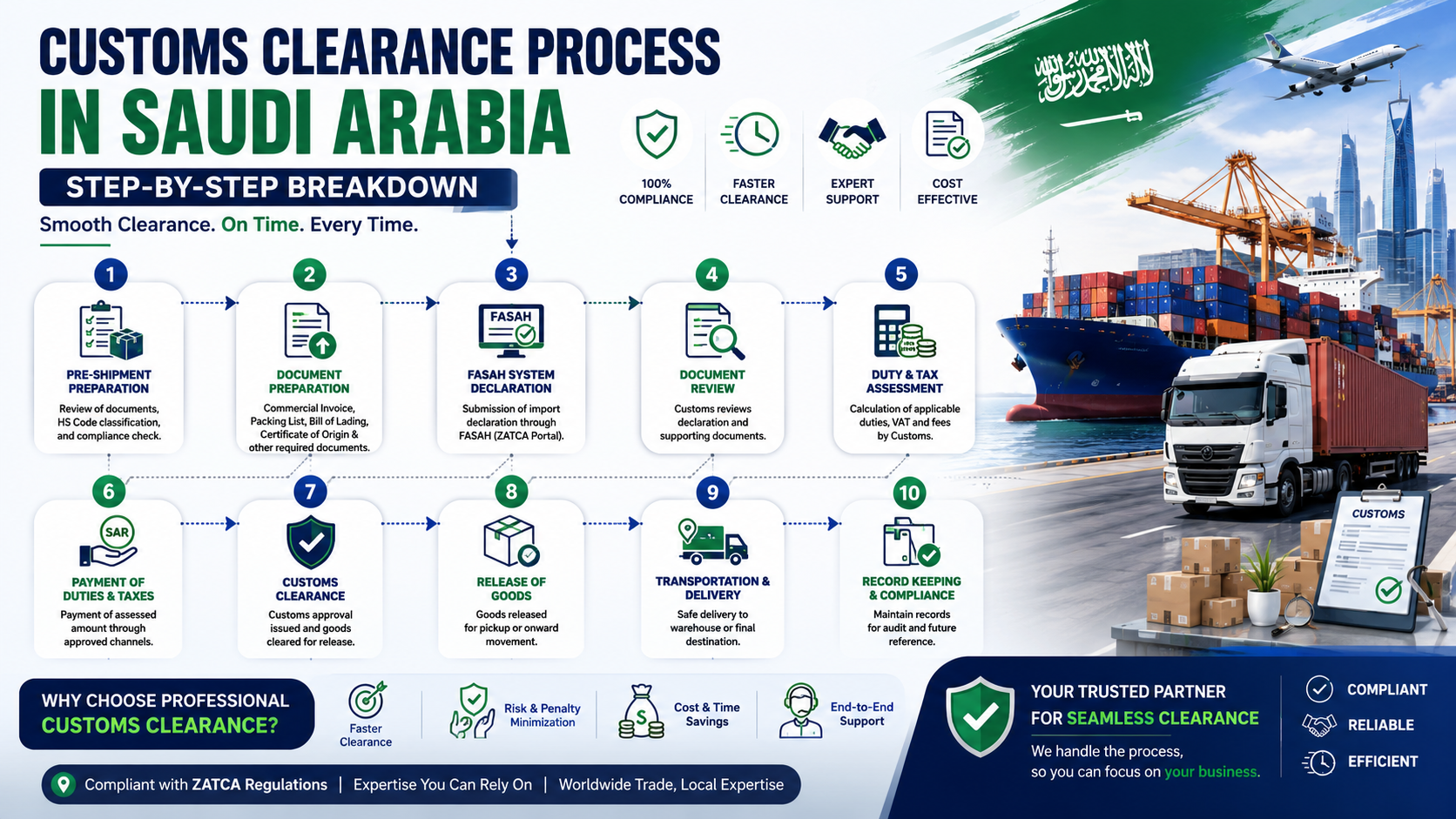
Understanding how to do customs clearance is essential for businesses importing goods into Saudi Arabia. Importers must comply with customs regulations, import documentation requirements, product conformity standards, customs duty calculations, shipment certification procedures, cargo inspections, and Saudi trade laws to ensure successful customs clearance. Even a small mistake during the import process can result in shipment delays, additional storage charges, customs penalties, or product rejection. Fortunately, most customs clearance issues are preventable with proper planning and compliance. This guide explores the most common customs clearance mistakes in Saudi Arabia and provides practical tips to help importers avoid them.
Why Customs Clearance Errors Can Be Costly
Saudi Arabia has one of the most advanced customs systems in the Middle East, supported by digital platforms and strict regulatory requirements. While these improvements have made customs processing faster, they have also increased the importance of submitting accurate information and complying with all applicable regulations.
Customs clearance mistakes can lead to:
-
Shipment delays
-
Additional customs inspections
-
Storage and demurrage charges
-
Financial penalties
-
Cargo rejection
-
Supply chain disruptions
-
Increased operational costs
Understanding these common mistakes can help businesses improve efficiency and reduce risks.
Mistake 1: Incomplete or Incorrect Documentation
One of the most common reasons shipments are delayed is incomplete documentation.
Saudi customs authorities require accurate and consistent paperwork for every shipment.
Common missing documents include:
-
Commercial Invoice
-
Packing List
-
Bill of Lading or Airway Bill
-
Certificate of Origin
-
Import permits
-
Product conformity certificates
Even small inconsistencies between documents can delay shipment approval.
How to Avoid It
-
Prepare documents before shipment dispatch.
-
Double-check all shipment details.
-
Ensure product descriptions match across every document.
-
Keep digital copies of all records.
Mistake 2: Using Incorrect HS Codes
Every imported product must be classified using the correct Harmonized System (HS) Code.
Incorrect classification may result in:
-
Wrong customs duty calculations
-
Compliance issues
-
Shipment inspections
-
Clearance delays
-
Financial penalties
How to Avoid It
-
Verify HS codes before submitting customs declarations.
-
Review product classifications carefully.
-
Consult customs clearance professionals when unsure.
-
Update classifications if product specifications change.
Mistake 3: Ignoring Product Compliance Requirements
Many imported products must comply with Saudi technical regulations before entering the Kingdom.
Examples include:
-
Electrical appliances
-
Consumer electronics
-
Automotive parts
-
Toys
-
Cosmetics
-
Construction materials
Some products require registration through the SABER platform and conformity certification.
How to Avoid It
-
Check whether your products are regulated.
-
Obtain required conformity certificates before shipping.
-
Complete product registration early.
-
Stay updated on Saudi technical regulations.
Mistake 4: Declaring Incorrect Shipment Values
Some importers unintentionally declare inaccurate shipment values due to calculation errors or incomplete invoices.
Incorrect valuation can lead to:
-
Customs reassessment
-
Delayed cargo release
-
Additional inspections
-
Financial penalties
How to Avoid It
-
Declare the actual commercial value of goods.
-
Include freight and insurance costs where required.
-
Maintain accurate financial records.
-
Verify invoices before submission.
Mistake 5: Delaying Customs Documentation
Waiting until cargo has already arrived before preparing customs paperwork is a common mistake.
Late documentation often causes:
-
Shipment holds
-
Port congestion
-
Storage fees
-
Delivery delays
How to Avoid It
-
Prepare all documentation before shipment departure.
-
Submit declarations promptly.
-
Coordinate closely with suppliers and logistics providers.
-
Monitor shipment schedules.
Mistake 6: Not Understanding Import Restrictions
Saudi Arabia regulates certain products more strictly than others.
Restricted goods may require:
-
Import permits
-
Additional certifications
-
Government approvals
-
Special inspections
Ignoring these requirements can result in shipment rejection.
How to Avoid It
-
Research import regulations before purchasing goods.
-
Confirm whether products require special permits.
-
Review current Saudi trade regulations regularly.
Mistake 7: Missing SABER Certification
Many regulated products require:
-
Product Certificate of Conformity (PCoC)
-
Shipment Certificate of Conformity (SCoC)
Without these approvals, customs authorities may refuse cargo clearance.
How to Avoid It
-
Register products before shipment.
-
Obtain certifications from approved conformity assessment bodies.
-
Ensure certificates remain valid.
-
Verify compliance before cargo arrives.
Mistake 8: Inaccurate Product Descriptions
Vague or inconsistent product descriptions create confusion during customs inspections.
Examples include:
-
Missing model numbers
-
Generic product names
-
Incorrect specifications
-
Incomplete manufacturer information
How to Avoid It
Provide detailed product information, including:
-
Product name
-
Brand
-
Model number
-
Technical specifications
-
Country of origin
Consistency across all documents is essential.
Mistake 9: Failing to Pay Duties and Taxes on Time
Customs authorities will not release cargo until all applicable duties and taxes have been paid.
Late payments often lead to:
-
Storage charges
-
Shipment delays
-
Additional administrative costs
How to Avoid It
-
Estimate import costs before shipping.
-
Budget for customs duties and VAT.
-
Make payments promptly.
-
Keep payment records for future reference.
Mistake 10: Trying to Handle Complex Imports Without Professional Support
Many first-time importers underestimate the complexity of Saudi customs regulations.
Without professional assistance, businesses may struggle with:
-
Product classification
-
Documentation
-
Compliance requirements
-
Duty calculations
-
Shipment tracking
How to Avoid It
Partner with experienced customs clearance specialists who understand Saudi import regulations and can manage the clearance process efficiently.
Best Practices for Successful Customs Clearance
Following proven best practices can significantly reduce customs-related problems.
Prepare Documentation Early
Gather and verify all required paperwork before shipment dispatch.
Verify Product Compliance
Determine whether products require:
-
SABER registration
-
Conformity certificates
-
Import permits
-
Technical approvals
Use Accurate HS Codes
Correct product classification helps prevent customs disputes and delays.
Maintain Consistent Records
Ensure all shipment documents contain identical:
-
Product descriptions
-
Quantities
-
Values
-
Manufacturer information
-
HS codes
Stay Updated on Regulations
Saudi import regulations continue evolving under Vision 2030.
Businesses should regularly monitor changes affecting:
-
Technical standards
-
Product regulations
-
Customs procedures
-
Certification requirements
Work With Professional Customs Clearance Providers
Experienced customs brokers can assist with:
-
Documentation preparation
-
Customs declarations
-
Product classification
-
Duty calculations
-
Regulatory compliance
-
Shipment tracking
Professional guidance often saves both time and money.
Benefits of Avoiding Customs Clearance Mistakes
Businesses that implement proper customs practices enjoy several advantages.
Faster Cargo Release
Accurate documentation speeds up customs processing.
Lower Import Costs
Avoiding delays reduces storage and demurrage charges.
Improved Regulatory Compliance
Businesses remain aligned with Saudi customs requirements.
Better Supply Chain Efficiency
Reliable customs processing supports on-time deliveries.
Reduced Business Risk
Compliance minimizes penalties, shipment holds, and product rejection.
The Future of Customs Clearance in Saudi Arabia
Saudi Arabia continues modernizing customs operations through Vision 2030 initiatives.
Recent developments include:
-
Electronic customs declarations
-
Automated cargo processing
-
Digital compliance verification
-
Integrated customs systems
-
Enhanced shipment tracking
These improvements are making customs clearance faster, more transparent, and more efficient for importers.
Conclusion
Learning how to do customs clearance correctly is one of the most important steps for successful importing into Saudi Arabia. Most customs clearance problems arise from preventable mistakes such as incomplete documentation, incorrect HS codes, missing certifications, inaccurate shipment values, or failure to comply with import regulations.
By preparing documentation early, obtaining required certifications, using accurate product classifications, staying informed about regulatory updates, and working with experienced customs clearance professionals, businesses can avoid costly delays and ensure smooth cargo movement. Following these best practices not only simplifies customs clearance but also strengthens supply chain efficiency and supports long-term business success in Saudi Arabia.

 English
 Arabic
 French
 Spanish
 Portuguese
 Deutsch
 Turkish
 Dutch
Dutch
 Italiano
 Russian
 Portuguese (Brazil)
 Greek
Greek
