


Essential Topics in a Comprehensive Earth Science Curriculum
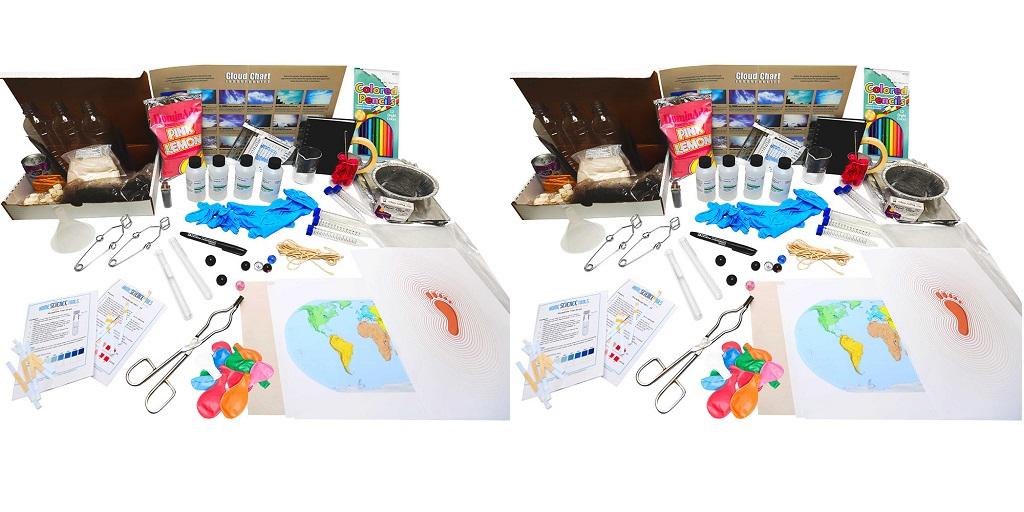
A strong Earth Science Curriculum helps students learn the systems and processes that shape the world around them. Homeschool education creates opportunities to explore these topics through observation, experiments, projects, and outdoor activities. This approach encourages active learning while helping students develop scientific thinking skills.
Earth science covers several connected subjects. Together, they provide a foundation for understanding natural events, environmental changes, and Earth's place within the solar system.
Understanding Earth's Structure
A study of Earth's structure introduces students to the layers that make up the planet. Lessons often focus on the crust, mantle, and core, as well as the forces that influence their movement.
Plate tectonics is an important topic within this area. Students can learn how tectonic plate shifts contribute to earthquakes, mountain formation, and volcanic activity. Models and demonstrations often make these concepts easier to visualize.
Rock and mineral studies also fit naturally into this section. Identifying specimens and examining their properties helps students develop observation and classification skills.
Exploring Weather and Climate
Weather and climate help explain many of the changes people experience each day. Students can investigate temperature, precipitation, wind, and air pressure through simple activities and record-keeping projects.
Keeping a weather journal provides valuable opportunities to track patterns over time. Students can compare observations across weeks or seasons and discuss the factors that influence local conditions.
Climate studies expand this understanding by examining long-term environmental trends and regional differences around the world.
Investigating Earth's Water Systems
Water shapes landscapes and supports life. Oceanography and hydrology introduce students to oceans, rivers, lakes, groundwater, and the water cycle.
Experiments involving evaporation, condensation, and filtration help illustrate how water moves through natural systems. Students often gain a stronger understanding when they can observe these processes directly.
Learning about erosion and sediment transport also demonstrates how water influences landforms over long periods.
Discovering Space and Astronomy
Astronomy helps students connect Earth science to the larger universe. Topics often include the Sun, Moon, planets, stars, and galaxies.
Building scale models can help students understand distances and relative sizes within the solar system. Observing lunar phases or tracking constellations encourages regular engagement with scientific observation.
Astronomy lessons often inspire questions that lead to deeper exploration and research.
Examining Natural Resources and Environmental Science
Earth science also provides opportunities to study natural resources and environmental stewardship. Students can learn about renewable and nonrenewable resources, conservation practices, and ecosystem interactions.
Discussions about soil, forests, water resources, and energy sources help students understand how scientific knowledge supports responsible decision-making.
These topics encourage critical thinking while highlighting the relationship between people and the environment.
Supporting Learning Through Projects
Projects allow students to apply concepts in meaningful ways. They encourage investigation, planning, and problem-solving.
Examples include:
- Constructing a model volcano
- Creating fossil replicas
- Building a weather station
- Designing a water filtration system
- Mapping local geological features
These activities reinforce classroom learning and provide opportunities for creativity.
Building Scientific Understanding
An effective Earth science program introduces concepts gradually while encouraging continued exploration. Students benefit from revisiting ideas through activities and observations.
A thoughtful sequence of lessons helps learners connect topics such as geology, weather, water systems, and astronomy. These connections strengthen understanding and demonstrate how natural systems interact.
Explore More with Home Science Tools
Home Science Tools offers Earth and space science resources designed to support hands-on homeschool learning. From experiment kits to project materials, these tools help students investigate scientific concepts through active participation. Well-planned activities can strengthen understanding, encourage curiosity, and make science an engaging part of everyday education.
For more information about Microscopes For Kids and Digital Microscope Please visit: Home Science Tools.

 English
 Arabic
 French
 Spanish
 Portuguese
 Deutsch
 Dutch
Dutch
 Italiano
 Russian
 Romaian
 Portuguese (Brazil)
 Greek
Greek
