


Real Estate Tokenization Development for Luxury Properties
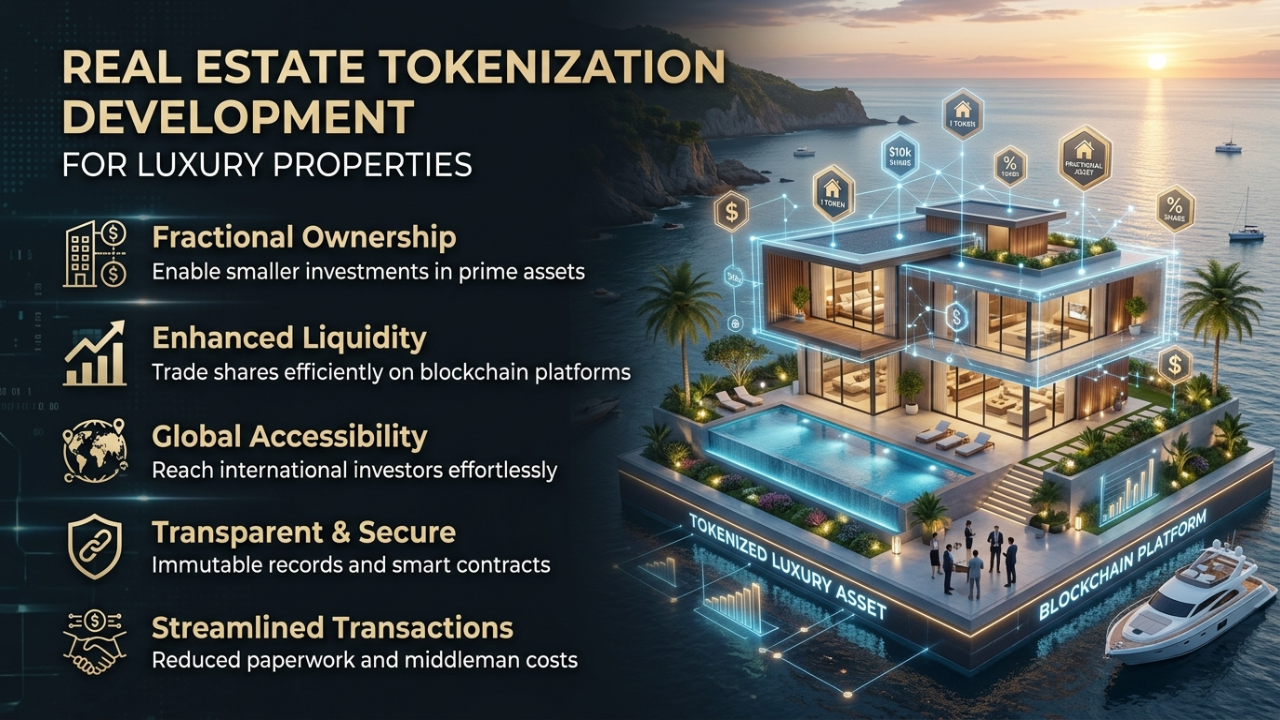
Luxury real estate has always attracted investors looking for long-term value, prestige, and portfolio diversification. High-end villas, waterfront residences, penthouses, branded apartments, private islands, and heritage estates often generate consistent appreciation over time. However, investing in these premium assets has traditionally required substantial capital, lengthy legal procedures, and limited access for global investors. These barriers have restricted participation to wealthy individuals and institutional buyers.
Today, digital technologies are changing how premium properties are bought, sold, and managed. One of the most significant developments is Real Estate Tokenization, which converts ownership rights of physical properties into blockchain-based digital tokens. This method allows luxury property owners to divide valuable assets into smaller ownership units while maintaining legal compliance and investment records.
As interest in digital assets continues to grow, real estate tokenization development has become an attractive option for developers, property owners, investment firms, and financial institutions. It offers new investment opportunities while making luxury real estate more accessible to a broader audience. This article explains how tokenization works for luxury properties, its advantages, development process, technical requirements, challenges, and future opportunities.
Understanding Real Estate Tokenization for Luxury Properties
Luxury properties usually involve high acquisition costs, complex ownership structures, and international buyers. Real Estate Tokenization converts ownership interests into digital tokens stored on a blockchain network. Each token represents a fraction of ownership or investment rights in a premium property.
For example, instead of purchasing an entire beachfront mansion worth $20 million, investors can purchase a smaller percentage through digital tokens. Their ownership share corresponds to the number of tokens they hold.
This approach opens investment opportunities for individuals who previously could not participate in luxury property markets.
A professional Real Estate Tokenization company helps property owners tokenize valuable assets while managing legal documentation, compliance, smart contracts, investor onboarding, and digital asset management.
Why Luxury Properties Are Ideal for Tokenization
Luxury properties generally have higher market values than standard residential or commercial buildings. Because of their price, finding buyers can take months or even years.
Tokenization offers several advantages for this market.
Fractional Ownership
Instead of selling an entire property to one buyer, ownership can be divided among many investors.
This creates more opportunities for investment without requiring buyers to commit millions of dollars.
Better Investment Accessibility
International investors can participate without purchasing the complete property.
Smaller investments attract more participants while keeping ownership records organized through blockchain technology.
Increased Liquidity
Luxury properties are usually difficult to sell quickly. Tokenized ownership allows investors to trade ownership tokens more easily, depending on marketplace regulations and platform policies.
Diversified Investment
Investors can allocate their funds across multiple luxury assets rather than purchasing one expensive property.
Types of Luxury Properties Suitable for Tokenization
Almost every premium property category can benefit from tokenization.
These include:
-
Luxury villas
-
Beachfront homes
-
Branded residences
-
High-rise penthouses
-
Heritage buildings
-
Private islands
-
Golf resorts
-
Luxury hotels
-
Premium serviced apartments
-
Exclusive vacation homes
Each property requires different legal structures and valuation methods before tokenization begins.
How Real Estate Tokenization Development Works
The development process follows several structured stages.
Property Evaluation
The luxury property undergoes professional valuation, ownership verification, financial assessment, and legal review.
This step determines the property's market value and confirms ownership rights.
Legal Structuring
Legal experts establish the ownership framework according to local property regulations.
The ownership model determines how investors receive rights through digital tokens.
Asset Token Creation
Digital tokens are generated using blockchain technology.
Each token represents a defined ownership percentage or investment share within the property.
Smart Contract Development
Smart contracts automate ownership management.
These contracts handle investor allocation, dividend distribution, transfer conditions, voting rights, and transaction records.
Investor Verification
Investors complete identity verification through KYC and AML procedures before participating.
Marketplace Listing
After regulatory approval, property tokens become available on approved investment platforms where qualified investors can buy or sell their holdings.
A Real Estate Tokenization Development company manages these technical and operational activities throughout the implementation process.
Components of a Real Estate Tokenization Platform
A successful Real Estate Tokenization Platform Development project includes multiple integrated modules.
Property Management Dashboard
Property owners upload documents, property details, valuations, financial reports, and ownership records.
Investor Portal
Investors can register, complete verification, purchase tokens, monitor investments, and receive financial reports.
Digital Wallet Integration
Secure wallets store ownership tokens while supporting transfers according to platform rules.
Smart Contract Management
Contracts automate ownership transactions and revenue distribution.
Compliance Module
The platform performs identity verification, transaction monitoring, investor eligibility checks, and regulatory reporting.
Payment Integration
Multiple payment methods including bank transfers, digital currencies, and stablecoins can be integrated depending on jurisdiction.
Analytics Dashboard
Property owners and administrators monitor investments, token sales, investor activity, and financial performance.
Blockchain Networks Used in Luxury Property Tokenization
Several blockchain networks support tokenized real estate projects.
Popular choices include:
-
Ethereum
-
Polygon
-
Avalanche
-
Binance Smart Chain
-
Solana
The blockchain selection depends on transaction fees, security, network adoption, and smart contract compatibility.
Benefits of Real Estate Tokenization Development for Luxury Properties
Luxury property owners gain several operational and financial advantages.
Larger Investor Pool
Instead of relying on a few wealthy buyers, property owners can attract investors from different countries.
Faster Capital Collection
Fractional investments help property owners raise capital more efficiently than traditional property sales.
Better Ownership Records
Blockchain stores transaction history permanently, reducing disputes regarding ownership changes.
Automated Income Distribution
Rental income or profit sharing can be distributed automatically using smart contracts.
Portfolio Expansion
Investment firms can include luxury properties from different regions within one digital investment platform.
Role of Smart Contracts
Smart contracts reduce manual administration throughout the investment lifecycle.
Common functions include:
-
Token issuance
-
Ownership transfers
-
Rental income distribution
-
Profit sharing
-
Voting rights
-
Compliance validation
-
Transaction history
Automation reduces paperwork while improving consistency across investment operations.
Security Considerations
Luxury real estate involves significant financial value, making security a priority.
Security measures often include:
-
Multi-factor authentication
-
Encrypted databases
-
Secure wallet storage
-
Smart contract auditing
-
Backup systems
-
Access control
-
Network monitoring
-
Penetration testing
Security reviews should continue even after platform deployment.
Regulatory Considerations
Property tokenization operates under financial and property regulations that vary across countries.
Important compliance areas include:
Property Ownership Laws
Ownership rights must follow local real estate regulations.
Securities Regulations
Many tokenized properties qualify as security tokens and require regulatory approval.
KYC and AML Compliance
Investor identity verification reduces financial risks and supports regulatory compliance.
Tax Reporting
Income generated through tokenized properties should comply with applicable tax laws.
Working with experienced legal professionals helps reduce regulatory complications during development.
Real Estate Asset Tokenization for International Investors
Global investors increasingly seek access to premium real estate markets.
real estate asset tokenization allows investors from different countries to participate in luxury properties without purchasing entire buildings.
Digital ownership records simplify investment management while reducing paperwork involved in cross-border transactions.
International participation also increases market exposure for premium property developers.
Industries Benefiting from Luxury Property Tokenization
Several sectors benefit from luxury real estate tokenization.
These include:
-
Real estate developers
-
Hospitality companies
-
Property investment firms
-
Private equity firms
-
Wealth management companies
-
Family offices
-
Financial institutions
-
Luxury resort operators
Many organizations are integrating blockchain technology into property investment strategies.
Challenges in Luxury Property Tokenization
Despite growing adoption, several challenges remain.
Regulatory Differences
Every country follows different regulations regarding digital assets and property ownership.
Investor Education
Many investors still need guidance regarding blockchain-based ownership models.
Market Adoption
Traditional investors may require additional confidence before investing through digital platforms.
Smart Contract Risks
Programming errors may affect financial operations if contracts are not audited properly.
Property Valuation
Luxury property prices often fluctuate depending on location, market demand, and economic conditions.
Proper planning reduces these challenges during implementation.
Choosing the Right Development Partner
Selecting an experienced development partner influences the success of the entire project.
A reliable provider should offer:
-
Blockchain development expertise
-
Smart contract development
-
Security testing
-
Regulatory support
-
Token issuance
-
Platform integration
-
Investor portal development
-
Wallet integration
-
Ongoing technical support
An experienced Real Estate Tokenization Development company understands both blockchain technology and property investment requirements.
Organizations also benefit from comprehensive Real Estate Tokenization Development Services that cover consultation, platform architecture, compliance assistance, maintenance, and platform upgrades.
Similarly, a trusted provider of Real Estate Tokenization Services can support businesses throughout planning, implementation, investor onboarding, and long-term platform management.
Future Outlook
Luxury real estate continues attracting investors despite changing economic conditions. Digital investment models are gradually becoming part of modern property markets. More developers, financial institutions, and investment firms are evaluating blockchain-based ownership structures for premium assets. As regulations become more defined and investor awareness increases, real estate tokenization development is expected to become a common option for luxury property investment, offering broader participation while maintaining structured ownership and efficient investment management.
Conclusion
Luxury property investment is no longer limited to a small group of high-net-worth buyers. Real Estate Tokenization provides an alternative approach that divides premium real estate into digital ownership units, making participation possible for a wider investor base while supporting organized ownership records and automated investment management. Businesses planning to enter this market should work with experienced professionals who understand blockchain technology, legal compliance, and property investment processes. Blockchain App Factory provides Real Estate Tokenization Services that help businesses plan, develop, and manage secure tokenization platforms for luxury real estate projects.
FAQs
1. What is luxury real estate tokenization?
Luxury real estate tokenization is the process of converting ownership rights of high-value properties into blockchain-based digital tokens that represent fractional ownership or investment interests.
2. Which luxury properties can be tokenized?
Luxury villas, penthouses, beachfront homes, branded residences, hotels, resorts, private islands, heritage buildings, and premium vacation homes are commonly considered for tokenization.
3. Is tokenized real estate legally recognized?
The legal status depends on the country where the property is located. Property laws, securities regulations, and compliance requirements differ across jurisdictions.
4. How do investors earn returns from tokenized luxury properties?
Returns may come from rental income, property appreciation, profit-sharing arrangements, or token value growth, depending on the investment structure.
5. Why are smart contracts used in property tokenization?
Smart contracts automate ownership records, token transfers, income distribution, compliance checks, and investor management while reducing manual administrative work.
6. What features should a Real Estate Tokenization Platform Development solution include?
A complete platform typically includes investor onboarding, property management, smart contracts, wallet integration, KYC and AML verification, payment processing, compliance management, reporting dashboards, and security features.
7. Why should businesses work with a Real Estate Tokenization company?
An experienced Real Estate Tokenization company provides technical expertise, legal coordination, blockchain integration, security implementation, and ongoing platform support, helping businesses launch tokenized real estate projects with greater confidence.

 English
 Arabic
 French
 Spanish
 Portuguese
 Deutsch
 Turkish
 Dutch
Dutch
 Italiano
 Russian
 Romaian
 Greek
Greek
