


How AI Is Changing the Role of an ISO 27001 Lead Auditor
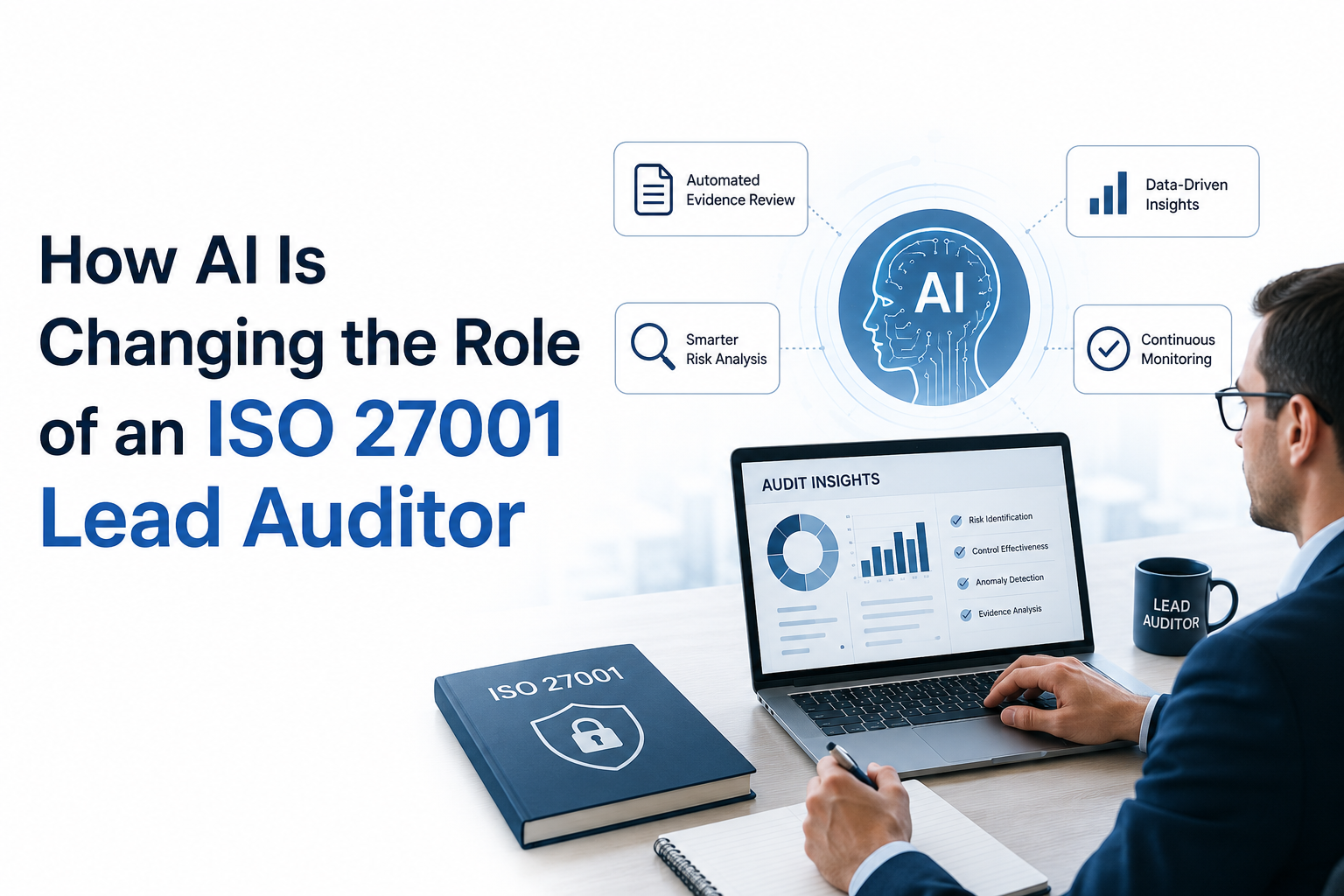
Artificial Intelligence (AI) is transforming the way organizations manage information security. From detecting cyber threats to automating routine security tasks, AI has become an important part of modern cybersecurity strategies. As businesses increasingly adopt AI-driven security solutions, the responsibilities of an ISO 27001 Lead Auditor are also evolving.
Today, auditing is no longer limited to reviewing documents and checking compliance against the standard. Lead auditors are expected to understand how AI influences risk management, security controls, decision-making, and compliance. While AI can improve the efficiency of audits, it also introduces new challenges that auditors must evaluate carefully.
If you are planning to build a career in information security, understanding the relationship between AI and ISO 27001 is becoming just as important as learning the standard itself.
Why AI Matters in ISO 27001 Audits
The latest version of ISO 27001 focuses on a risk-based approach to information security management. Organizations are encouraged to identify, assess, and treat risks continuously rather than relying on periodic reviews.
AI supports this objective by helping organizations:
- Detect security incidents in real time
- Identify unusual user behavior
- Analyze large volumes of security logs
- Predict potential vulnerabilities
- Improve threat intelligence
- Automate repetitive security tasks
As these technologies become more common, auditors must determine whether AI systems are being used effectively, responsibly, and securely within the Information Security Management System (ISMS).
The Traditional Role of an ISO 27001 Lead Auditor
Before AI became widely adopted, the primary responsibilities of a Lead Auditor included:
- Planning audit activities
- Reviewing ISMS documentation
- Interviewing employees
- Verifying compliance with ISO 27001 requirements
- Identifying nonconformities
- Preparing audit reports
- Recommending corrective actions
These responsibilities remain essential today. However, AI has changed how auditors collect evidence, evaluate risks, and verify the effectiveness of security controls.
How AI Is Transforming the Audit Process
1. Faster Analysis of Security Data
Organizations generate millions of security events every day. Reviewing these records manually is time-consuming and often impractical.
AI-powered security platforms can analyze logs within minutes and identify suspicious patterns that deserve further investigation.
Instead of spending hours reviewing data, auditors can focus on validating whether the detected issues have been addressed appropriately.
2. Continuous Risk Monitoring
Traditional audits often provide a snapshot of an organization's security posture at a specific point in time.
AI enables continuous monitoring by identifying emerging risks as they develop.
This allows auditors to evaluate whether the organization is actively managing risks rather than simply preparing for annual audits.
3. Improved Evidence Collection
Collecting audit evidence is one of the most time-intensive parts of an audit.
AI tools can automatically organize:
- Security logs
- Access records
- Incident reports
- Asset inventories
- Risk assessments
This improves efficiency while reducing the possibility of missing important information.
However, auditors must still verify that the collected evidence is accurate and complete.
4. Better Threat Detection
AI systems are capable of identifying cyber threats that may not be obvious through manual analysis.
Examples include:
- Insider threats
- Account compromise
- Malware activity
- Unusual login behavior
- Data exfiltration attempts
Lead auditors should understand how these AI-generated alerts contribute to the organization's overall risk management process.
New Skills Every ISO 27001 Lead Auditor Should Develop
As AI becomes more integrated into cybersecurity operations, auditors need to expand their knowledge beyond traditional compliance.
Important skills now include:
Understanding AI-Based Security Tools
Auditors should understand the purpose of AI-powered solutions such as:
- Security Information and Event Management (SIEM)
- User and Entity Behavior Analytics (UEBA)
- Extended Detection and Response (XDR)
- Security Orchestration, Automation, and Response (SOAR)
While technical expertise is not always required, understanding how these tools support information security is increasingly valuable.
Evaluating AI Risks
AI introduces several new risks that should be included within the ISMS, including:
- Biased decision-making
- Poor-quality training data
- Incorrect threat predictions
- Lack of transparency
- Privacy concerns
- Unauthorized access to AI models
Auditors should verify that organizations have identified and managed these risks appropriately.
Strong Analytical Thinking
AI produces recommendations, not final conclusions.
An experienced auditor must critically evaluate AI-generated insights instead of accepting them without verification.
Professional judgment remains one of the most valuable skills in an audit.
AI Cannot Replace Human Auditors
Although AI significantly improves efficiency, it cannot replace an ISO 27001 Lead Auditor.
Auditing requires:
- Professional judgment
- Ethical decision-making
- Communication with stakeholders
- Understanding organizational culture
- Assessing management commitment
- Evaluating business context
These responsibilities require human expertise.
AI should be viewed as a tool that supports auditors rather than replacing them.
Why ISO 27001 Training Is Becoming More Important
As audit practices evolve, professionals need more than just theoretical knowledge of the standard.
Comprehensive ISO 27001 Training helps individuals understand:
- The requirements of ISO 27001:2022
- Risk assessment methodologies
- Modern cybersecurity practices
- AI-enabled security operations
- Audit planning techniques
- Evidence collection
- Reporting nonconformities
- Corrective action verification
Learning how AI fits into modern information security prepares professionals for the expectations of today's organizations.
Building a Successful Career as an ISO 27001 Lead Auditor
Technology continues to change, but the fundamentals of auditing remain the same.
Successful auditors combine:
- Knowledge of ISO 27001
- Practical auditing experience
- Risk management skills
- Cybersecurity awareness
- Effective communication
- Continuous learning
If you are beginning your journey toward becoming a Lead Audit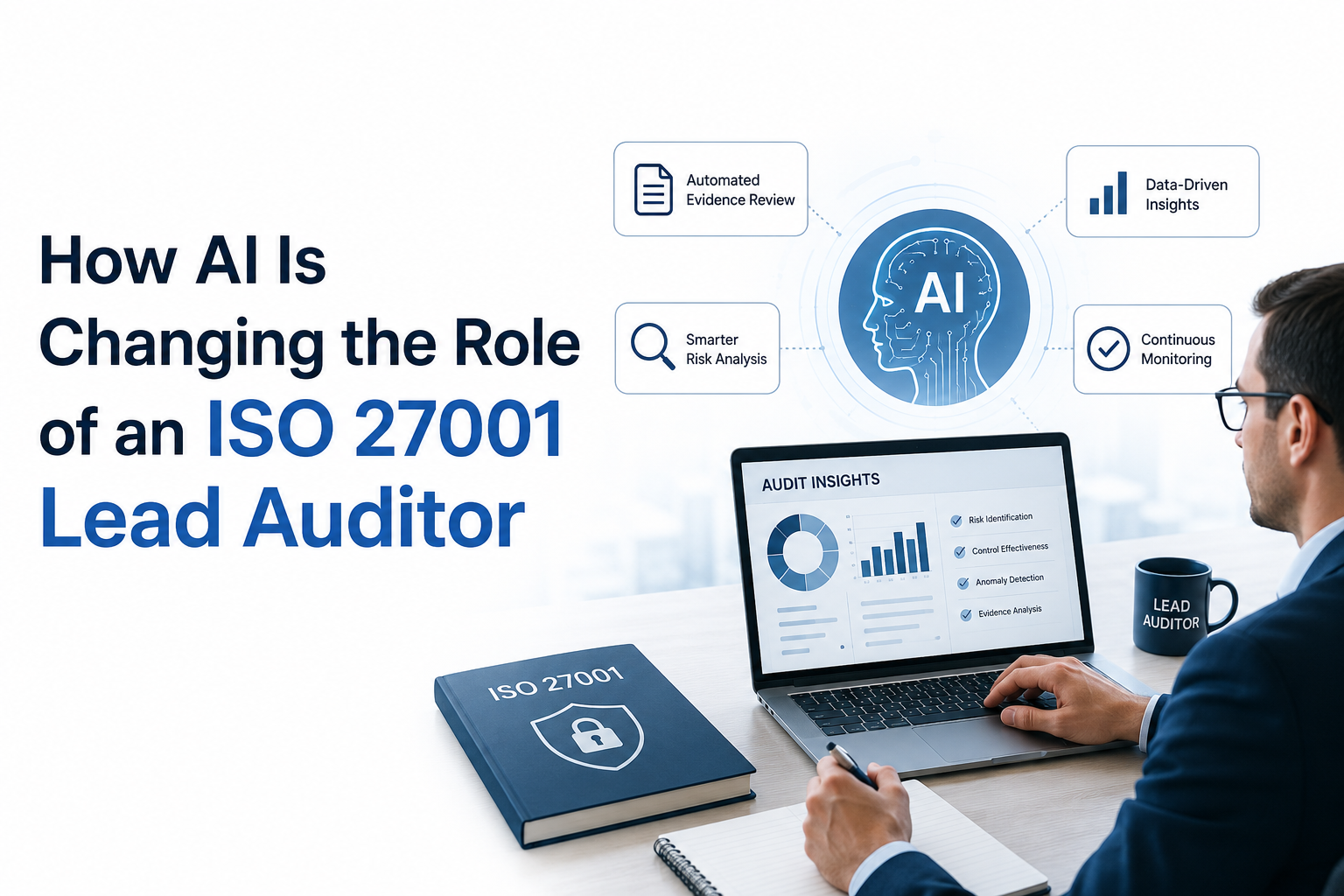 or, it is equally important to understand the certification path, required competencies, practical audit techniques, and career opportunities. Exploring a detailed guide on succeeding in ISO 27001 Lead Auditor Training can provide valuable insights before advancing into AI-driven auditing practices.
What the Future Looks Like
The future of ISO 27001 auditing will combine human expertise with intelligent technology.
Organizations are increasingly adopting AI to improve security monitoring, automate compliance activities, and strengthen risk management. As a result, Lead Auditors must be comfortable reviewing AI-assisted processes alongside traditional ISMS controls.
Rather than reducing the need for auditors, AI is making their role more strategic. Auditors who understand both ISO 27001 requirements and emerging technologies will be better positioned to deliver meaningful assessments and help organizations continuously improve their information security management systems.
Conclusion
Artificial Intelligence is reshaping the cybersecurity landscape, and ISO 27001 audits are evolving with it. Modern Lead Auditors are expected to evaluate not only compliance with ISO 27001 but also how organizations use AI to identify risks, strengthen security controls, and improve operational resilience.
While AI can automate repetitive tasks and analyze massive amounts of security data, it cannot replace human judgment, ethics, or critical thinking. These qualities remain at the heart of every successful audit.
For professionals looking to stay relevant in an increasingly digital world, combining strong auditing knowledge with modern ISO 27001 Training and an understanding of AI-driven security practices is becoming an essential step toward long-term career success.

 English
 Arabic
 French
 Spanish
 Portuguese
 Deutsch
 Turkish
 Dutch
Dutch
 Russian
 Romaian
 Portuguese (Brazil)
 Greek
Greek
