


How Aircraft Engine MRO Is Strengthening Aviation Growth Across the GCC
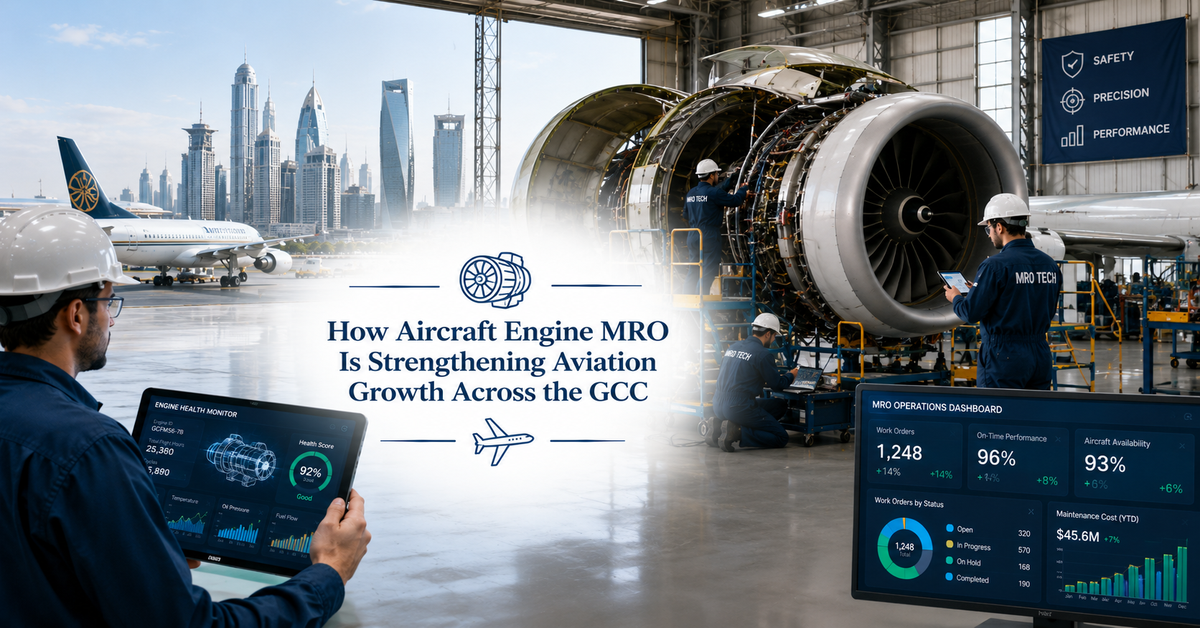
The Gulf Cooperation Council (GCC) has emerged as one of the world's most important aviation hubs, connecting Europe, Asia, and Africa through its strategically located airports and globally recognized airlines. As passenger traffic, cargo operations, and fleet expansion continue to grow, the importance of aircraft engine maintenance, repair, and overhaul (MRO) services is increasing significantly. Reliable engine maintenance ensures aircraft safety, operational efficiency, regulatory compliance, and reduced downtime, making engine MRO a critical pillar of the region's aviation ecosystem.
According to a study published by MarkNtel Advisors, the GCC Aircraft Engine MRO Market was valued at approximately USD 3.39 billion in 2025 and is projected to reach USD 3.88 billion in 2026, further expanding to nearly USD 6.29 billion by 2032, registering a CAGR of around 8.39% during the forecast period. Detailed insights can be found in this industry growth analysis, which highlights how expanding airline fleets, growing passenger demand, and aviation infrastructure investments are driving long-term market growth.
Expanding Airline Fleets Are Increasing MRO Demand
The GCC is home to some of the world's largest international airlines, many of which continue to expand their fleets to meet growing regional and global travel demand. Every aircraft engine requires scheduled inspections, maintenance checks, component replacement, and periodic overhauls throughout its operational lifecycle. As fleet sizes increase, the demand for specialized engine maintenance services naturally rises alongside them.
Modern turbofan engines are highly sophisticated systems comprising thousands of precision-engineered components. Maintaining these engines requires advanced diagnostic equipment, certified technicians, and specialized repair facilities capable of meeting strict aviation safety standards. This has encouraged continued investment in regional MRO capabilities that reduce reliance on overseas maintenance providers.
Strategic Location Supports Regional MRO Growth
The GCC's geographical location provides a significant advantage for aviation maintenance services. Positioned between major international markets, the region serves as a transit point for long-haul passenger and cargo operations connecting multiple continents. This strategic positioning supports demand for efficient maintenance facilities capable of serving both regional carriers and international airlines.
Several countries within the GCC are investing in aviation clusters that combine airports, maintenance facilities, logistics infrastructure, and aerospace manufacturing capabilities. These integrated ecosystems improve operational efficiency while attracting global aviation service providers and technology partners.
The International Air Transport Association (IATA) continues to recognize the Middle East as an important aviation market, reflecting the region's growing contribution to international air transport and airline connectivity.
Digital Technologies Are Transforming Engine Maintenance
Aircraft engine MRO has evolved significantly with the introduction of digital technologies. Modern engines generate extensive operational data that allows maintenance teams to monitor performance, identify anomalies, and schedule maintenance before serious faults develop.
Predictive maintenance has become increasingly important as airlines seek to minimize unscheduled downtime. Using sensors, artificial intelligence, cloud-based analytics, and digital twins, maintenance providers can detect early signs of wear and optimize maintenance schedules based on actual engine performance rather than fixed inspection intervals.
These technologies improve operational efficiency while helping airlines reduce maintenance costs and maximize aircraft availability.
Skilled Workforce Remains Essential
Despite increasing automation, highly trained aviation professionals remain central to aircraft engine maintenance. Engine inspections, component repairs, testing procedures, and certification activities require experienced engineers and licensed technicians with specialized expertise.
As newer-generation engines incorporate advanced materials, digital controls, and more efficient propulsion technologies, workforce training has become increasingly important. MRO providers continue investing in technical education, simulator-based learning, and manufacturer-certified training programs to ensure maintenance personnel remain qualified for evolving engine platforms.
Strong workforce development also supports the GCC's ambition to expand its aerospace and aviation capabilities over the long term.
Safety and Regulatory Compliance Drive Industry Standards
Safety remains the highest priority within aircraft engine maintenance. Every maintenance procedure must comply with rigorous regulatory requirements established by aviation authorities and engine manufacturers. Engine inspections, repairs, testing, and documentation follow standardized processes designed to ensure continued airworthiness.
Organizations such as the International Civil Aviation Organization (ICAO) establish global aviation standards that influence maintenance practices across international aviation. Compliance with these standards is essential for airlines operating international fleets and maintaining global operational certifications.
Digital documentation, quality management systems, and advanced inspection technologies further strengthen maintenance accuracy and regulatory compliance throughout the MRO process.
Sustainability Is Influencing Maintenance Strategies
Sustainability has become an increasingly important consideration within the aviation industry. Well-maintained engines operate more efficiently, contributing to improved fuel performance and lower emissions over time. MRO providers are also adopting environmentally responsible practices through component repair instead of replacement where appropriate, improved waste management, and optimized maintenance workflows.
The International Air Transport Association (IATA) continues supporting initiatives aimed at improving aviation sustainability, including enhanced operational efficiency and reduced environmental impact. Efficient engine maintenance complements these broader industry objectives by helping airlines maximize engine performance throughout the aircraft lifecycle.
Future Outlook
The GCC aircraft engine MRO market is expected to maintain strong momentum as airline fleet expansion, aviation infrastructure development, and international passenger traffic continue supporting long-term demand. Investments in advanced maintenance facilities, digital technologies, workforce development, and regional aerospace capabilities will further strengthen the market's competitive position.
As the GCC continues to reinforce its role as a global aviation hub, aircraft engine MRO will remain an indispensable part of the industry's growth. By combining advanced engineering expertise, predictive maintenance technologies, and internationally recognized safety standards, the region is well positioned to support the next generation of commercial aviation while enhancing operational efficiency and long-term fleet reliability.

 English
 Arabic
 Spanish
 Portuguese
 Deutsch
 Turkish
 Dutch
Dutch
 Italiano
 Russian
 Romaian
 Portuguese (Brazil)
 Greek
Greek
