


Top Hospital Diesel Generators Company in UAE for Emergency Backup Power
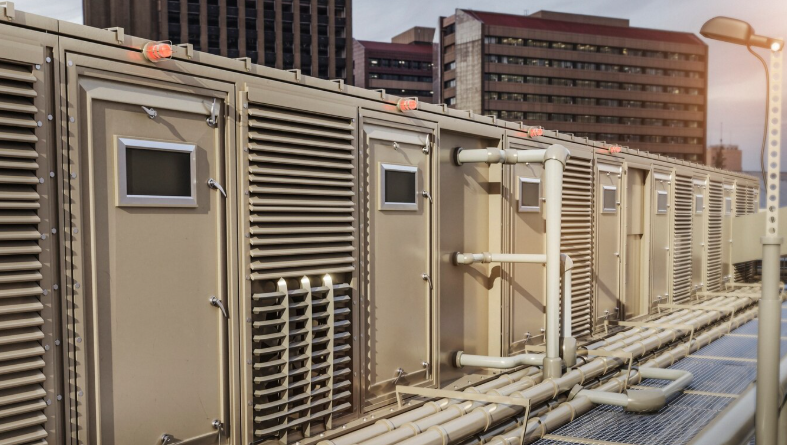
When main grid power fails in a healthcare facility, the transition to backup power must be instantaneous and flawless. Operating theaters, life-support systems, neonatology wards, and diagnostic laboratories depend entirely on the reliability of standby power systems. In the UAE's challenging climate, sourcing a high-performance backup infrastructure is not merely a technical procurement decision; it is a direct commitment to patient safety and operational resilience.
The Critical Role of Emergency Power in UAE Healthcare Facilities
Emergency power systems in UAE hospitals prevent life-support disruptions, secure climate-controlled medication storage, and keep operating rooms functional during main grid failures. Because extreme desert heat puts an immense load on municipal electrical grids, healthcare facilities require heavy-duty emergency systems designed to assume the entire facility's critical electrical load within seconds.
We have engineered and assessed power systems across the Middle East, and we know that healthcare temporary or permanent infrastructure faces unique challenges here. Ambient summer temperatures regularly cross 50°C, which rapidly degrades the efficiency of standard machinery. For a medical center, a power failure during peak summer isn't just an inconvenience; without immediate emergency ventilation and cooling, internal building temperatures can spike to dangerous levels within minutes, jeopardizing both patients and temperature-sensitive biological inventories.
Furthermore, medical facilities operate under strict regulatory frameworks. Local healthcare authorities, alongside civil defense bodies, mandate that emergency power systems activate and stabilize voltage parameters in less than ten seconds from the moment of a primary grid disconnection. Achieving this level of responsiveness demands advanced synchronization panels, robust engine governors, and an optimized electrical layout that separates vital life-safety branches from non-essential building loads.
Vital Regulatory Frameworks Governing Hospital Power in the Emirates
Hospital emergency power installations in the UAE must strictly comply with local mandates from the Ministry of Health and Prevention (MOHAP), the Dubai Health Authority (DHA), or the Department of Health (DOH), Abu Dhabi. These regulations enforce rapid start times, specific fuel storage capacities, and rigorous testing schedules to guarantee unconditional public safety.
Navigating the local compliance landscape requires an experienced engineering partner. In Dubai, the DHA and Dubai Municipality lay down rigid engineering standards for any
hospital diesel generators company in uae. These guidelines align with international code frameworks such as NFPA 110 (National Fire Protection Association standard for emergency and standby power systems). The code classifies healthcare backup installations as Class 1, Type 10 systems, meaning the machinery must automatically supply full operational power to life-safety equipment within a maximum of 10 seconds.
Physical separation of electrical distribution networks is extensive as a result of rules. The emergency distribution system must be completely independent of the normal wiring networks, using dedicated conduits, automatic transfer switches (ATS), and switchgear. Our field experience shows that regular, documented load-bank testing—where the backup units are brought up to their full operational capacity—is heavily audited by UAE Civil Defense inspectors during annual building fitness certification renewals.
Key Criteria for Selecting a Healthcare Power Infrastructure Partner
Selecting a healthcare power infrastructure partner requires evaluating their engineering expertise in medical environments, their emergency dispatch times, and their ability to provide custom acoustic and filtration systems. The right partner must demonstrate a proven track record of handling complex parallel installations and maintaining rapid field service capabilities.
Ten-Second Start and Load Acceptance
The absolute baseline for any healthcare facility is an engine-generator combination designed for immediate high-load acceptance. When searching for a specialized diesel generator manufacturer in UAE, be sure that their equipment features advanced electronic governors and large displacement blocks that can handle 100% of the emergency block load in one go without significant voltage dips or frequency fluctuations.
Proactive Field Support and Maintenance SLAs
Medical backup systems cannot wait for standard business hours when an issue arises. Top-tier providers offer binding Service Level Agreements (SLAs) featuring guaranteed one-to-two-hour on-site technician arrival times, backed by dedicated 24/7 emergency dispatch centers. These technicians must be certified to work on critical control systems and carry specialized diagnostic components directly in their service vehicles.
Advanced Sound Attenuation and Emission Controls
Hospitals are sanctuary environments where noise pollution directly affects patient recovery rates. Suppliers must deliver advanced sound-attenuated enclosures or custom plant room acoustic treatments that reduce operational noise levels to less than 65 to 70 dB(A) at a distance of one meter, while integrating specialized hospital-grade silencers to minimize exhaust rumble.
Technical Specifications for Medical-Grade Backup Generators
Medical-grade backup systems require specialized configurations, including dual-bearing alternators with permanent magnet generators (PMG), tropicalized cooling radiators rated for 55°C, and digital control systems that support remote monitoring. These systems must also feature robust dual-stage fuel filtration mechanisms to protect against condensation and airborne dust.
Core Technical Specifications for UAE Hospital Emergency Generators
|
Core Technical Parameter |
Hospital Standby Standard |
Functional Necessity for Healthcare |
|
Alternator Excitation System |
PMG (Permanent Magnet Generator) |
Delivers short-circuit clearing and isolates controls from load distortion. |
|
Governor Mechanism |
Isochronous Electronic Governor |
Maintains dead-on frequency stability, protecting sensitive medical imagery. |
|
Cooling Package |
55°C Ambient Tropical Radiator |
Counteracts extreme desert heat to prevent thermal power derating. |
|
Control Interfacing |
Dual-Redundant PLC with Modbus |
Seamless integration into modern hospital Building Management Systems (BMS). |
Eliminating Harmonics and Voltage Fluctuations
Modern medical facilities contain a large number of non-linear loads such as MRI scanners, CT machines and large digital monitoring networks. These devices send back a lot of harmonic distortion to the electrical system . Therefore, hospitals' backup units need to be equipped with large alternators with a low sub-transient reactance and digital Automatic Voltage Regulators (AVR) in order to stabilize the wave output of the power output.
Fuel Management and Redundancy
Fuel security is life security in a healthcare context. Local regulations typically require a minimum of 24 to 72 hours of continuous fuel supply stored on-site in secure, double-walled bulk tanks. The fuel delivery framework must feature automated day-tank fuel transfer systems, fitted with fuel polishing modules that continuously clean the diesel, removing water condensation and particulate matter before it ever reaches the engine injectors.
Design Engineering: Optimizing Parallel and Redundant Systems
Optimizing parallel and redundant systems involves configuring multiple generator units to run concurrently via smart digital paralleling switchgear, creating an $N+1$ or $2N$ architecture. This design strategy ensures that if one unit suffers a mechanical fault, the remaining synchronized units automatically cover the hospital's vital life-support loads.
In massive medical complexes, relying on a single large-scale power unit introduces a single point of failure. We strongly advocate for modular, paralleled configurations. For example, instead of installing one massive 3000 kVA system, a hospital might deploy three 1500 kVA units operating in an $N+1$ redundant configuration. Under normal emergency operations, two units handle the full facility load, while the third remains in live standby, ready to immediately step in if another unit trips.
Breakdown of the Setup:
-
The Main Grid feeds directly into the hospital's main distribution board.
-
Under standard operation, non-critical building loads draw power directly from this board.
-
During a power failure, the Automatic Transfer Switch (ATS) shifts immediately to isolate the critical backup emergency loop.
-
The Backup Supply features three 1500 kVA generators linked together: Generator 1 and Generator 2 actively share the primary hospital emergency load, while Generator 3 serves as a hot-standby redundant backup to guarantee zero downtime if an active unit fails.
This arrangement also allows facilities to perform routine, scheduled maintenance on individual units during off-peak hours without leaving the hospital entirely unprotected. The digital paralleling switchgear handles load sharing, automatic synchronization of voltage, phase and frequency, and selective load shedding—a process where non-essential infrastructure (like administrative area cooling) is disconnected if the system needs to prioritize critical intensive care units.
Decarbonization and the Future of Clean Healthcare Backup Power
The future of clean healthcare backup power in the UAE focuses on integrating hybrid battery arrays, adopting synthetic fuels like Hydrotreated Vegetable Oil (HVO), and exploring hydrogen fuel-cell innovations. These modern technologies allow medical facilities to drastically cut down localized emissions while fully preserving their uncompromising safety profiles.
As the UAE accelerates its national sustainability initiatives toward 2026 and beyond, healthcare institutions face the dual task of maintaining absolute reliability while reducing their carbon footprints. Traditional diesel systems are evolving to meet these expectations through compatibility with renewable fuels. Hydrotreated Vegetable Oil (HVO) is rapidly gaining ground; it functions as a direct, drop-in replacement for fossil diesel, reducing greenhouse gas emissions by up to 90% without requiring any mechanical modifications to modern engine designs.
Furthermore, forward-thinking medical campuses are implementing Battery Energy Storage Systems (BESS) alongside their traditional generation fleets. In this layout, massive lithium-ion storage arrays provide instantaneous power during the initial milliseconds of a grid failure, bridging the gap before the diesel prime movers fire up. This combination reduces the physical wear on the mechanical engines, limits heavy smoke bursts during cold starts, and opens the door for integrating on-site solar arrays into the emergency energy matrix.
Critical Commissioning Checklist for Medical Emergency Power
Successfully commissioning a medical emergency power system requires running systematic load-bank evaluations, testing step-load responses, validating automatic transfer switch transition speeds, and verifying complete integration with fire alarm systems. This structured process confirms that the installation functions perfectly as an integrated safety asset before it is cleared for active service.
1.Verify Electrical Isolation and Earthing:Phase 1: Installation Validation.
Perform comprehensive insulation resistance tests on all power cabling. Verify that the generator star point and frame are connected to an independent, low-resistance copper grounding matrix, measuring less than one ohm with a certified tester.
2.Execute Steady-State Load Bank Testing:Phase 2: Static Testing.
Connect a portable resistive-reactive load bank to the generator system. Run the unit continuously for a minimum of 4 hours at varying load steps (25%, 50%, 75%, and 100%), monitoring engine temperatures, oil pressures, and voltage stability.
3.Conduct 100% Transient Step-Load Testing:Phase 3: Dynamic Validation.
Subject the stabilized generator to a sudden 100% block-load introduction. Validate that the engine’s transient voltage drop remains within Class G3 international standards (less than 10% deviation) and recovers its baseline frequency within a few seconds.
4.Perform Live Black-Out Simulation:Phase 4: Full Facility Integration.
Disconnect the main municipal power feed to the hospital under supervised conditions. Verify that the automated switchgear senses the voltage loss, commands the engines to start, synchronizes multiple units, and transfers all critical life-safety loads within 10 seconds.
Frequently Asked Questions
What is the minimum startup time allowed for a hospital emergency generator?
According to DHA and civil defense frameworks, emergency power units backing up life-safety loads must start, stabilize, and accept full operational electrical loads in 10 seconds or less from the moment primary grid power fails.
How does the UAE's high humidity affect emergency generator operation?
High coastal humidity accelerates internal corrosion, promotes moisture accumulation in electrical control panels, and compromises fuel quality by causing condensation in bulk tanks. Medical-grade units use anti-condensation space heaters inside the alternator windings and dual-stage water-separating fuel filtration systems to prevent these issues.
Can a hospital utilize a single large backup generator for its entire facility?
While physically possible, it introduces a severe single point of failure risk. Industry best practice and modern local healthcare guidelines strongly prefer a paralleled configuration of multiple smaller units (N+1 redundancy) to guarantee continuous coverage if one unit suffers a mechanical breakdown.

 English
 Arabic
 French
 Spanish
 Portuguese
 Deutsch
 Turkish
 Dutch
Dutch
 Italiano
 Romaian
 Portuguese (Brazil)
 Greek
Greek
