


Sustainable Development Trends in Housing Projects
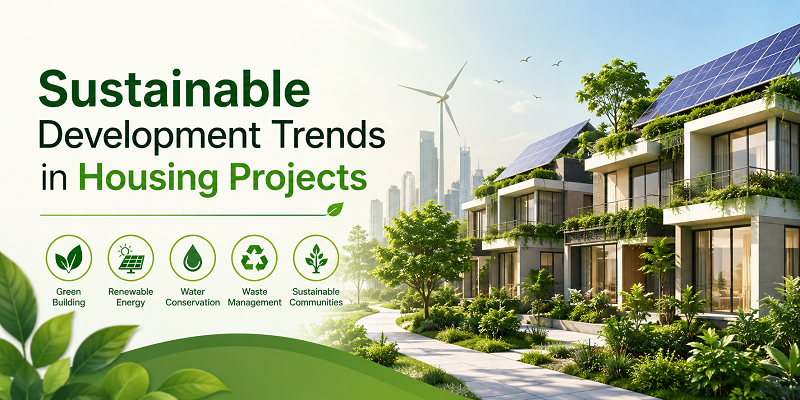
The concept of home is evolving. It is no longer just a place of shelter but an ecosystem that impacts our health, finances, and the planet. In India, where rapid urbanization is leading to a massive surge in housing construction, the conversation is shifting from simple square footage to environmental responsibility. The buildings we live in account for over one-third of global emissions, making the residential sector a critical battleground in the fight against climate change. Consequently, sustainable development is transitioning from a niche concept to a mainstream imperative in the real estate industry.
This shift is heavily influenced by the demand for high-quality, future-ready homes. For instance, the growing popularity of premium residential corridors like the Dwarka Expressway showcases how modern homebuyers are seeking a combination of luxury, connectivity, and sustainability. Modern developments are increasingly focusing on creating self-sufficient ecosystems that prioritize both environmental consciousness and a superior quality of life. Similarly, homebuyers exploring options like Tata Residential Projects are often drawn to the brand's commitment to ethical practices, timely delivery, and a strong focus on green, sustainable developments.
Today, the market is witnessing a definitive move towards construction that is resource-efficient, climate-resilient, and healthier for its inhabitants. This article explores the leading trends in sustainable housing, delving into the technologies, policies, and market dynamics that are shaping the future of where and how we live.
What Defines a Sustainable Housing Project?
A sustainable housing project goes beyond just planting a few trees. It encompasses a holistic approach to the entire lifecycle of a building—from the sourcing of raw materials to its construction, operation, and eventual end-of-life.
Key Characteristics
-
Net-Zero Carbon and Resilient Buildings (NZCRBs): These are structures that minimize energy demand, employ renewable energy, and are built or retrofitted using low-carbon or recycled materials. They are also designed to withstand climate shocks such as heatwaves, floods, and storms.
-
Resource Efficiency: This includes the use of recycled and locally sourced materials, water conservation through rainwater harvesting and wastewater treatment, and waste reduction strategies during construction.
-
Indoor Environmental Quality: Sustainable homes prioritize the health of their occupants through enhanced ventilation, the use of non-toxic materials, and maximization of natural daylight.
-
Green Certifications: Many projects seek third-party validation through certifications like IGBC (Indian Green Building Council) or LEED (Leadership in Energy and Environmental Design). These certifications provide a framework and a benchmark for sustainability and are becoming increasingly important to discerning buyers.
In emerging markets like India, the balance between "net-zero" and "resilience" is crucial. While temperate regions might focus on decarbonization, climate-vulnerable regions in India prioritize resilience features like passive cooling and flood-proofing, integrating net-zero measures incrementally.
Why Is Sustainable Housing Gaining Traction?
The momentum behind sustainable housing is driven by a convergence of factors, from government policy to changing consumer preferences.
Regulatory Push
The Indian government has been a significant catalyst. Initiatives like the Pradhan Mantri Awas Yojana (PMAY) are increasingly relying on innovative construction methods to deliver affordable housing quickly. Furthermore, policies like the Eco Niwas Samhita, India's Energy Conservation Building Code for residential buildings, set mandatory efficiency standards for building envelopes and ventilation.
Consumer Demand
Today's homebuyers are more informed and environmentally conscious. A home is not just an asset; it's a lifestyle statement. Buyers are willing to pay a premium for energy-efficient homes that promise lower utility bills and a healthier living environment. This is particularly evident in premium segments, where features like solar panels, green landscaping, and high-quality insulation are fast becoming non-negotiable standards.
Economic Viability
While the upfront cost of sustainable technology has been a barrier, the long-term economic benefits are undeniable. Lower energy and water bills offer significant savings over the life of the home. Additionally, green-certified buildings often command higher resale values and attract better financing options.
Key Sustainable Development Trends in Housing
The Indian real estate sector is undergoing a significant transformation, adopting global best practices and local innovations. Below is a comparison of key trends shaping the sustainable housing market.
|
Trend |
Description |
Key Benefit |
Example/Relevance |
|
Net-Zero and Resilient Buildings |
Buildings that produce as much energy as they consume and are designed to withstand climate risks. |
Low operating costs, climate security, reduced carbon footprint. |
Focus on passive cooling in India to combat heatwaves. |
|
Prefabricated & Modular Construction |
Components are manufactured off-site in a controlled environment and assembled on-site. |
Rapid construction (e.g., 96 apartments in 96 days), reduced waste, improved quality control. |
Used in projects under PMAY and for high-end luxury towers. |
|
Green Building Certifications |
Third-party validation of a building's environmental performance. |
Transparency, quality assurance, higher marketability, investor confidence. |
IGBC certification for large townships like Tata New Haven. |
|
Integrated Townships |
Self-contained, master-planned communities that mix residential, commercial, and recreational spaces. |
Reduced commutes, better quality of life, efficient resource management. |
Tata Housing's Carnatica in Bengaluru spans 135 acres. |
|
Focus on Location & Connectivity |
Development along major infrastructure corridors like the Dwarka Expressway. |
Reduced travel time and carbon footprint, high investment potential. |
Proximity to IGI Airport, metro links, and corporate hubs. |
1. The Rise of Integrated Townships
There is a clear trend towards large, self-sufficient townships. These projects offer a mix of housing options, commercial spaces, schools, and recreational areas, creating a vibrant community. This model not only enhances the quality of life but also promotes sustainability by reducing the need for long commutes.
A prime example is Tata Housing's Carnatica in North Bengaluru. This 135-acre integrated township has seen phenomenal success, with its Varnam Phase I crossing ₹1,000 crore in sales within just two months of its launch. This success demonstrates a strong market appetite for well-planned, lifestyle-centric developments outside city centers that are easily accessible.
2. Focus on Premium Corridors: Dwarka Expressway
Location plays a pivotal role in sustainable urban planning. The Dwarka Expressway in Gurugram is a prime example of a corridor that is redefining luxury and sustainable living. With its 16-lane signal-free corridor, improved connectivity to the IGI Airport, and upcoming metro links, it has become a hotspot for development. Property prices on the corridor surged by 58% year-on-year, reflecting its immense potential.
This growth is fueled by the development of luxury projects like Luxury Homes in Dwarka Expressway, where developers are integrating green spaces, energy-efficient designs, and wellness amenities to appeal to discerning buyers. The area's master plan emphasizes Transit-Oriented Development (TOD), which incentivizes vertical, high-density living to create more efficient and sustainable urban environments.
3. Innovation in Construction Technology: Prefabrication
To meet India's massive housing demand, the construction industry is turning to innovative methods like prefabrication. Currently accounting for only 1-2% of the market, the prefabricated market is projected to grow from $2.7 billion to **$5.47 billion by 2030**. This method involves manufacturing building components off-site and assembling them on-site, which significantly speeds up construction and reduces waste.
Large developers are leveraging this technology. For instance, Experion Developers has awarded an ₹800 crore contract to TATA Projects for its upcoming luxury project, 'The Trillion' in Sector 48, Gurugram. TATA Projects' expertise in executing large-scale, sustainable projects makes them a key partner in delivering quality developments that meet modern standards of efficiency and design.
4. Green Certifications as a Standard
Green certifications like IGBC and LEED are no longer just differentiators; they are becoming a hygiene factor for quality housing. These certifications ensure that the project adheres to strict environmental guidelines. For instance, Tata Housing's New Haven project in Bahadurgarh is IGBC Silver Pre-certified. The project's success, with over 450 units sold in Phase 1C within a month, highlights how buyers associate certification with quality, trust, and a future-proof investment.
Benefits of Choosing a Sustainable Home
For homebuyers, the decision to invest in a sustainable home comes with a host of tangible and intangible benefits.
-
Lower Operating Costs: Energy-efficient appliances, solar panels, and water-saving fixtures significantly reduce monthly utility bills. This is a major draw for both homeowners and investors.
-
Healthier Living Environment: Sustainable homes are built with non-toxic materials and designed to maximize natural light and ventilation, improving indoor air quality and overall well-being.
-
Higher Resale Value: As demand for green homes increases, these properties command a premium in the secondary market, ensuring better long-term returns.
-
Climate Resilience: Features like durable construction, passive cooling, and rainwater harvesting protect the home and its occupants from the impacts of extreme weather, offering peace of mind.
-
Peace of Mind: Buying a home from a reputable developer known for quality, such as those behind Tata Housing projects, ensures ethical practices, timely delivery, and a product that is built to last.
Challenges and Considerations
Despite the clear benefits, the path to widespread sustainable housing is not without its hurdles.
-
High Upfront Costs: The initial investment for advanced green technologies can be a barrier for developers and buyers, especially in the affordable housing segment.
-
Split-Incentive Challenge: In rental markets, landlords are often reluctant to invest in energy-efficient upgrades because the financial benefits (lower bills) accrue to the tenants.
-
Lack of Technical Capacity: There is a shortage of skilled labor and expertise in implementing green building techniques and managing complex technologies.
-
Regulatory Fragmentation: While policies exist, their enforcement can be inconsistent. Navigating different regulations across states and cities can be a challenge for developers.
-
Misconceptions and Trust: Some buyers still have doubts about the durability and aesthetics of new construction technologies like prefabrication.
The Future of Sustainable Housing
Looking ahead, the future of housing is undeniably green. The industry is moving towards a model where sustainability is integrated from the very first sketch. The use of AI and machine learning in PropTech will enable smarter energy management and predictive maintenance in homes. Furthermore, the expansion of the Smart Cities Mission will bring modern infrastructure and sustainable practices to Tier 2 and 3 cities, democratizing access to quality green housing.
As urban populations continue to grow, the need for resilient, low-carbon, and affordable housing will intensify. This will require a collaborative effort between developers, governments, and financial institutions to innovate business models, design inclusive policies, and create financing mechanisms that make sustainability accessible to all.
Frequently Asked Questions (FAQs)
1. What exactly is sustainable housing?
Sustainable housing refers to the practice of designing, constructing, and operating homes in an environmentally responsible and resource-efficient manner. This includes reducing energy and water use, using sustainable materials, and creating healthier indoor environments.
2. Are sustainable homes more expensive?
While the upfront cost can be higher, the long-term savings on utility bills and potential tax incentives often offset the initial investment. Moreover, the value of the property tends to appreciate faster.
3. What are the most important green certifications to look for in India?
The most recognized certifications are the Indian Green Building Council (IGBC) and Leadership in Energy and Environmental Design (LEED). They provide a reliable measure of a project's sustainability.
4. How does prefabricated construction contribute to sustainability?
Prefabrication reduces construction waste, lowers the carbon footprint of the building process, and improves energy efficiency through better quality control. It also significantly speeds up project timelines.
5. Is it easier to build a sustainable home in a new project or as a retrofit?
New construction is generally easier and more cost-effective for incorporating sustainable features from the ground up. However, retrofits, such as installing solar panels or better insulation, can also significantly improve a home's efficiency.
6. What is the significance of the Dwarka Expressway for real estate?
The Dwarka Expressway is a key infrastructure corridor that connects Gurugram to Delhi, significantly improving accessibility. It has become a prime location for luxury housing, with strong demand and high capital appreciation.
7. How can I ensure my home is resilient to climate change?
Look for features like passive cooling designs, high-quality insulation, rainwater harvesting systems, durable building materials, and elevated landscaping to protect against flooding and heatwaves.
8. Are there government schemes that support sustainable housing?
Yes, the Indian government's Pradhan Mantri Awas Yojana (PMAY) promotes the use of sustainable technologies in affordable housing. Various states also offer incentives for green buildings.
9. What does "Net-Zero Carbon" mean for a home?
A net-zero carbon home is one where the total amount of energy used by the building on an annual basis is roughly equal to the amount of renewable energy created on the site, or it is offset through carbon credits.
10. Why should I trust Tata Housing projects?
Tata Housing is a subsidiary of the Tata Group, known for its ethical practices and commitment to quality. They are pioneers in sustainable development, with a strong portfolio of IGBC-certified projects delivered on time, making them a trusted name in the industry.
Conclusion
Sustainable development in housing is no longer a fringe concept. It is the new benchmark for quality, intelligence, and responsibility in the real estate sector. From the integration of smart technologies and green building materials to the rise of integrated townships and strategic infrastructure corridors like the Dwarka Expressway, the industry is building for a future that is resilient, efficient, and livable.
For homebuyers, this represents a fantastic opportunity to invest in homes that are not only financially sound but also healthier and kinder to the planet. By choosing developments with a clear focus on sustainability, you are investing in a lifestyle that is future-proof and aligned with the needs of a changing world. Whether it's the enhanced quality of life in a green township or the peace of mind that comes with a trusted developer, the value proposition of sustainable homes is clear and compelling.

 English
 Arabic
 French
 Spanish
 Portuguese
 Deutsch
 Turkish
 Dutch
Dutch
 Russian
 Romaian
 Portuguese (Brazil)
 Greek
Greek
