


SME to Mainboard Migration in India (2026)
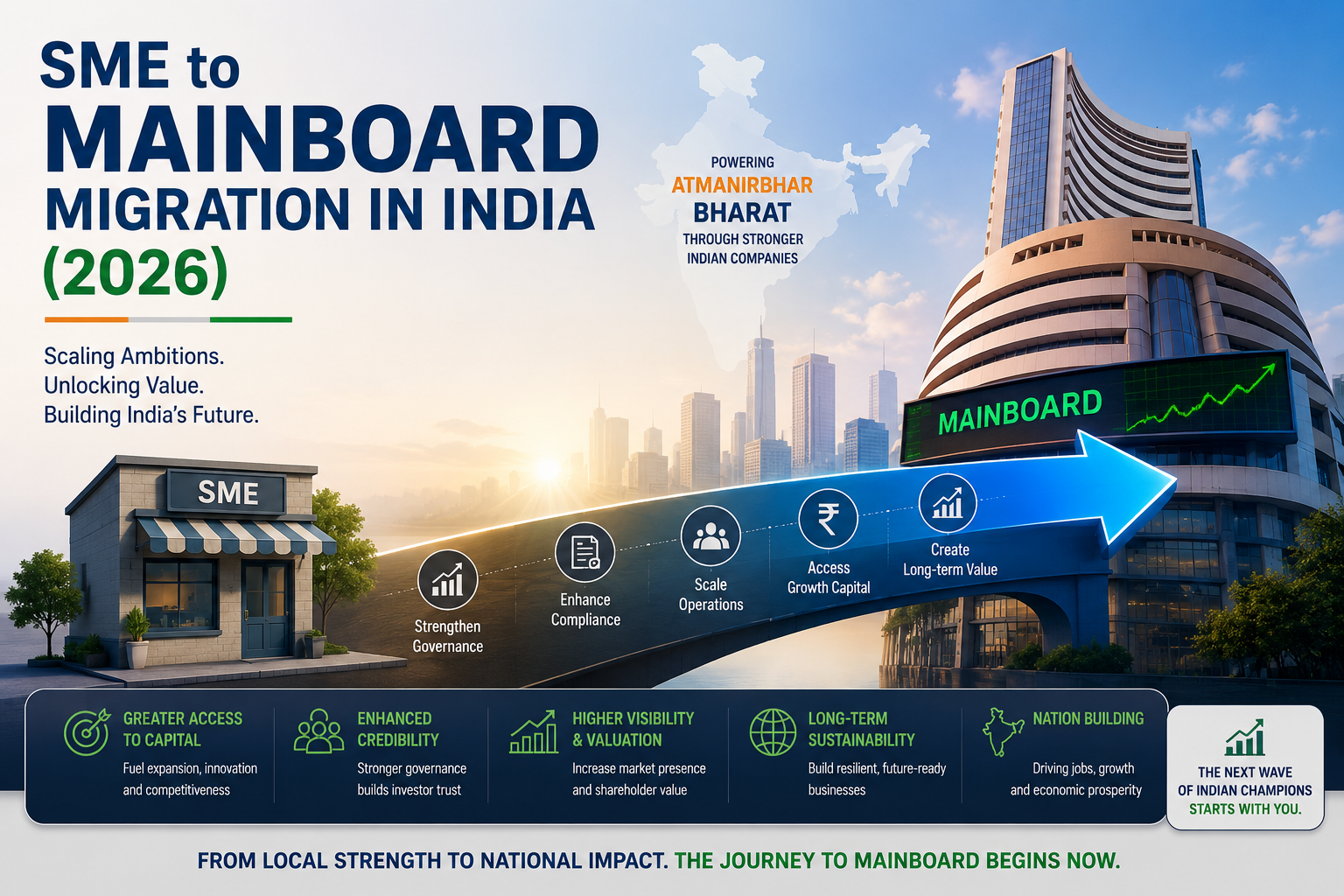
SME to Mainboard Migration in India (2026): Complete Guide, Eligibility, Process & Benefits
As India's capital markets continue to evolve, many successful small and medium enterprises (SMEs) are choosing to migrate from SME stock exchanges to the mainboard. This transition represents more than just a change in listing platform—it signifies business growth, stronger investor confidence, enhanced corporate governance, and greater access to capital.
SME to Mainboard Migration is becoming increasingly popular among companies that have achieved consistent financial performance and wish to attract institutional investors, improve liquidity, and strengthen their market reputation.
In this comprehensive guide, you'll learn everything about the SME to Mainboard Migration process, eligibility requirements, regulatory framework, benefits, challenges, and how professional IPO consultants can simplify the entire journey.
What is SME to Mainboard Migration?
SME to Mainboard Migration is the process through which a company listed on an SME exchange moves its existing shares to the mainboard of recognized stock exchanges such as NSE or BSE after meeting prescribed eligibility criteria.
Unlike a fresh Initial Public Offering (IPO), migration generally allows existing listed shares to be traded on the mainboard, subject to regulatory approvals and exchange requirements.
The migration reflects that the company has matured financially and operationally, making it suitable for participation in the broader capital market.
Why Companies Choose Mainboard Migration
Growing businesses often outgrow the SME platform. As companies expand, they require larger funding opportunities and greater visibility among institutional investors.
Some major reasons include:
- Higher liquidity for shareholders
- Better corporate image
- Increased investor participation
- Easier access to future fundraising
- Enhanced credibility
- Wider analyst coverage
- Greater market capitalization potential
- Improved valuation opportunities
Migration often acts as a milestone that demonstrates a company's successful growth journey.
Eligibility Criteria for SME to Mainboard Migration
Although requirements may vary slightly depending on the exchange, companies generally need to satisfy several important conditions.
1. Minimum Listing Period
The company should generally remain listed on the SME platform for the prescribed period before becoming eligible for migration.
2. Paid-Up Capital Requirements
The company should meet the minimum paid-up equity capital prescribed by the stock exchange.
3. Shareholder Approval
Migration requires approval from shareholders through a special resolution.
4. Corporate Governance Compliance
The company must comply with all applicable SEBI regulations and stock exchange governance norms.
5. Financial Performance
Strong financial statements, profitability, revenue growth, and compliance history significantly strengthen the migration application.
6. Regulatory Compliance
The company should have:
- No major regulatory violations
- Timely financial disclosures
- Proper corporate governance practices
- Regular compliance filings
SME to Mainboard Migration Process
The migration process typically involves multiple stages.
Step 1: Internal Assessment
Management evaluates whether the company satisfies all migration requirements.
Step 2: Board Approval
The Board of Directors approves the migration proposal.
Step 3: Shareholder Approval
A special resolution is passed by shareholders.
Step 4: Due Diligence
Legal, financial, compliance, and secretarial due diligence is conducted.
Step 5: Documentation
Necessary documents are prepared and submitted to the stock exchange.
Step 6: Exchange Review
The exchange reviews eligibility, compliance history, disclosures, and supporting documents.
Step 7: Regulatory Approval
After successful verification, migration approval is granted.
Step 8: Mainboard Listing
The company's shares begin trading on the mainboard platform.
Benefits of SME to Mainboard Migration
Improved Liquidity
Mainboard stocks generally experience higher trading volumes, making it easier for investors to buy and sell shares.
Institutional Investment
Mutual funds, insurance companies, pension funds, and foreign institutional investors often prefer investing in mainboard-listed companies.
Better Brand Recognition
A mainboard listing enhances credibility among customers, vendors, banks, and investors.
Easier Fundraising
Companies can raise larger amounts through:
- Qualified Institutional Placements (QIPs)
- Follow-on Public Offers (FPOs)
- Rights Issues
- Preferential Issues
Increased Market Visibility
Mainboard companies receive greater media coverage and analyst attention.
Higher Corporate Reputation
Migration demonstrates financial discipline and operational maturity.
Challenges During Migration
Although migration offers numerous advantages, companies may face several challenges.
Increased Compliance
Mainboard companies must comply with stricter governance standards.
Higher Costs
Compliance, auditing, legal, and investor relations expenses generally increase.
Greater Market Scrutiny
Institutional investors closely monitor financial performance.
Continuous Disclosure Requirements
Companies must maintain timely disclosures and transparency.
Proper planning helps overcome these challenges effectively.
Documents Required
Typical documents include:
- Board Resolution
- Shareholder Resolution
- Financial Statements
- Secretarial Compliance Reports
- Corporate Governance Reports
- Shareholding Pattern
- Compliance Certificates
- Stock Exchange Applications
- Due Diligence Reports
SEBI Regulations
Migration is governed by various SEBI regulations, stock exchange circulars, and listing obligations.
Companies should ensure compliance with:
- SEBI Listing Obligations and Disclosure Requirements (LODR)
- Applicable stock exchange migration norms
- Corporate governance provisions
- Disclosure requirements
- Investor protection regulations
Professional legal and IPO advisors play an important role in maintaining regulatory compliance throughout the migration process.
Timeline for SME to Mainboard Migration
The timeline depends on documentation quality, regulatory approvals, and company preparedness.
A well-prepared migration may typically take several months from planning to final approval.
Early compliance planning can significantly reduce delays.
Common Reasons for Migration Delays
Some common issues include:
- Incomplete documentation
- Corporate governance deficiencies
- Delayed shareholder approvals
- Regulatory observations
- Financial disclosure inconsistencies
- Secretarial compliance issues
Proper planning helps minimize these risks.
Best Practices Before Migration
Companies should:
- Strengthen internal governance
- Maintain transparent disclosures
- Improve financial reporting systems
- Conduct internal compliance audits
- Resolve pending regulatory matters
- Maintain healthy investor communication
- Build experienced management teams
These measures improve the likelihood of successful migration.
Why Professional IPO Consultants Matter
Migration involves legal, regulatory, financial, and compliance complexities.
Professional IPO consultants assist companies by:
- Evaluating eligibility
- Managing documentation
- Coordinating with legal experts
- Handling exchange communications
- Preparing compliance reports
- Supporting investor readiness
- Ensuring regulatory compliance
Experienced advisors help businesses navigate the migration process efficiently while reducing execution risks.
How India IPO Supports Businesses
Planning an SME to Mainboard Migration requires strategic preparation, regulatory expertise, and meticulous documentation. India IPO supports businesses throughout this journey by offering end-to-end IPO advisory and migration assistance.
From assessing eligibility and preparing documentation to coordinating with legal professionals and ensuring compliance with applicable regulations, our experienced team helps companies move confidently toward a successful mainboard listing.
Whether you are considering migration or preparing for long-term capital market growth, India IPO provides practical guidance tailored to your business objectives.
Frequently Asked Questions (FAQs)
Is SME to Mainboard Migration a new IPO?
No. Migration generally involves transferring an already listed company's shares from the SME platform to the mainboard after fulfilling prescribed eligibility requirements.
Can every SME-listed company migrate?
No. Companies must satisfy the eligibility conditions laid down by the relevant stock exchange and comply with applicable regulatory requirements.
What are the biggest advantages of migration?
The key benefits include better liquidity, improved visibility, access to institutional investors, stronger corporate reputation, and enhanced fundraising opportunities.
Does migration increase compliance obligations?
Yes. Mainboard-listed companies are generally subject to more comprehensive governance, disclosure, and compliance requirements than SME-listed companies.
Why should businesses seek professional advisory support?
Professional advisors help manage documentation, regulatory compliance, due diligence, exchange coordination, and overall execution, reducing delays and improving the likelihood of a successful migration.
Conclusion
SME to Mainboard Migration marks a significant milestone in a company's growth journey. It reflects operational maturity, stronger governance, and readiness to participate in India's broader capital markets.
While the process requires careful planning, regulatory compliance, and detailed documentation, the long-term advantages—including greater liquidity, enhanced credibility, wider investor participation, and improved fundraising opportunities—can substantially support a company's future expansion.
Businesses planning this transition should begin preparations early, maintain strong compliance standards, and work with experienced advisors to ensure a smooth and successful migration.
If your organization is considering an SME to Mainboard Migration, India IPO is committed to helping you navigate every stage of the process with professional guidance, regulatory expertise, and a focus on long-term value creation.

 English
 Arabic
 French
 Spanish
 Portuguese
 Deutsch
 Turkish
 Dutch
Dutch
 Italiano
 Russian
 Portuguese (Brazil)
 Greek
Greek
