


Cutting Through Pakistan's Light-Polluted Skies With the Right Filter
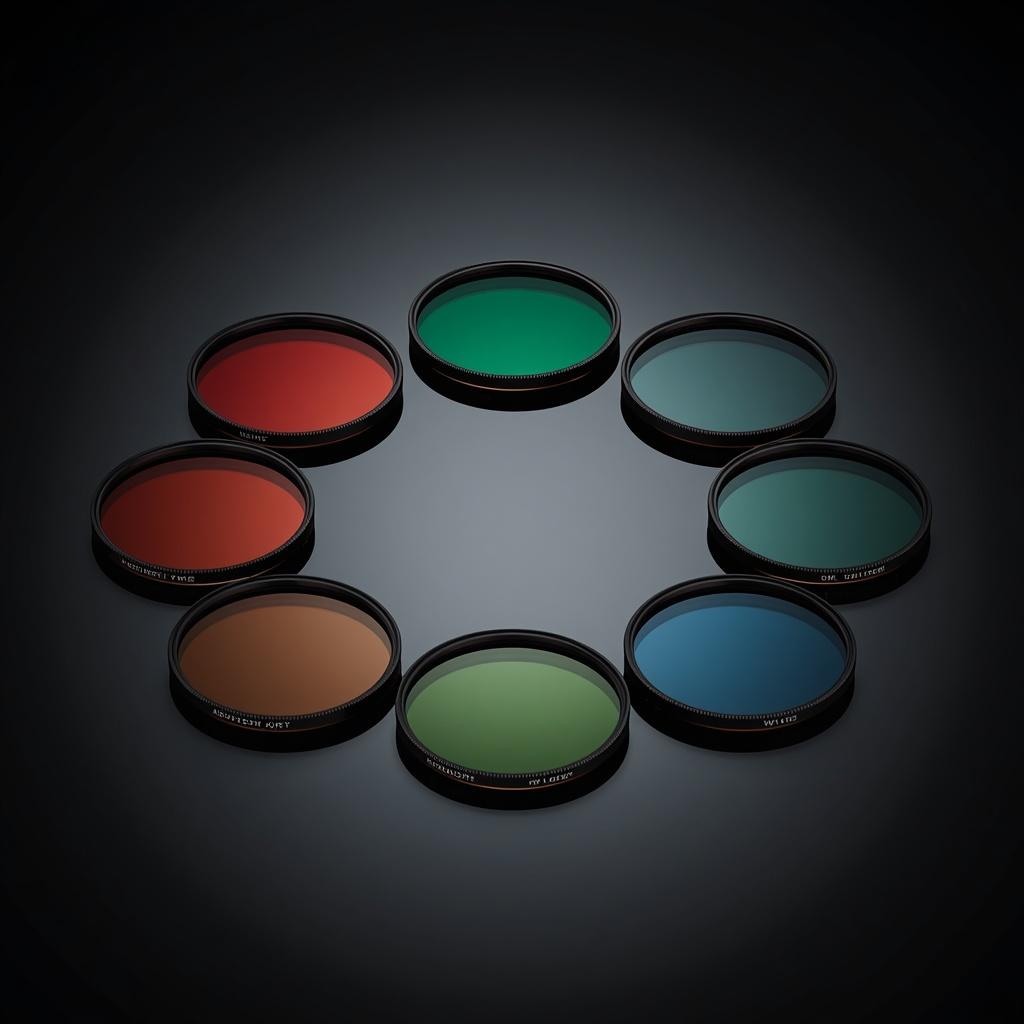
If you've ever set up a telescope on a rooftop in Lahore or Karachi and watched a nebula you were excited to photograph disappear into a washed-out orange glow, you already understand the single biggest obstacle facing urban astrophotographers here. Light pollution doesn't care how good your telescope or camera is — it drowns out the faint signal you're trying to capture before it even reaches your sensor. This is the exact problem Optolong filters were engineered to solve, and Sky Deep now stocks the full range in Pakistan through a sourcing arrangement that actually protects buyers.
Before getting into which filter suits which situation, it's worth explaining why that sourcing detail isn't just a footnote.
The Counterfeit Filter Problem Nobody Warns You About
Astronomy filters are deceptively easy to fake. A poorly coated imitation can look nearly identical to the real thing in a product photo, yet perform nowhere near as well once you're actually integrating it into an imaging train — introducing halos around bright stars, uneven transmission, or coatings that degrade within months. Buyers in Pakistan have historically had almost no way to verify what they were actually receiving.
Sky Deep closes that gap by being the only authorized dealer of Optolong for this collection in the entire country. Nothing sold here is an unofficial Chinese-market substitute manufactured to imitate the brand; it's genuine Optolong glass, and it comes backed by real warranty coverage rather than a seller's word.
Understanding the Two Big Categories of Filters Here
Before choosing a specific filter, it helps to understand the two broad jobs these products do.
Broadband and Light-Pollution Filters for General Imaging
These filters block specific wavelengths associated with artificial lighting while letting most of the visible spectrum through, making them useful across a wide range of targets rather than one specific type of object. The Optolong L-Pro 2" Mounted Filter and its clip-in counterpart, the Optolong L-Pro Sony-FF Clip-In Filter, are popular starting points for imagers shooting from within city limits who still want reasonably natural star colors. The Optolong CLS 2" Mounted Filter serves a similar purpose and has been a long-standing favorite for suppressing sodium and mercury vapor glow specifically.
Dual-Band Filters for Serious Nebula Imaging
Dual-band filters isolate two very narrow wavelength bands, typically hydrogen-alpha and oxygen-III, which is exactly where most emission nebulae glow brightest. The Optolong L-eNhance Light Pollution Dual-Bandpass 2" Imaging Filter and its DSLR-friendly version, the Optolong L-eNhance Light Pollution Dual-Bandpass Imaging Clip Filter for Canon EOS APS-C, are excellent middle-ground choices for imagers stepping up from broadband filtering.
For tighter isolation and noticeably darker skies in your final image, the Optolong L-eXtreme line sits above L-eNhance, while the Optolong L-Ultimate 1.25" Light Pollution Dual Band Filter and Optolong L-Ultimate 2" Light Pollution Dual Band Filter push narrowband performance even further, making them a strong pick for the most light-polluted locations. The Optolong L-Para 2" Dual Band Filter rounds out this category with a slightly different bandpass profile suited to certain camera sensors.
Going Fully Narrowband: Hydrogen, Oxygen, and Sulfur
For imagers chasing the deepest possible contrast on specific nebula structures, single-line narrowband filters are the standard tool. Optolong's hydrogen-alpha options include the tightly isolated Optolong H-Alpha 3nm CCD 2" Filter alongside the more forgiving Optolong H-Alpha 7nm CCD 1.25" Mounted Filter and Optolong H-Alpha 7nm CCD 2" Mounted Filter.
On the oxygen-III side, the Optolong OIII CCD 3nm 2" Mounted Filter offers the tightest bandpass, while the Optolong OIII CCD 6.5nm 1.25" Mounted Filter and Optolong OIII CCD 6.5nm 2" Mounted Filter trade some isolation for more signal throughput. Sulfur-II imagers have a matching set in the Optolong SII 3nm CCD 2" Filter, Optolong SII CCD 6.5nm 1.25" Mounted Filter, and Optolong SII CCD 6.5nm 2" Mounted Filter, which together form the classic combination used to build Hubble-palette composite images.
For anyone who wants all three narrowband channels without buying them separately, the Optolong 3nm SHO 2" Mounted Filter Kit bundles tightly isolated H-Alpha, OIII, and SII filters together, while the more budget-conscious Optolong 1.25" Filter Set with H-Alpha, SII, and OIII Filters and Optolong 2" Filter Set with H-Alpha, SII, and OIII Filters offer the same three-channel approach at wider bandpasses.
Filter Sets for Full-Spectrum Imaging
If your imaging plans go beyond narrowband and include full-color LRGB work as well, Optolong's combination sets save you from piecing together individual purchases. The Optolong 1.25" Filter Set with LRGB, H-Alpha, SII, and OIII Filters and the larger Optolong 2" Filter Set with LRGB, H-Alpha, SII, and OIII Filters cover both worlds in one purchase, while the standalone Optolong LRGB CCD 1.25" Mounted Filter Set is a solid option for imagers who already own their narrowband filters and just need the color channels.
Filters for Visual Use and Sensor Protection
Not every filter in this lineup is built for long-exposure imaging. The Optolong UHC 1.25" Mounted Filter and Optolong UHC 2" Mounted Filter improve visual contrast on nebulae directly through an eyepiece, which is a genuinely underrated upgrade for observers who haven't tried one yet. On the technical side, the Optolong UV-IR Cut 1.25" Mounted Filter and Optolong UV-IR Cut 2" Mounted Filter block wavelengths that would otherwise cause focus shift and color fringing in color CMOS cameras, and they're worth having in almost any imaging kit regardless of target.
Choosing the Right Filter Isn't Guesswork
With 27 filters spanning broadband, dual-band, and single-line narrowband options, it's easy to end up buying the wrong bandpass for your camera or your local sky conditions. A monochrome camera user has very different filter needs than someone shooting with a one-shot color CMOS sensor, and a filter tuned for the darkest skies isn't always the best pick for a heavily light-polluted rooftop.
Get the Right Filter the First Time
Rather than guessing which bandpass, size, or filter type fits your camera and your local sky, reach out to Sky Deep's team directly and describe your setup. A short conversation about your camera type, telescope, and typical imaging location can steer you toward the exact filter that will actually make a visible difference in your next set of subs.
Frequently Asked Questions
Are Optolong filters sold by Sky Deep genuine or unofficial imports?
They're genuine. Sky Deep is the only authorized Optolong dealer for this collection in Pakistan and does not sell unofficial Chinese-market substitutes.
What's the difference between a dual-band and a narrowband filter?
Dual-band filters isolate two wavelengths, usually H-Alpha and OIII, for general nebula imaging, while single-line narrowband filters isolate just one wavelength for maximum contrast on specific structures.
Which Optolong filter works best for imaging from a light-polluted city?
Dual-band options like L-eNhance or L-Ultimate typically perform better in heavily light-polluted areas than broadband filters, since they block more artificial light while preserving nebula signal.
Do I need a 1.25-inch or 2-inch filter for my setup?
It depends on your imaging train's fully illuminated field; wide-field setups with larger sensors generally need 2-inch filters to avoid vignetting, while smaller sensors are usually fine with 1.25-inch.
Does Sky Deep provide warranty coverage on Optolong filters?
Yes, every Optolong filter purchased through Sky Deep comes with proper warranty backing, which isn't something typically available through unauthorized resellers.
For related gear, you can also browse Sky Deep's narrowband filters and clip-in filters collections.

 English
 Arabic
 Spanish
 Portuguese
 Deutsch
 Turkish
 Dutch
Dutch
 Italiano
 Russian
 Romaian
 Portuguese (Brazil)
 Greek
Greek
