


The Environmental Case for Professional Demolition Over DIY Teardowns in East Tennessee
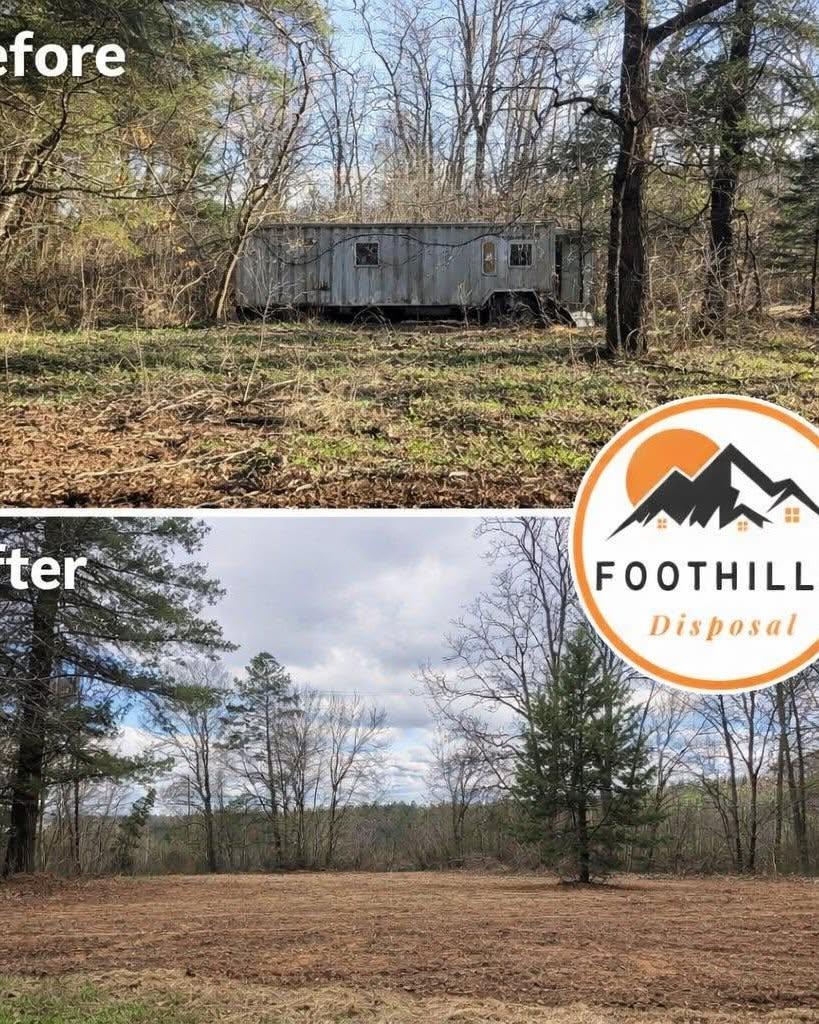
The environmental impact of building demolition is not a topic that appears frequently in mainstream Tennessee property discussions. The conversation tends to focus on cost, timing, permits, and logistics — the practical dimensions of a project that most property owners experience once or twice in a lifetime. But the environmental dimension of how a structure is torn down, what happens to the resulting material, and how the site is left afterward is genuinely significant and deserves more consideration than it typically receives.
The United States generates approximately 600 million tons of construction and demolition debris annually — more than twice the volume of municipal solid waste generated by the entire residential and commercial sector combined. In Tennessee, construction and demolition waste represents a significant and growing component of the total waste stream processed by the state's licensed facilities. Much of that material — structural lumber, steel framing, copper wiring, aluminum components, concrete, and masonry — could be diverted from the landfill entirely through sorting and recycling. Whether it is depends almost entirely on how the demolition is managed and by whom it is executed.
This article makes the environmental case for choosing professional demolition over DIY teardowns in East Tennessee, examining specifically what professional crews do differently, what materials can be diverted from landfill in a typical Tennessee demolition project, and what the community-level environmental impact is when property owners make responsible demolition choices.
What Happens to Demolition Debris in East Tennessee
When a structure is demolished in Tennessee, the resulting debris follows one of two paths: it goes to a licensed solid waste facility, or it gets sorted for recycling and reuse — with only what remains after sorting going to the landfill. The amount that ends up sorted and recycled versus landfilled depends on a combination of contractor practice, project economics, and the property owner's stated priorities.
A standard construction and demolition landfill in East Tennessee accepts mixed debris — wood, drywall, concrete, insulation, metal, and general building material commingled — and charges tipping fees based on weight. The mixed load goes into the landfill cell, and its individual components — steel that could be recycled, lumber that might be reusable, concrete that could be crushed for road base aggregate — are permanently lost. This is the default outcome when a demolition is executed purely for speed and convenience without any sorting protocol built into the project scope.
A professionally managed demolition with a recycling protocol separates material categories on site: steel and ferrous metal goes to a scrap recycler; copper and other non-ferrous metals are separated for their higher recycling value; clean dimensional lumber is separated for potential reuse or biomass processing; concrete and masonry are separated for aggregate crushing; drywall is separated for gypsum recycling where facility capacity exists. Only genuinely mixed, unseparable, or truly hazardous material reaches the landfill — and that volume can be fifty to seventy percent lower than an unsorted mixed load from the same project scope.
The Hazardous Material Dimension: Where Environmental Risk Is Concentrated
Beyond the recyclable fraction, the most environmentally significant dimension of demolition in East Tennessee is the handling of hazardous materials. Older structures — particularly manufactured homes and commercial buildings constructed before 1980 — commonly contain materials whose environmental risk upon demolition is not obvious to the untrained observer but is well-documented in environmental science and public health literature.
Asbestos-containing materials were used extensively in floor tiles, ceiling materials, pipe insulation, exterior siding, roofing compounds, and joint compounds throughout American residential and commercial construction until the late 1970s. When these materials are disturbed during demolition — particularly in a DIY teardown where the operator may not recognize what they are handling — asbestos fibers are released into the air and can be inhaled by workers, neighbors, and anyone in proximity to the site. The regulatory requirement for asbestos survey and abatement before demolition of pre-1980 structures exists precisely because uncontrolled asbestos release during demolition is a documented and preventable public health hazard.
Lead paint is present in virtually every structure built before 1978. Lead paint that is intact and undisturbed poses minimal risk in normal occupancy conditions. Lead paint dust and debris generated by demolition activities — the cutting, breaking, and grinding of painted surfaces — is a significant exposure pathway for workers and nearby residents, particularly children for whom even low-level lead exposure has documented developmental consequences. Professional demolition crews follow EPA Lead Renovation, Repair, and Painting protocols that minimize the spread of lead-contaminated dust during and after work.
Refrigerants in old appliances, PCBs in older electrical equipment, mercury in fluorescent lights and older thermostats, and petroleum products in underground storage tanks associated with agricultural properties all represent regulated hazardous materials requiring specific handling that cannot legally be released to the environment. DIY demolitions not preceded by a hazardous material survey and not managed by crews familiar with regulated material identification routinely result in unintentional release of these substances — into soil, into drainage pathways, and into the air — without the property owner being aware it has happened until a problem surfaces years later.
Why Professional Crews Make a Measurable Environmental Difference
The environmental gap between professionally managed demolition and DIY teardown is not primarily a matter of equipment or physical capacity. It is a matter of knowledge, documented process, and professional accountability. Experienced crews bring all three in combination.

Knowledge: an experienced East Tennessee demolition crew recognizes asbestos-suspect materials on sight, knows which appliances contain regulated refrigerants, identifies paint vintages that suggest lead content, and recognizes site features — old concrete pads, vent pipes, surface disturbances — that may indicate buried tanks or previous contamination requiring investigation before work continues.
Process: professional demolition operations follow documented protocols for material sorting, hazardous material identification, regulated waste handling, and recycling stream separation. These protocols have been developed through accumulated project experience and reinforced by regulatory compliance requirements that apply to licensed contractors. Working with full-service demolition and site clearance companies in the Knoxville area that document their waste handling and recycling practices gives property owners confidence that the environmental dimension of their project is being managed by people who have done it correctly many times before — not by someone learning the right way through trial and error on your property.
Accountability: licensed demolition contractors in Tennessee operate under state contractor licensing requirements that include liability for improper waste disposal. A licensed contractor who directs demolition waste to an unregulated dump site or allows hazardous material release on a job site faces professional consequences including license revocation and civil liability. This institutional accountability gives contractors a strong incentive to follow environmental protocols that a DIY operator — with the same regulatory exposure but without the professional consequences — may not have.
The Recycling Value Proposition for Property Owners
Beyond the environmental protection argument, there is a financial argument for recycling-oriented demolition that matters directly to the property owner's bottom line: recycling revenue can meaningfully offset demolition cost. In East Tennessee's current market, scrap steel is purchased by the ton at licensed scrap yards; copper and aluminum command significantly higher per-pound prices; and salvageable structural lumber from pre-1950 buildings carries genuine market value to reclaimed material dealers who sell to a national premium market.
A professionally managed demolition that separates and recycles materials captures this value in two ways: by selling recyclable materials directly, generating revenue credited against the project invoice; and by reducing the volume of material incurring landfill tipping fees, reducing the disposal cost component of the project. Both effects reduce the gross cost of the demolition. A manufactured home demolition generating three tons of recyclable steel, significant copper from wiring and plumbing, and aluminum from exterior trim and fixtures might generate $400 to $800 in recycling revenue — while simultaneously reducing the landfill disposal volume and its associated tipping cost.
For property owners who prioritize environmental responsibility and want to ensure their demolition project maximizes recycling, communicating this priority explicitly during contractor selection and getting specific commitment to a recycling protocol in the written contract is the most direct way to ensure it actually happens. Contractors who cannot specify how they handle material separation and recycling on a demolition project have not developed the process — and will not implement it on your project regardless of what they agree to in a general conversation about their approach.
Site Restoration: The Environmental Step Most Often Overlooked
After demolition is complete and debris is removed, site restoration is the final environmental responsibility of the project — and the one most frequently underplanned. A cleared demolition site in East Tennessee — with disturbed soil, removed foundation elements, and potentially altered drainage patterns — is vulnerable to erosion that can carry soil, sediment, and any remaining surface contaminants into drainage pathways and eventually into East Tennessee's river and creek systems.
Tennessee's stormwater management regulations require that sites disturbed by construction or demolition activities implement erosion control measures within specified timeframes after disturbance completion. For large commercial projects, these requirements are formalized through Tennessee's Construction General Permit under the NPDES program. For smaller residential demolition projects, the regulatory requirements are less formally administered but the environmental responsibility — and the potential for downstream damage — is no less real.
Responsible site restoration after demolition includes rough grading to establish stable drainage patterns, installation of erosion control fabric or sediment barriers on slopes and at drainage points, seeding with a Tennessee-appropriate cover crop within two weeks of grading completion, and inspection of drainage pathways after the first significant rain event to identify any erosion that has initiated and address it before it deepens into gullying. These steps add modest cost to a demolition project and provide significant environmental protection — both for the immediate site and for the watershed that all East Tennessee properties ultimately drain into.
Making the Responsible Choice
The environmental case for professional demolition over DIY teardown in East Tennessee is not primarily a regulatory argument, although the regulatory requirements strongly support it. It is a practical argument grounded in the reality that professional crews with experience, process, and institutional accountability produce environmental outcomes that DIY operators cannot reliably achieve regardless of their personal commitment and good intentions.
For Tennessee property owners who care about the environmental legacy of their property decisions — and an increasing proportion of buyers and sellers in East Tennessee's market do, particularly in the under-forty demographic driving the most active portion of the current market — the choice of demolition approach is part of that legacy. A demolition that properly handles regulated materials, maximizes recycling, and restores the site with appropriate erosion control leaves behind a cleared property that is genuinely ready for whatever comes next, with a documented environmental record that supports rather than complicates future transactions.

 English
 French
 Spanish
 Portuguese
 Deutsch
 Turkish
 Dutch
Dutch
 Italiano
 Russian
 Romaian
 Portuguese (Brazil)
 Greek
Greek
