


Bottled Air Seems Convenient Until You Run the Numbers on Your Breathing Air System
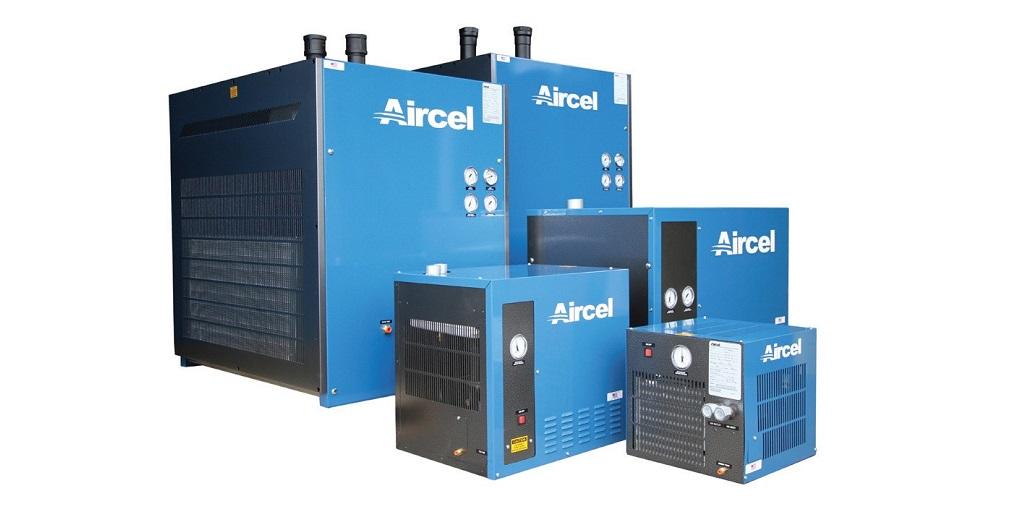
Many facilities default to cylinders because the setup looks simple. A supplier delivers them, workers hook up, the job gets done. There's no capital expense, no installation, no system to maintain. For low-frequency or one-off tasks, that arrangement makes sense. For operations running multiple users across long shifts, the cylinder model starts to show its cracks, and a centralized breathing air system changes the economics entirely.
Why Cylinders Cost More Than Your Breathing Air System Budget Shows
A standard cylinder at typical industrial flow rates lasts roughly 45 to 90 minutes per user. For a blasting crew running eight-hour shifts, that means constant cylinder rotation, on-site storage for full and empty tanks, supplier delivery schedules to manage, and labor hours spent tracking inventory. Two simultaneous users double all of that.
The per-unit cost of bottled breathing air is significantly higher than generating air on-site. Delivery fees, cylinder rental charges, and the cost of production downtime when a cylinder runs out mid-task add up quickly. A centralized breathing air system running off an industrial air compressor puts that volume under a facility's direct control at a fraction of the ongoing cost.
Compliance adds another layer. OSHA breathing air standards require that air used with respiratory protection equipment meet Grade D breathing air specifications, which cover oxygen content, CO limits, moisture levels, and oil content. With cylinders, facilities trust the fill quality at a supplier's location, with no real-time visibility into what workers are actually breathing.
What a Centralized Breathing Air System Controls That Cylinders Don't
A properly specified on-site setup built around compressed-air purification gives a facility direct control over its air quality. Compressed air passes through multiple treatment stages: a coalescing pre-filter to remove bulk moisture and oil aerosols, an air dryer for breathing air to bring the dew point to safe levels, activated carbon filtration to remove hydrocarbon vapors and odors, and final particulate filtration. Every stage of the breathing air system meets breathing air filtration standards at the point of use, not at a fill station miles away.
Air quality monitoring systems with continuous CO sensing give safety managers real-time data rather than after-the-fact documentation. For confined-space breathing-apparatus applications, that monitoring is what separates a compliant entry program from a liability event. Workers entering tanks, vessels, or manholes can't discover bad air after the fact, and continuous sensing means they don't have to.
How the Math Changes When Your Breathing Air System Is On-Site
The cost comparison sharpens over a 12 to 36-month window. Centralized systems carry upfront equipment costs, but the per-scfm cost of generating and purifying air on-site drops considerably once the system is running. Facilities with two or more simultaneous users typically see full cost recovery inside 18 months. Operations running abrasive blasting, continuous spray coating, or multi-person confined space work usually get there faster, sometimes well inside a year, depending on daily volume.
Cylinder dependency also introduces supply chain risk that most facilities don't price in. A delayed delivery shuts down production. A bad fill compromises respiratory protection equipment without any warning. Building air quality monitoring systems into a centralized setup eliminates both problems and provides safety managers with documentation they can hand over during audits and incident reviews, without having to chase paperwork from a third party.
For any operation that runs on breathing air at a meaningful volume, the cylinder model was never designed to scale. A breathing air system that generates, purifies, and monitors its own air supply on-site gives a facility the cost structure and oversight that bottled air simply can't provide.
For facilities ready to compare options, Air & Vacuum Process carries a full line of industrial breathing air systems, including the Aircel BHD Series. Their resources cover system selection, compliance requirements, and configuration details worth reviewing before your next equipment decision.
For more information about Silent Air Compressors and Natural Gas Dehydration Unit Please visit: Air & Vacuum Process Inc.

 English
 Arabic
 Spanish
 Portuguese
 Deutsch
 Turkish
 Dutch
Dutch
 Italiano
 Russian
 Romaian
 Portuguese (Brazil)
 Greek
Greek
