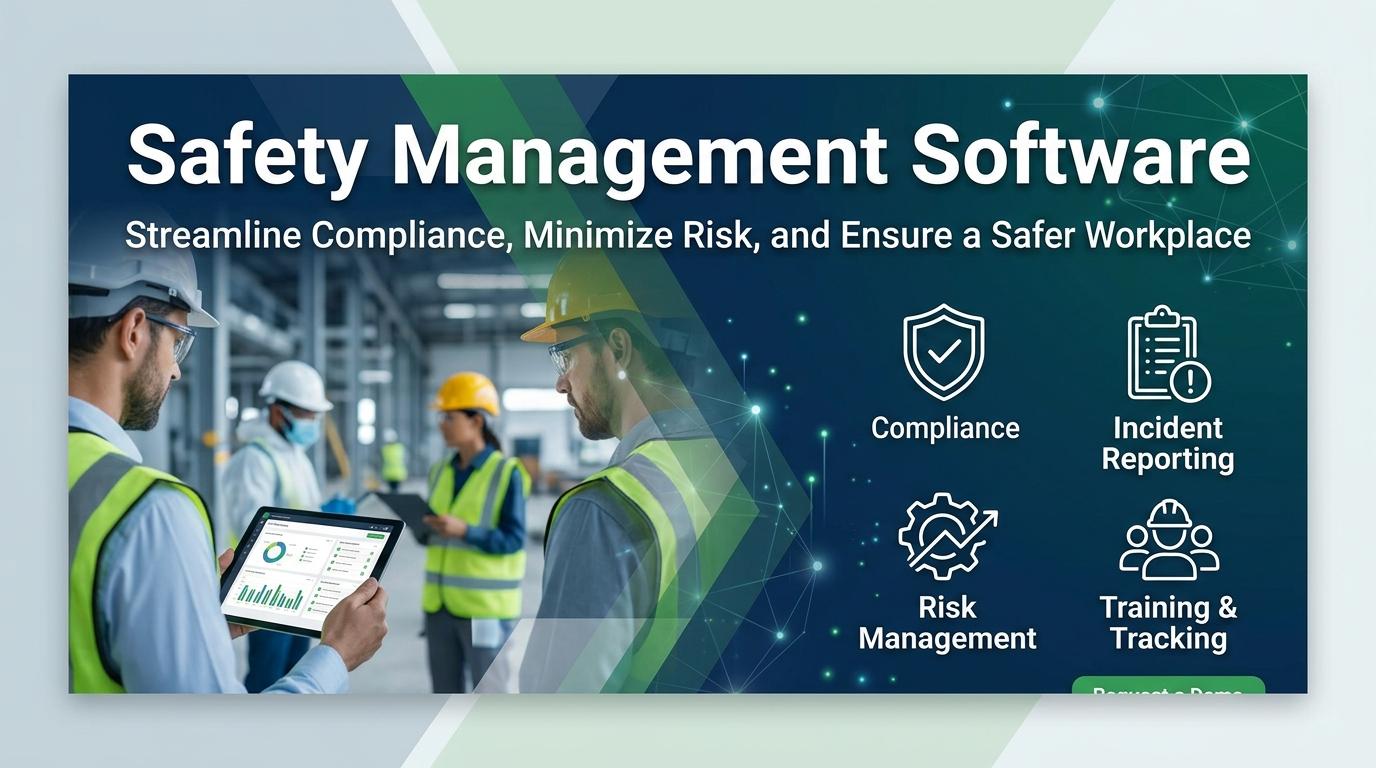
Safety Management Software has become an essential business tool for organizations that want to maintain safe workplaces, meet compliance requirements and manage operational risks more effectively. Safety Management Software is no longer limited to recording incidents or storing documents. Modern platforms help businesses monitor workplace conditions, automate routine tasks and provide valuable insights for better decision making. I believe organizations achieve better safety outcomes when they use technology that supports both employees and management in their daily responsibilities.
Every organization faces different workplace risks depending on its industry, workforce and operating environment. Construction companies, manufacturers, healthcare providers and logistics businesses all require structured safety processes. They need software that simplifies reporting, improves communication and keeps important information organized. You can build a stronger safety culture when employees have access to reliable tools that make reporting and compliance easier.
Why Safety Management Software Is Becoming More Important
Workplace safety is a continuous process rather than a one-time activity. Businesses must monitor hazards, train employees and respond quickly whenever safety concerns arise.
Safety management software helps organizations:
- Improve workplace safety
- Reduce paperwork
- Organize safety records
- Support compliance efforts
- Improve communication
When we use digital systems instead of manual processes, it becomes easier to manage safety information across different departments.
Centralized Safety Management
One of the most valuable features of modern safety software is centralized information management. Instead of storing records in multiple spreadsheets or paper files, organizations can manage everything through one platform.
Centralized systems often include:
- Safety records
- Inspection reports
- Employee training history
- Incident reports
- Compliance documents
They allow managers to access important information whenever it is needed.
Incident Reporting Software With Faster Response
Quick reporting is essential after workplace incidents. Modern incident reporting software allows employees to report problems immediately using computers or mobile devices.
Important reporting features include:
- Digital reporting forms
- Photo attachments
- Investigation tracking
- Corrective action assignment
- Status updates
You can reduce reporting delays and improve workplace communication with digital reporting systems.
Risk Management Software for Better Prevention
Preventing incidents before they occur is one of the primary goals of workplace safety. Risk management software helps organizations identify hazards and prioritize corrective actions.
Common features include:
- Hazard identification
- Risk assessment tools
- Corrective action tracking
- Risk monitoring
- Historical reporting
I think businesses become more proactive when they have clear visibility into workplace risks.
Workplace Safety Software With Mobile Access
Many employees work outside traditional office environments. Mobile access allows workers to complete safety tasks directly from their smartphones or tablets.
Mobile capabilities often include:
- Safety inspections
- Incident reporting
- Photo uploads
- Task notifications
- Digital checklists
They improve communication because information reaches supervisors much faster.
Safety Compliance Software for Regulatory Requirements
Organizations operating in regulated industries must maintain detailed compliance records. Safety compliance software helps businesses organize documentation while reducing administrative work.
Useful compliance features include:
- Compliance calendars
- Automated reminders
- Policy management
- Training records
- Regulatory reporting
You can prepare for inspections more confidently when records remain organized and accessible.
Audit Management Tools for Continuous Improvement
Regular audits help organizations evaluate how well safety procedures are being followed. Digital audit management simplifies scheduling, inspections and reporting.
Popular audit features include:
- Inspection templates
- Digital checklists
- Audit scheduling
- Corrective action management
- Performance reports
We can monitor improvement more effectively when audit information is available in one location.
EHS Software With Integrated Management
Many businesses prefer integrated EHS software that combines environmental, health and safety responsibilities into one system.
Integrated features often include:
- Environmental monitoring
- Employee health records
- Safety inspections
- Compliance tracking
- Risk assessments
They reduce the need to manage separate software platforms for different business functions.
Compliance Management Software With Automation
Automation has become one of the most requested software capabilities because it reduces repetitive administrative work.
Automation features may include:
- Automatic reminders
- Task assignments
- Scheduled inspections
- Report generation
- Workflow approvals
I believe automation allows safety professionals to spend more time solving workplace problems instead of managing paperwork.
Dashboard Reporting and Analytics
Business leaders often need clear information before making important decisions. Modern dashboards present safety data in an organized format.
Useful dashboard information includes:
- Incident trends
- Risk levels
- Inspection completion
- Training status
- Compliance performance
They provide managers with a better understanding of workplace safety performance.
Employee Training Management
Training is one of the foundations of an effective safety program. Many safety platforms now include training management features that simplify employee learning records.
Training functions often include:
- Course scheduling
- Attendance records
- Certification tracking
- Refresher reminders
- Employee progress reports
You can verify training completion quickly whenever required.
Cloud Based Safety Management Software
Cloud technology continues changing how organizations manage workplace safety. Employees and managers can access information from different locations without relying on office computers.
Cloud-based software provides:
- Secure remote access
- Automatic updates
- Data backups
- Team collaboration
- Lower maintenance requirements
They improve flexibility for organizations with multiple worksites.
Business Safety Solutions That Grow With Organizations
Businesses often expand over time, so safety software should support long-term growth without requiring complete replacement.
Scalable business safety solutions provide:
- Flexible user management
- Multiple location support
- Department customization
- Integration options
- Expanded reporting capabilities
You should select software that continues supporting your business as operations grow.
Choosing the Right Safety Management Software
Not every organization requires the same software features. The best solution depends on operational requirements and long-term goals.
Before selecting software, consider:
- Industry requirements
- Company size
- Ease of implementation
- Mobile capabilities
- Customer support
- Reporting tools
- Data security
They should evaluate software based on practical business needs instead of selecting features that may never be used.
Future Trends in Safety Management Software
Technology continues improving workplace safety through smarter systems and better data analysis. Organizations increasingly expect software to provide faster insights and stronger automation.
Future developments may include:
- Artificial intelligence for hazard prediction
- Predictive safety analytics
- Wearable technology integration
- Voice-enabled reporting
- Smarter automation
- Expanded cloud connectivity
We will likely see software becoming more intelligent while remaining easier for employees to use.
Final Thoughts
Trending Safety Management Software features are helping organizations improve workplace safety, simplify compliance and manage operational risks more efficiently. Whether a business needs workplace safety software, safety compliance software, risk management software, incident reporting software, audit management tools, EHS software or compliance management software, selecting the right platform can strengthen daily operations and long-term planning. I believe successful organizations combine modern technology with employee participation, regular training and strong leadership. When businesses invest in practical business safety solutions, they create workplaces where people can work more confidently while supporting continuous improvement and sustainable growth.




 English
 Arabic
 French
 Spanish
 Portuguese
 Deutsch
 Turkish
 Dutch
Dutch
 Italiano
 Russian
 Romaian
 Greek
Greek
