


Gen Z Meets Tradition: Why Young Indian-Americans Are Embracing Modern Ethnic Wear
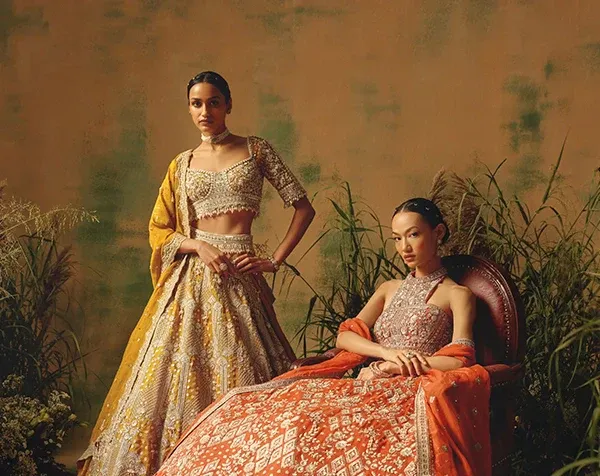
Scroll through Indian-American TikTok or Instagram for ten minutes and you'll see something that would have seemed unlikely a generation ago: teenagers and twenty-somethings proudly styling kurtas with sneakers, wearing dupattas as everyday scarves, and treating bindis and jhumkas as casual accessories rather than items reserved for the rare "Indian event." Gen Z Indian-Americans are doing something their parents' generation rarely had the cultural confidence — or honestly, the available clothing options — to do: wearing their heritage loudly, often, and on their own terms.
A Different Starting Point Than Their Parents
Many first-generation immigrants navigated American life by minimizing visible markers of difference, at least in public and professional settings. Ethnic wear was something worn at home, at temple, or at community events — rarely integrated into everyday public life. That wasn't necessarily about shame; it was often a practical survival strategy in a country that didn't always make space for visible cultural difference.
Their kids and grandkids inherited a very different social landscape. Growing up in increasingly diverse American cities and suburbs, surrounded by social media that celebrates cultural specificity rather than flattening it, Gen Z Indian-Americans have far more room — and frankly, more demand from their own peer groups — to show up authentically. Indian identity isn't something to manage or downplay; it's something to express.
The Aesthetic Shift Driving This
This cultural confidence has been matched by a genuine shift in what's actually available to wear. A decade ago, "Indian clothing in America" mostly meant either imported pieces designed for a different market or extremely traditional formalwear with no everyday application. Neither option matched how a 22-year-old wants to dress for a casual hangout, a college event, or a low-key Diwali gathering with friends.
The rise of genuinely contemporary, fusion-forward design has changed that. Cropped, asymmetric kurtas. Co-ord sets in bold prints that wouldn't look out of place at a music festival. Mirror-work jackets layered over plain t-shirts and jeans. Indian-inspired prints on Western silhouettes like wrap skirts and bodysuits. This is clothing built for a generation that wants to wear their culture the same way they wear everything else — comfortably, expressively, and without a special occasion required.
A well-curated contemporary indian clothing collection speaks directly to this demand, offering exactly the kind of everyday-wearable, photogenic, mix-and-match pieces that Gen Z shoppers are actually looking for, rather than formalwear that only makes sense twice a year.
Social Media as a Cultural Accelerant
It's impossible to talk about this shift without acknowledging the role of platforms like Instagram and TikTok. Gen Z creators of Indian descent have built large followings specifically around styling ethnic wear in modern, accessible ways — get-ready-with-me videos for Diwali, "Indian clothes you can actually wear daily" content, and styling tutorials that demystify draping or pairing traditional pieces with Western basics.
This content does something powerful: it normalizes Indian fashion as part of mainstream style conversation rather than positioning it as separate or "other." When a kurta jacket shows up in the same feed as streetwear hauls and thrift finds, it stops being a niche cultural artifact and becomes simply another fashion choice — one with deep personal meaning attached.
Fashion as Identity Work
For many young Indian-Americans, choosing to wear ethnic pieces casually is also a form of quiet identity work. Growing up between two cultures often comes with pressure to choose — to be "American enough" at school and "Indian enough" at home, with very little space to simply be both, fully, at the same time. Clothing that allows for that fusion without compromise becomes a small but meaningful tool for resolving that tension.
It also reflects a broader generational value: authenticity over assimilation. Where earlier generations sometimes equated fitting in with minimizing difference, Gen Z increasingly equates confidence with visibility — showing up as exactly who you are, unapologetically, rather than editing yourself down to fit a narrower mold.
What Brands Are Getting Right
Brands successfully reaching this audience tend to share a few things in common: size-inclusive ranges, price points accessible to a younger demographic without parental budgets, genuinely versatile pieces that work beyond a single occasion, and marketing that reflects real diaspora experiences rather than imported aesthetics that don't quite translate to American daily life.
The Role of College Campuses and Cultural Organizations
College campuses have become an unexpected accelerant for this shift. Indian Student Associations, Bollywood dance teams, and South Asian cultural clubs give young Indian-Americans regular, low-stakes opportunities to wear ethnic fashion in casual, social settings — a campus Diwali show, a cultural week fashion event, or simply a themed party with friends. These recurring, informal occasions create demand for exactly the kind of comfortable, photogenic, easy-to-style pieces that didn't really exist a decade ago, since the only available options were either too formal or too plain for the moment.
This campus-driven normalization often follows young Indian-Americans into their post-college lives and early careers, where the habit of incorporating ethnic pieces into everyday dressing — rather than reserving them strictly for family events — has already been established and feels natural rather than novel.
Pushing Back on Stereotypes Through Fashion
There's also a quieter, more political dimension to this shift worth acknowledging. For years, ethnic clothing in American media and pop culture was often portrayed through a narrow, sometimes mocking lens — costume-like, exoticized, or reduced to a punchline. Gen Z's confident, everyday embrace of modern Indian fashion pushes directly against that legacy, reclaiming these garments as simply stylish, modern clothing rather than markers of difference to be either hidden or exaggerated for comic effect.
Final Thoughts
The Gen Z embrace of modern ethnic wear isn't a trend in the disposable, seasonal sense — it's a generational recalibration of what it means to be Indian-American. Tradition isn't being abandoned; it's being reinterpreted, worn more often, and integrated more fully into everyday life than perhaps any generation before. For a generation raised to hold two cultures at once, that integration, expressed through what they choose to wear, feels less like a fashion statement and more like simply showing up as themselves.

 English
 Arabic
 French
 Spanish
 Portuguese
 Turkish
 Dutch
Dutch
 Italiano
 Russian
 Romaian
 Portuguese (Brazil)
 Greek
Greek
