


How Do Methods Of Construction Affect Estimating?
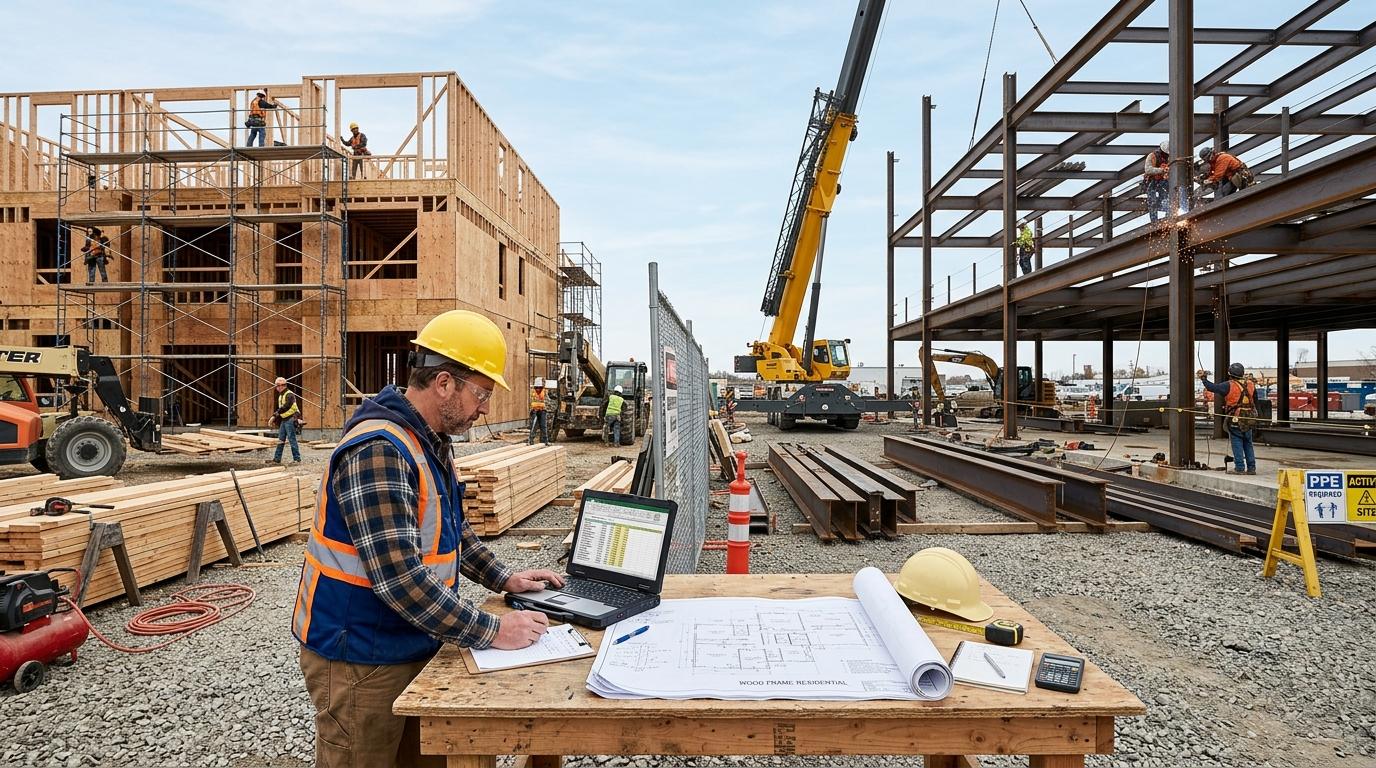
How methods of construction affect estimating comes down to one simple truth: the manner in which a building is plotted and constructed has a profound impact on how costs are projected, the reliability of those projections, and the extent to which a bid or budget will be competitive in the American construction market. Various construction methods, for instance, stick‑built, modular, or ultra‑modern designs, affect the inputs used to derive cost forecasts, labor productivity standards, material quantities, and even funding decisions.
Excellent estimating is much more than arithmetic; it involves choosing the right estimation technique that fits the project's method, and this is the point where the construction estimating consultants become a major asset. Nowadays, these services are transforming complex construction methods into reliable, well‑supported cost estimates that contractors, owners, and developers rely on.
Understanding Construction Estimating
What Is Construction Estimating?
Construction estimating involves determining the total costs for a work, including the use of labor, materials, equipment, permits, and contractor services, before construction starts. It ensures that all parties have a clear understanding of the financial commitment.
Besides allowing for securing funds, planning of the project, and competitive tendering, it is also essential to prevent cost overruns, delays, or project discontinuation. Project stakeholders will recognize this as an accurate estimation that provides the foundation for a well-planned project implementation.
Why Construction Methods Matter to Estimating
Simply put, a construction method is the way a building is put together. It tells:
-
Which materials are chosen?
-
How workers are divided and counted.
-
How complicated is the site coordination?
-
How much detail is needed to estimate costs accurately?
Different construction methods have different impacts on the cost forecasting process, for example, how many labor hours are needed and how many material assemblies there will be. Estimators have to make sure their methods correspond with the construction method in order to make dependable estimates.
Main Estimating Methods And Their Interaction With Construction Techniques
Which estimating method is best depends largely on the design stage and how complex the construction method is. Here, we look at the most popular methods that are being used in the U.S. construction industry.
Estimating At Different Project Stages
As a rule, the accuracy of estimating gets better as the project goes from concept to construction documents:
|
Project Phase |
Estimating Approach |
Typical Accuracy |
Typical Use |
|
Early Concept |
Historical or analogous estimates |
±25–40% |
Determine feasibility |
|
Design Development |
Parametric & unit cost models |
±15–25% |
Adjust designs and budget |
|
Final Bid |
Detailed or bottom‑up estimating |
±5–10% |
Final bids and contracts |
|
Control/Construction |
Detailed tracking |
±1–5% |
Budget control and variance analysis |
Source: Combined trends in estimating practice.
Analogous Estimating
Historical info from one or several similar projects is utilized by this approach for developing early cost estimates. In fact, it can be handy when we have limited info about the design and the construction method hasn't been decided yet. Because it is such a high-level method, the results can vary greatly in terms of accuracy.
Parametric Estimating
This kind of estimating is based on statistical relationships, such as cost per square foot or cost per unit of output. It is most effective when there are enough project details to match specific construction method parameters to cost drivers, e.g., modular vs. traditional framing.
Unit Cost Estimating
By unit here, we mean simple measurable quantities such as square feet or linear feet. Each unit has to be assigned a price. As the construction docs get finalized and the construction method is known, this method will yield more precise results.
Assemblies and Systems Estimating
Besides pricing single items, this method groups them as systems, e.g., wall assemblies, roof systems. Since it is directly associated with construction methods, it is more accurate. For instance, different wall systems in modular construction vs. stick-built.
Bottom‑Up Estimating
Out of all the methods, this one provides the highest level of detail and accuracy, as each component is counted and priced separately. You need complete design documents for it and normally, it is done only after the construction method and materials are fully determined.
Tech‑Enhanced Approaches (e.g., BIM/5D)
5D BIM is one of the emerging technologies that links cost estimations directly to the project's digital model, integrating the actual materials, labor, and methods. Such a method is very effective, mainly in complicated construction projects where accuracy is of the utmost importance.
How Constructing Methods Influence Estimating Inputs
Estimating is not merely a matter of changing numbers, it is about ensuring that the calculations are consistent with real-world construction decisions. Below is a brief explanation of how various construction methods influence the various inputs used in estimating:
Materials and Assemblies
The materials and assemblies required vary with the construction method. For instance:
-
Costs of modular construction include factory unit costs and transport costs.
-
Traditional stick-built methods make use of standardized material takeoffs based on on-site work.
Knowing these differences is essential for deciding on the appropriate estimating technique.
Labor Productivity and Classification
Changing the construction method inevitably leads to changes in the productivity rates and classifications of labor. A modular approach, on one hand, not only leads to on-site labor hours reduction, but it also results in a need for more specialized labor. Therefore, in order to come up with precise estimates, the differences need to be captured.
Technology Integration
Methods like BIM not only increase the accuracy of estimates by demonstrating how the components are interconnected, but also in associating them with cost databases. This limits the need for assumptions and, hence, better budget performance.
How Market And Contract Factors Interact With Construction Methods
Estimators must also consider external factors, such as:
Material Pricing Volatility
Material prices change constantly due to various factors such as market conditions, tariffs, transportation costs, and supply chain constraints. When a particular construction method involves using highly specialized materials, estimators should probably adjust their projections regularly to reflect this price volatility.
Contract Delivery Method
A contract delivery method project, such as Design-Bid-Build, Design-Build, Construction Manager at Risk, etc., determines when the costs are figured out and to what extent the design is complete during the estimation process. This matters a lot for the accuracy of the construction methods-based estimates.
Regulatory and Local Factors
In the United States, local variations in permit fees, labor laws, and building codes also have an impact on cost estimation. As these factors differ from one region to another, it is essential to consider them while preparing estimates compatible with construction methods and expectations.
Conclusion
The U.S. construction market relies heavily on construction methods when projecting, negotiating, and controlling costs. From early conceptual estimates through detailed bid packages, the chosen construction method determines the most accurate estimating approach. With material prices rising, labor shortages, and increasingly complex projects, working with a structural steel estimator can further improve estimating accuracy and support successful project delivery.
Exactly estimating supplies owners with documentation to raise capital; contractors receive help from it to prepare winning bids; and it minimizes the financial risk that is present in any construction project. By comprehending how construction methods are combined with estimating techniques, the whole construction community will have more clarity, a sense of assurance, and control regardless of the next project's size or complexity.
FAQs
1. How Do Estimating And Budgeting Differ?
Estimating figures out how much something will cost; budgeting takes that estimate to determine how much money to set aside and to keep track of spending against actual costs during construction.
2. Are Construction Methods Capable Of Changing Cost Estimates?
Absolutely, different methods need different materials, different assumptions about labor productivity, different sets of tools, and different processes, all of which determine the price model.
3. What Is A Good Time To Start Detailed Estimating?
Usually, detailed estimating starts when the design documents are ready and the construction method has been decided, just before bidding.
4. To What Extent Does Technology Influence Estimating?
5D BIM and similar technologies link data on costs to building models. This way, they improve the accuracy and decrease the need for speculations during complicated constructions.
5. Why Use Professional Estimating Services?
Professional services provide expertise, accuracy, and market insights that help contractors and owners predict costs reliably and competitively.

 English
 Arabic
 French
 Spanish
 Portuguese
 Deutsch
 Dutch
Dutch
 Italiano
 Russian
 Romaian
 Portuguese (Brazil)
 Greek
Greek
