


IPO Requirements India: Complete Eligibility & Listing Guide for SMEs & Mainboard IPOs
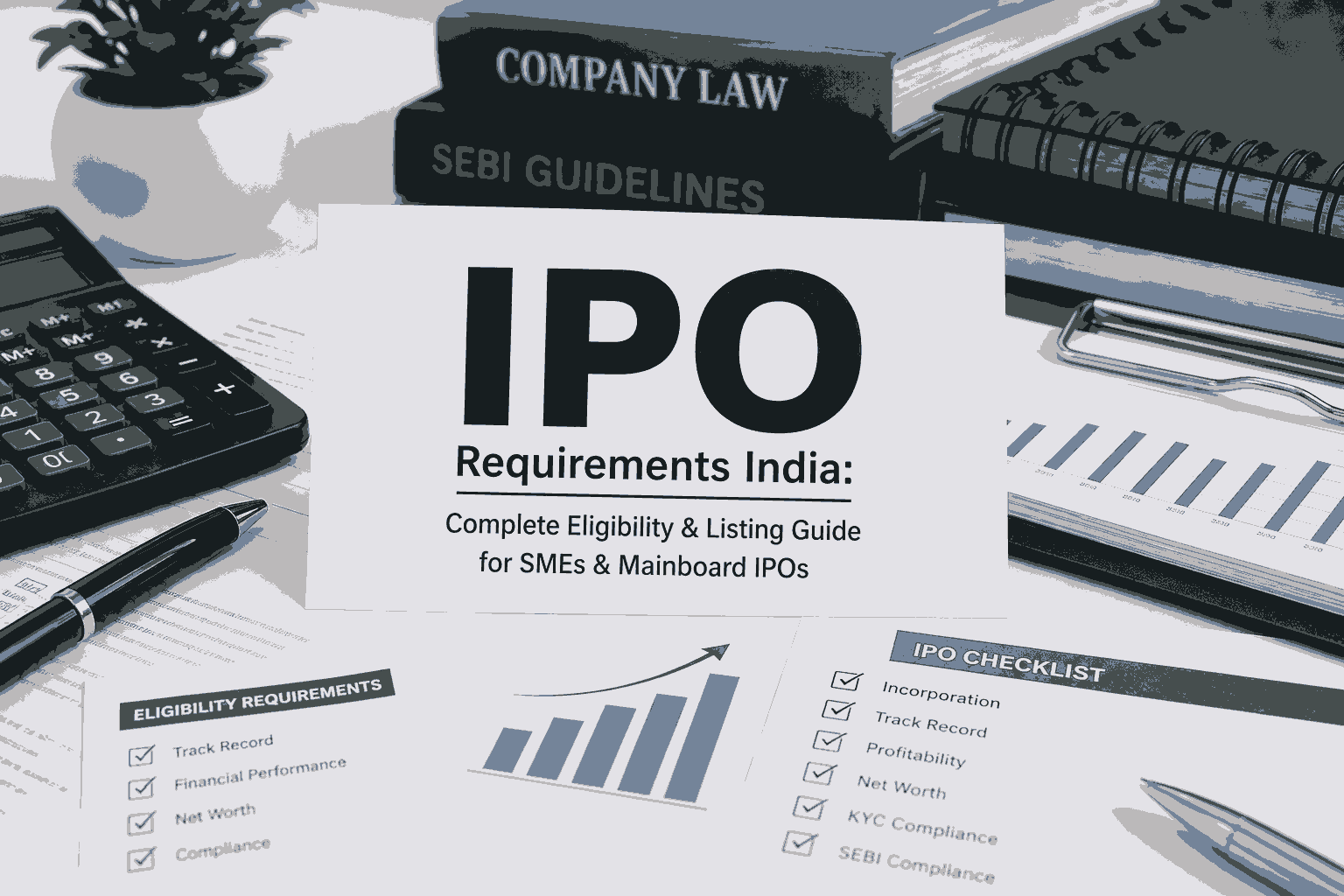
IPO Requirements India: Complete Guide for Companies Planning an IPO
Launching an Initial Public Offering (IPO) is one of the biggest milestones in a company's growth journey. It allows businesses to raise capital from the public while improving their brand reputation, market credibility, and expansion opportunities. However, before a company can go public, it must meet several regulatory, financial, and legal requirements.
Understanding the IPO Requirements India is essential for promoters, startups, SMEs, and growing businesses planning to enter the capital market. The Securities and Exchange Board of India (SEBI) has established clear eligibility criteria and compliance standards that companies must satisfy before listing on recognized stock exchanges.
In this guide, we'll explain everything you need to know about IPO requirements in India, including eligibility, documentation, SEBI regulations, SME IPO norms, and how professional IPO consultants can simplify the entire process.
What is an IPO?
An Initial Public Offering (IPO) is the process through which a privately held company offers its shares to the public for the first time. After the IPO, the company's shares become listed on a recognized stock exchange such as NSE or BSE, allowing investors to buy and sell them.
Companies generally launch IPOs to:
· Raise capital for expansion
· Repay existing debt
· Fund new projects
· Increase market visibility
· Improve corporate credibility
· Provide exit opportunities to early investors
Why Understanding IPO Requirements India is Important
Many businesses assume that strong revenue alone is enough to launch an IPO. However, SEBI evaluates companies on multiple parameters including:
· Financial performance
· Corporate governance
· Promoter background
· Legal compliance
· Business sustainability
· Disclosure standards
· Shareholding pattern
Meeting these requirements ensures investor protection and maintains transparency in India's capital markets.
Basic IPO Requirements India
Before filing for an IPO, companies should satisfy the following basic conditions.
1. Company Registration
The business must be registered as a Public Limited Company under the Companies Act.
Private Limited Companies need to convert into Public Limited Companies before initiating the IPO process.
2. Financial Track Record
A company should have a stable financial history demonstrating consistent business operations.
Generally, investors and regulatory authorities look for:
· Healthy revenue growth
· Positive net worth
· Sustainable profitability
· Strong cash flows
· Audited financial statements
3. Corporate Governance
Strong governance practices improve investor confidence.
Companies should have:
· Independent directors
· Audit committee
· Nomination committee
· Internal audit systems
· Compliance officers
· Risk management framework
4. Promoter Eligibility
Promoters should possess:
· Clean legal records
· Good financial standing
· No major regulatory violations
· Transparent ownership structure
Promoter credibility significantly influences investor trust.
5. Minimum Public Shareholding
After listing, companies must comply with SEBI's minimum public shareholding norms to ensure adequate market liquidity.
SEBI IPO Eligibility Criteria
SEBI regulates IPOs under the ICDR (Issue of Capital and Disclosure Requirements) Regulations.
Some key eligibility parameters include:
Net Tangible Assets
Companies should maintain adequate net tangible assets over the prescribed period.
Net Worth
A healthy net worth demonstrates financial stability.
Operating History
Businesses generally require an established operational track record before approaching public investors.
Disclosure Compliance
Companies must disclose:
· Business risks
· Financial statements
· Promoter details
· Litigation
· Related-party transactions
· Business strategy
· Industry outlook
Transparency is one of SEBI's highest priorities.
Mainboard IPO Requirements
Large companies generally choose the Mainboard platform.
Typical Mainboard IPO preparation includes:
· Appointment of Merchant Banker
· Due diligence
· DRHP preparation
· Legal compliance
· Financial audit
· Valuation
· Regulatory approvals
· Marketing through Roadshows
Mainboard IPOs usually attract institutional investors, retail investors, and High Net-Worth Individuals (HNIs).
SME IPO Requirements
Small and Medium Enterprises have separate listing norms under SME exchanges.
Some common SME IPO requirements include:
· Established business operations
· Positive financial performance
· Compliance with exchange regulations
· Qualified Merchant Banker
· Proper financial reporting
· Corporate governance standards
SME IPOs provide growing businesses with access to capital while maintaining relatively simplified listing requirements compared to Mainboard IPOs.
Documents Required for IPO
Preparing documentation is one of the most important stages.
Common documents include:
· Certificate of Incorporation
· Memorandum of Association (MOA)
· Articles of Association (AOA)
· Audited Financial Statements
· Income Tax Returns
· Board Resolutions
· Shareholding Pattern
· Promoter Details
· Material Contracts
· Legal Compliance Certificates
· Business Agreements
· Intellectual Property Details
· Litigation Records
· Statutory Registrations
Maintaining organized documentation speeds up regulatory approvals.
IPO Process in India
Understanding the IPO process helps companies prepare better.
Step 1: Appointment of Advisors
Companies appoint:
· Merchant Banker
· IPO Consultant
· Legal Advisor
· Registrar
· Auditor
· Advertising Agency
Step 2: Due Diligence
Experts review:
· Financial records
· Legal matters
· Compliance
· Tax filings
· Business operations
Step 3: Draft Red Herring Prospectus (DRHP)
The DRHP contains:
· Business overview
· Financial information
· Risk factors
· Management details
· Objects of the issue
· Industry analysis
Step 4: SEBI Review
SEBI reviews the filing and may request clarifications before granting approval.
Step 5: Marketing the IPO
Companies conduct investor presentations and roadshows to generate market interest.
Step 6: IPO Opens
Investors submit applications during the subscription period.
Step 7: Share Allotment
Shares are allotted based on investor demand and applicable regulations.
Step 8: Stock Exchange Listing
After allotment, shares begin trading on the stock exchange.
Common Challenges Companies Face
Many businesses encounter issues such as:
· Regulatory compliance
· Documentation errors
· Financial restructuring
· Valuation concerns
· Legal issues
· Delayed approvals
· Poor investor communication
Professional IPO consultants help reduce these risks.
Benefits of Hiring an IPO Consultant
Experienced IPO consultants assist throughout the listing journey.
Their services include:
· IPO readiness assessment
· Compliance management
· Financial restructuring
· Documentation support
· SEBI coordination
· Merchant Banker coordination
· Investor presentation
· Timeline management
· Listing support
Professional guidance helps companies avoid costly delays.
How to Prepare Your Company for an IPO
Businesses should begin preparations well in advance.
Recommended steps include:
· Strengthen financial reporting
· Improve internal controls
· Ensure tax compliance
· Build strong corporate governance
· Resolve pending legal issues
· Organize statutory documents
· Maintain accurate accounting records
· Develop long-term business plans
· Engage experienced IPO advisors
Early preparation significantly increases the chances of a successful public issue.
Why Choose India IPO for IPO Advisory?
Planning an IPO requires expertise across finance, law, compliance, and capital markets. Working with experienced professionals helps companies navigate the listing process efficiently.
At India IPO, businesses receive end-to-end guidance, including:
· IPO readiness assessment
· SME IPO consulting
· Mainboard IPO consulting
· Regulatory compliance support
· Documentation assistance
· Merchant banker coordination
· Listing strategy
· Post-listing advisory
Whether you are an SME, startup, or an established enterprise, expert IPO advisory can simplify every stage of your public issue journey.
Frequently Asked Questions (FAQs)
1. What are the basic IPO requirements in India?
Companies generally need to meet SEBI eligibility norms, maintain proper financial records, establish corporate governance, prepare required documentation, and comply with applicable listing regulations.
2. Can startups launch an IPO in India?
Yes. Eligible startups can launch an IPO after meeting the relevant regulatory, financial, and exchange requirements.
\
3. What is the difference between SME IPO and Mainboard IPO?
SME IPOs are designed for small and medium-sized businesses with separate listing norms, while Mainboard IPOs cater to larger companies and generally involve broader investor participation.
4. Is SEBI approval mandatory?
Yes. Companies must comply with SEBI regulations and obtain the necessary approvals before proceeding with a public issue.
5. Why should companies hire IPO consultants?
IPO consultants assist with regulatory compliance, documentation, financial planning, due diligence, and overall IPO execution, helping businesses navigate the process more efficiently.
Conclusion
Understanding the IPO Requirements India is the first step toward a successful public listing. Going public is more than raising capital—it is about building investor confidence through transparency, strong governance, and regulatory compliance. Companies that prepare early, maintain accurate financial records, and follow SEBI guidelines are better positioned for a smooth IPO journey.
Whether you are planning an SME IPO or a Mainboard IPO, expert guidance can make the process more structured and efficient. If you're looking for professional IPO advisory, India IPO can help you evaluate your IPO readiness, manage documentation, and navigate the listing process with confidence.

 English
 Arabic
 French
 Spanish
 Portuguese
 Deutsch
 Turkish
 Dutch
Dutch
 Italiano
 Russian
 Romaian
 Portuguese (Brazil)
