


How Weather Affects Industrial Solar Panel Performance
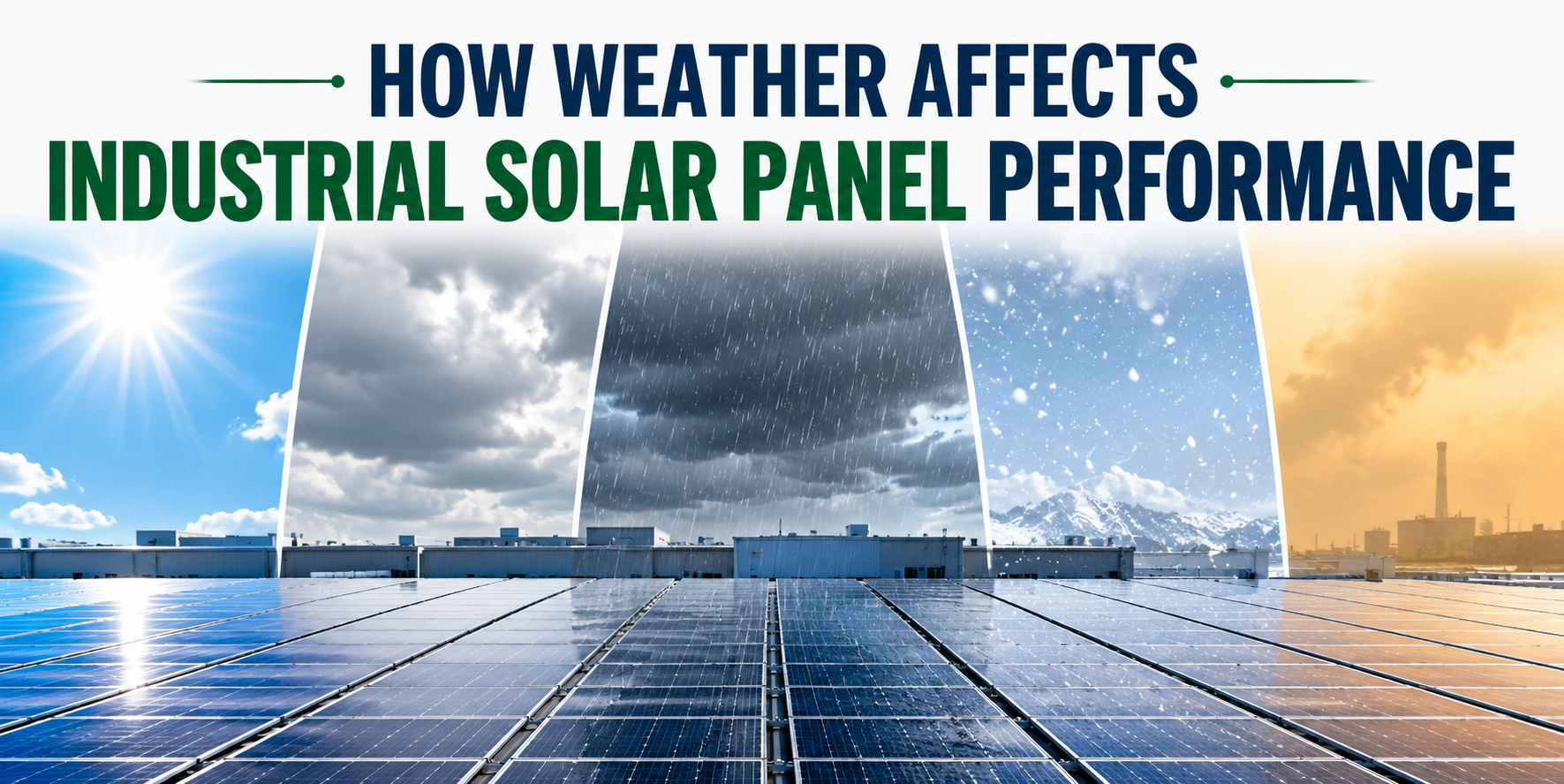
Imagine walking onto the roof of a massive warehouse and seeing thousands of glass sheets gleaming in the sun. These are not just windows; they are the engine of a modern business. Every industrial solar panel works hard to turn sunlight into savings by reducing energy costs. However, many business owners wonder what happens when the weather changes. Does power generation stop during cloudy days? Is the system safe during storms?
Understanding how weather affects your solar system is essential for maximizing energy production and protecting your investment. While weather cannot be controlled, knowing its impact helps businesses plan better, improve efficiency, and maintain long-term performance.
Does Weather Affect Industrial Solar Panel Performance?
Yes, weather directly affects the performance of every industrial solar panel. Although these systems are designed to withstand different environmental conditions, they do not generate the same amount of electricity every day.
A common misconception is that solar panels work better in hot weather. In reality, solar panels depend on sunlight, not heat. Factors like cloud cover, rain, dust, temperature, and seasonal changes all influence electricity generation. Understanding these changes helps businesses optimize their Industrial Solar System for better long-term returns.
How Different Weather Conditions Impact Industrial Solar Panels
1. Sunny Weather
Sunny weather provides the best conditions for an Industrial Solar System. Clear skies allow panels to receive maximum direct sunlight, resulting in the highest electricity generation. During these peak sunlight hours, businesses achieve the greatest savings on electricity bills.
The sun's position also plays an important role. Around midday, when sunlight falls directly on the panels, an industrial solar installation produces its highest output. Proper panel orientation ensures maximum energy capture throughout the day.
2. Cloudy and Overcast Days
Industrial Solar Panels continue generating electricity even on cloudy days. Although clouds reduce direct sunlight, panels can still capture diffused sunlight scattered through the atmosphere.
However, Solar Panel Efficiency decreases compared to bright sunny conditions. On heavily overcast days, systems typically produce around 10% to 25% of their normal capacity. This is one reason many businesses install a slightly larger Industrial Solar Power Plant to ensure reliable energy production throughout the year.
3. High Temperatures
Many people believe hotter weather increases solar panel performance, but excessive heat actually reduces efficiency.
As panel temperatures rise, the movement of electrons becomes less efficient, resulting in lower electricity generation. Modern Industrial Solar Panels are designed with proper airflow underneath to help cool the panels naturally.
In fact, a cool and sunny spring day often produces more electricity than an extremely hot summer afternoon.
4. Rainy Weather
Rain may temporarily reduce solar energy production because clouds block sunlight, but it also provides a significant advantage.
Rain naturally cleans the surface of industrial solar panels by washing away dust, pollen, bird droppings, and dirt. These contaminants reduce Solar Panel Efficiency by blocking sunlight.
Once the skies clear, clean panels often generate more electricity than before the rainfall. Most Industrial Solar Power Plants are designed to withstand heavy rain and remain fully operational during wet weather.
5. Winter and Cold Weather
Winter brings shorter daylight hours, reducing the total amount of sunlight available each day. However, cold temperatures actually improve solar panel efficiency.
Electronic components perform better in cooler conditions, allowing industrial solar panels to generate electricity more efficiently when sunlight is available.
Snow can temporarily block sunlight if it completely covers the panels. Fortunately, most industrial systems are installed at an angle that allows snow to slide off naturally, while the dark surface helps speed up melting.
6. Dust, Pollution, and Haze
Dust, smog, pollution, and airborne particles can significantly affect the performance of an Industrial Solar Power Plant.
These particles reduce the amount of sunlight reaching the solar cells, while accumulated dust on the panel surface further decreases Solar Panel Efficiency.
Businesses operating in dusty industrial environments should schedule regular panel cleaning to maintain consistent energy production throughout the year.
7. Strong Winds and Storms
Strong winds generally do not affect electricity generation but can impact the structural safety of an industrial solar panel installation.
Industrial mounting systems are engineered to withstand high wind speeds. However, severe storms with flying debris may still cause physical damage.
Modern solar systems like raynex power solution also include surge protection to safeguard electrical equipment from lightning strikes and power surges, ensuring reliable operation during extreme weather.
Which Weather Condition is Best for Industrial Solar Panels?
The ideal weather for an industrial solar power plant is a cool, clear, and sunny day.
Contrary to popular belief, extremely hot weather is not ideal because excessive heat lowers panel efficiency. Cool temperatures combined with bright sunlight allow solar panels to generate maximum electricity while maintaining optimal operating conditions.
These favorable conditions help maximize annual Solar Panel Efficiency and improve overall energy production.
How to Improve Industrial Solar Panel Performance in Any Weather
1. Schedule Regular Panel Cleaning
Clean your Industrial Solar System at least twice a year, or more frequently if your facility is located in a dusty or polluted environment. Clean panels receive more sunlight and generate higher electricity output.
2. Monitor System Performance
Use monitoring software to track daily energy production. Sudden drops in output during sunny weather may indicate issues such as damaged panels, wiring faults, or equipment failures that require immediate attention.
3. Choose High-Efficiency Solar Panels
Invest in high-quality industrial solar panels designed to perform well under varying weather conditions. Premium panels maintain better Solar Panel Efficiency during cloudy weather and high temperatures, resulting in greater long-term energy production.
4. Ensure Professional Installation
Proper installation ensures the correct panel angle, adequate ventilation, and secure mounting. Professional installation improves energy generation while protecting the system from wind damage and overheating.
5. Perform Preventive Maintenance
Schedule annual inspections to identify minor issues before they become major problems. Regular maintenance helps extend the lifespan of your Industrial Solar Power Plant and maintains consistent performance.
6. Remove Nearby Shade and Obstructions
Regularly inspect the surrounding area for trees, new buildings, rooftop equipment, or other objects that create shadows. Even small areas of shading can significantly reduce the performance of an industrial solar panel.
Conclusion
Weather plays a major role in the performance of every industrial solar panel, but it does not prevent solar energy from being a reliable investment. While conditions such as clouds, rain, dust, and seasonal changes affect energy production, a properly designed and well-maintained Industrial Solar System continues generating clean electricity throughout the year.
By understanding weather impacts, performing regular maintenance, and investing in quality equipment, businesses can maximize Solar Panel Efficiency and achieve long-term energy savings. With the right planning and professional installation, your Industrial Solar Power Plant will continue delivering reliable performance for decades.
FAQs
1. Do Industrial Solar Panels work at night?
No. industrial solar panels require sunlight to generate electricity. Many businesses use battery storage systems to store excess energy produced during the day for nighttime use.
2. Can hail damage Industrial Solar Panels?
Most industrial solar panels are built with durable tempered glass and are tested to withstand normal hailstorms. Extremely large hailstones may still cause damage in rare cases.
3. How much power is generated on cloudy days?
During heavy cloud cover, an Industrial Solar System typically produces around 10% to 25% of its maximum capacity, depending on cloud density and local weather conditions.
4. Does snow affect solar panel performance?
Yes. Heavy snow covering the panels blocks sunlight and temporarily reduces energy generation. Once the snow melts or slides off, cold temperatures actually improve Solar Panel Efficiency.
5. How long do Industrial Solar Panels last?
Most industrial solar panels are designed to last between 25 and 30 years with proper maintenance and can continue performing reliably under various weather conditions.

 English
 Arabic
 Spanish
 Portuguese
 Deutsch
 Turkish
 Dutch
Dutch
 Italiano
 Russian
 Romaian
 Portuguese (Brazil)
 Greek
Greek
