


Shopify Alternatives India with Lower Transaction Fees
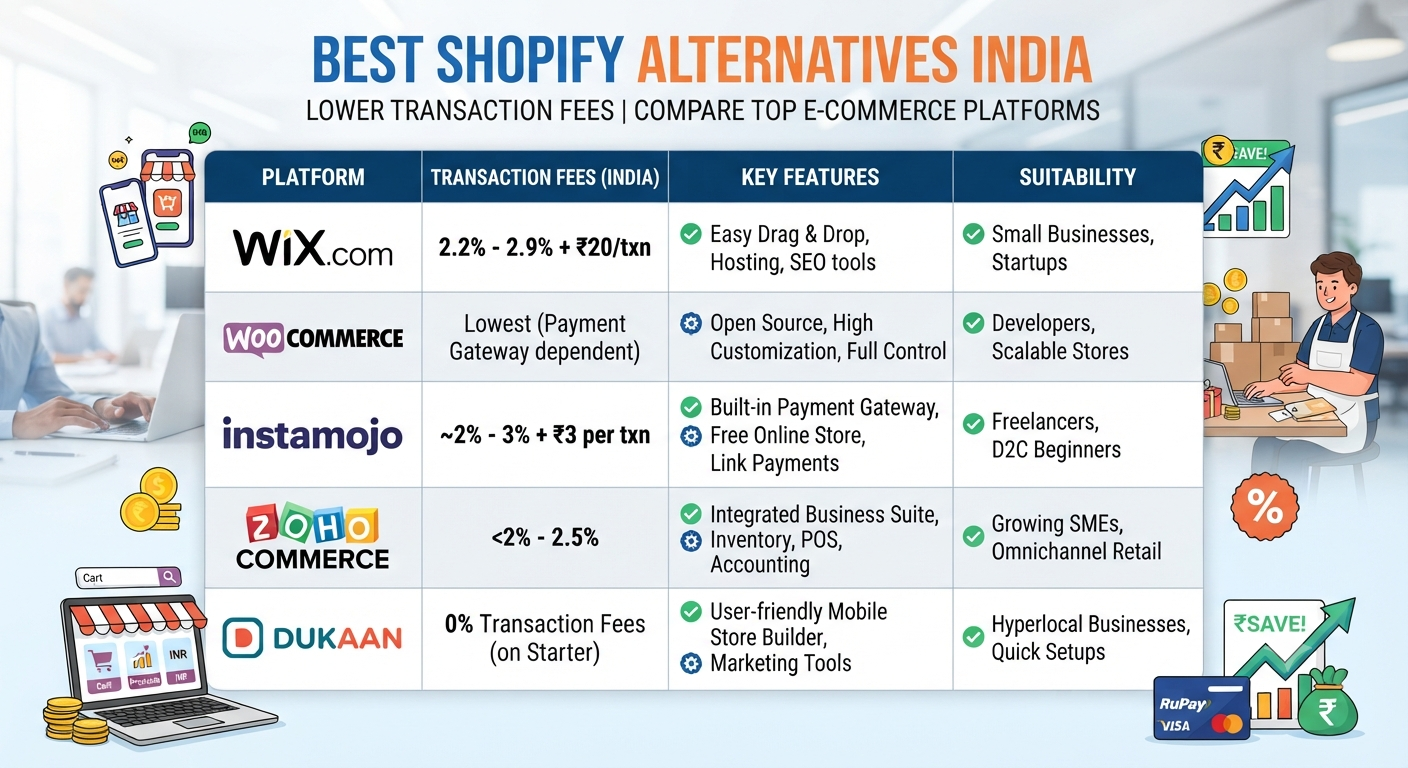
Running an online store in India comes with its own set of challenges. Payment gateways, GST compliance, regional logistics, and transaction fees can quietly eat into your margins every single month.
If you've been using Shopify, you've probably noticed that the platform's pricing and transaction charges aren't always friendly to Indian merchants, especially smaller D2C brands and first-time founders who are still figuring out their unit economics.
The good news? You don't have to stick with a single platform just because it's popular globally. There are several shopify alternatives india sellers are now switching to, and many of them come with lower fees, better local integrations, and pricing that actually makes sense for the Indian market.
In this article, we'll break down why merchants are exploring alternatives, what to look for in a replacement, and which platforms genuinely deliver value.
Why Indian Sellers Are Looking Beyond Shopify
The Transaction Fee Problem
Shopify charges additional transaction fees if you don't use Shopify Payments and Shopify Payments isn't even fully supported in India. That means most Indian merchants end up paying:
-
A subscription fee in USD (which fluctuates with currency conversion)
-
Extra transaction charges for using third-party payment gateways like Razorpay or PayU
-
App costs that pile up quickly as your store scales
For a growing business, these layered costs add up fast and eat into already thin margins.
Currency and Pricing Mismatch
Shopify's pricing is built around international markets. When converted to INR, even the "basic" plans feel expensive relative to what Indian-first platforms charge. Founders bootstrapping their first store often find this mismatch frustrating, especially in the early, cash-conscious stage of building a brand.
Limited Local Support
Customer support timezones, payment gateway integrations, and shipping partner compatibility are often built with Western markets in mind. Indian sellers frequently need workarounds for things that should be plug-and-play, like COD reconciliation or local courier APIs.
What to Look for in a Shopify Alternative
Before jumping to a new platform, it helps to know what actually matters for your business. Here's a practical checklist:
1. Transaction Fee Structure
Look closely at whether the platform charges a percentage on every sale, a flat fee, or nothing extra beyond your payment gateway's standard rate. This single factor can significantly affect your bottom line as order volume grows.
2. INR-Based Pricing
Platforms priced in INR remove the unpredictability of currency fluctuations, making budgeting far easier for Indian founders.
3. Built-in AI and Automation Tools
Modern store builders increasingly use AI to handle product descriptions, SEO suggestions, and design layouts automatically. This saves hours of manual work, especially for solo founders managing everything themselves.
4. Local Payment Gateway Compatibility
Razorpay, Cashfree, PayU, and UPI support should be native, not an afterthought requiring third-party apps.
5. Ease of Migration
Switching platforms shouldn't mean rebuilding your store from scratch. Good alternatives offer smooth product, customer, and order data migration.
Best Shopify Alternatives Worth Considering
When evaluating the best shopify alternatives, it's worth comparing not just pricing, but also usability, design flexibility, and how well the platform understands the Indian e-commerce ecosystem.
Many merchants researching this topic land on detailed breakdowns like the shopify alternatives india comparison, which lays out fee structures and feature sets side by side. This kind of comparison is genuinely useful before committing to a long-term platform decision.
What Sets Newer Platforms Apart
A newer category of tools, often described as an atlas ai store builder, is changing how Indian merchants set up their stores. Instead of manually configuring themes, payment integrations, and product pages, these platforms use AI to handle most of the heavy lifting in minutes rather than days.
This matters a lot if you're a small business owner without a dedicated tech or design team. You get a functional, professional-looking store without hiring a developer or designer.
How Lower Transaction Fees Impact Your Business
Better Margins on Every Sale
Even a 1-2% difference in transaction fees might sound small, but at scale say, ₹10 lakh in monthly sales that's thousands of rupees saved every single month. Over a year, that's a meaningful amount you could reinvest in marketing or inventory.
More Predictable Cash Flow
Flat or zero transaction fee models make it easier to forecast revenue accurately. You're not second-guessing how much of your sale actually reaches your bank account after multiple deductions.
Easier Pricing Strategy
When you know your exact costs per transaction, you can price products more competitively without sacrificing profitability something that's harder to do when fees vary or stack up unpredictably.
Choosing the Right Ecommerce Website Builder
If you're starting fresh or migrating an existing store, picking the best ecommerce website builder isn't just about price. It's about finding a platform that grows with your business.
Key Questions to Ask Yourself
-
Does the platform support the payment methods my customers actually use (UPI, COD, wallets)?
-
Can I customize my storefront without coding knowledge?
-
Is customer support responsive and based in a similar timezone?
-
Are there hidden costs in apps, themes, or premium features?
-
Does it integrate easily with Indian logistics and shipping partners?
Answering these honestly will narrow your options quickly and save you from a frustrating switch down the line.
Why AI-Powered Builders Are Gaining Traction
AI-driven platforms like shopeasy.ai, positioned as a best ecommerce website builder option, are appealing to first-time sellers because they reduce the technical learning curve. Instead of spending weeks learning how a platform works, you can describe your business and get a ready-to-edit store within minutes.
This is particularly valuable for India's growing base of solo entrepreneurs and small D2C brands who don't have the bandwidth to manage complex backend setups.
Making the Switch Without Losing Momentum
Plan Your Migration Timeline
Don't switch platforms during a high-sales period like a festive sale. Choose a quieter month to test the new platform thoroughly.
Migrate Data Carefully
Export your product catalog, customer list, and order history before making any changes. Most modern platforms offer guided import tools to simplify this.
Test Payment Flows Before Going Live
Run a few test transactions using real payment methods (UPI, cards, COD) to ensure everything works smoothly before directing real traffic to your new store.
Redirect Old URLs
If your previous store had indexed pages, set up proper redirects to avoid losing SEO value during the transition.
Conclusion
Switching away from Shopify isn't about chasing the cheapest option — it's about finding a platform genuinely built for how Indian businesses operate. Lower transaction fees, INR pricing, local payment gateway support, and AI-assisted setup tools are no longer "nice to have" features; they're becoming essential for sustainable growth.
Taking the time to compare your options properly, test a few platforms, and understand the real cost of running your store can save you significant money and stress in the long run. Whether you're just starting out or scaling an established brand, the right platform should feel like a partner in your growth, not a recurring expense you have to work around.
FAQs
1. Why are Indian merchants moving away from Shopify?
Mainly due to higher effective transaction fees, USD-based pricing, and limited native support for Indian payment gateways and logistics partners.
2. Are Shopify alternatives in India cheaper overall?
Many are, especially platforms with INR-based pricing and zero or lower transaction fees beyond standard payment gateway charges.
3. Can I migrate my existing Shopify store without losing data?
Yes, most alternative platforms offer tools to import products, customers, and order history smoothly with proper planning.
4. Do AI-powered store builders work well for small businesses?
Yes, they're particularly useful for solo founders and small teams since they reduce setup time and technical complexity significantly.
5. What should I prioritize when choosing a new ecommerce platform?
Focus on transaction fee structure, local payment gateway support, ease of use, and the quality of customer support available in your timezone.

 English
 Arabic
 Spanish
 Portuguese
 Deutsch
 Turkish
 Dutch
Dutch
 Italiano
 Russian
 Romaian
 Portuguese (Brazil)
 Greek
Greek
