


Reconstitution Solution: Understanding Bacteriostatic Water and Its Role in Healthcare
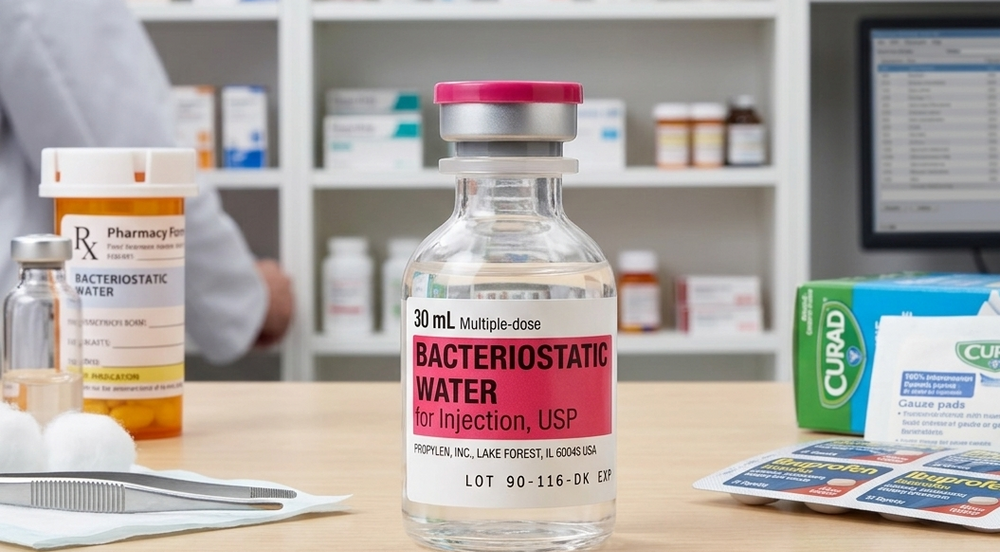
In modern healthcare, precision matters. From medication preparation to laboratory procedures, every component plays an important role in ensuring safety and effectiveness. One product that often appears in clinical settings is bacteriostatic water, a specialized sterile solution commonly used by healthcare professionals for specific medical applications.
Although many people encounter the term while researching injectable medications, there is often confusion about what bacteriostatic water actually is, how it differs from other sterile solutions, and why medical professionals choose it in certain situations. Understanding these basics helps patients and caregivers become more informed without replacing professional medical advice.
What Is Bacteriostatic Water?
Bacteriostatic water is sterile water for injection that contains a small amount of benzyl alcohol as a preservative. The preservative inhibits the growth of many types of bacteria after the vial has been opened, making the solution suitable for multiple withdrawals when used according to its approved labeling.
Unlike ordinary purified water or drinking water, bacteriostatic water is manufactured under strict pharmaceutical quality standards to ensure sterility before use.
Healthcare providers may use it when preparing certain medications that require dilution or reconstitution, provided the medication's prescribing information specifically permits its use.
How Does It Differ from Sterile Water?
Although both products are sterile, they serve different purposes.
Sterile water for injection contains no antimicrobial preservative and is generally intended for single-use applications once opened. Bacteriostatic water, by contrast, contains benzyl alcohol, which helps reduce bacterial growth after the vial is accessed.
The choice between these products depends entirely on the medication manufacturer's instructions, the patient's clinical needs, and the judgment of qualified healthcare professionals.
Common Healthcare Applications
Bacteriostatic water has a variety of legitimate medical and laboratory uses. These may include:
- Preparing certain medications when specifically recommended by the manufacturer.
- Supporting pharmaceutical compounding in appropriate clinical settings.
- Use in research laboratories and educational institutions.
- Medical training and demonstration environments.
Its use always depends on product labeling, institutional protocols, and healthcare provider recommendations.
Why the Preservative Matters
The defining characteristic of bacteriostatic water is its benzyl alcohol content.
This preservative helps inhibit bacterial growth inside the vial after opening, reducing contamination risk during approved multiple-dose use. However, the preservative does not sterilize contaminated equipment or replace proper aseptic technique.
Healthcare professionals continue to follow strict infection-control procedures regardless of the preservative.
Important Safety Considerations
Although bacteriostatic water is widely used in healthcare, it is not appropriate for every patient or medication.
Several important considerations include:
- Some medications specifically require sterile water instead.
- Certain patient populations, including newborns, may have restrictions regarding products containing benzyl alcohol.
- Product labeling should always be reviewed before selecting a diluent.
- Healthcare professionals should follow manufacturer instructions and institutional guidelines.
Patients should never substitute one injectable solution for another without professional guidance.
Choosing the Right Product
When healthcare facilities purchase pharmaceutical supplies, several factors influence product selection.
These often include:
- Regulatory compliance
- Manufacturer reputation
- Sterility assurance
- Packaging integrity
- Expiration dating
- Storage requirements
- Compatibility with intended medications
Leading pharmaceutical manufacturers maintain rigorous quality-control standards throughout production to help ensure consistent product quality.
Proper Storage and Handling
Maintaining product quality begins with proper storage.
Healthcare facilities generally store pharmaceutical solutions according to manufacturer recommendations regarding temperature, light exposure, and expiration dates. Staff members routinely inspect packaging for damage and confirm product integrity before use.
Following established storage practices helps maintain sterility until the product reaches its intended clinical environment.
Clearing Up Common Misconceptions
Online discussions have contributed to several misconceptions about bacteriostatic water.
One common misunderstanding is that all injectable medications can be prepared using the same solution. In reality, medication manufacturers specify compatible diluents based on stability, safety, and clinical testing.
Another misconception is that the preservative makes the product immune to contamination. While benzyl alcohol helps inhibit bacterial growth, proper sterile handling remains essential throughout every stage of clinical use.
Final Thoughts
Bacteriostatic water plays an important role in healthcare by providing a sterile solution with an antimicrobial preservative for approved medical applications. Its unique formulation makes it suitable for specific situations, but it should always be selected according to product labeling and healthcare professional guidance.
As with any pharmaceutical product, understanding its intended purpose, limitations, and safety considerations helps promote informed decision-making while supporting high standards of patient care.
Frequently Asked Questions
1. What is bacteriostatic water?
It is sterile water for injection that contains benzyl alcohol as an antimicrobial preservative.
2. Is bacteriostatic water the same as sterile water?
No. Sterile water does not contain preservatives, while bacteriostatic water includes benzyl alcohol.
3. Why is benzyl alcohol added?
It helps inhibit the growth of many bacteria after the vial has been opened, as described in the product labeling.
4. Can every injectable medication use bacteriostatic water?
No. The appropriate diluent depends on the medication manufacturer's instructions and clinical guidance.
5. Where is bacteriostatic water commonly used?
It is used in hospitals, clinics, pharmacies, research laboratories, and other healthcare environments.
6. Is bacteriostatic water intended for home use?
It should only be used when prescribed or directed by a qualified healthcare professional and according to the approved product labeling.

 Arabic
 French
 Spanish
 Portuguese
 Deutsch
 Turkish
 Dutch
Dutch
 Italiano
 Russian
 Romaian
 Portuguese (Brazil)
 Greek
Greek
