


Best ESD Antistatic Mat Malaysia: Which One Should You Choose?
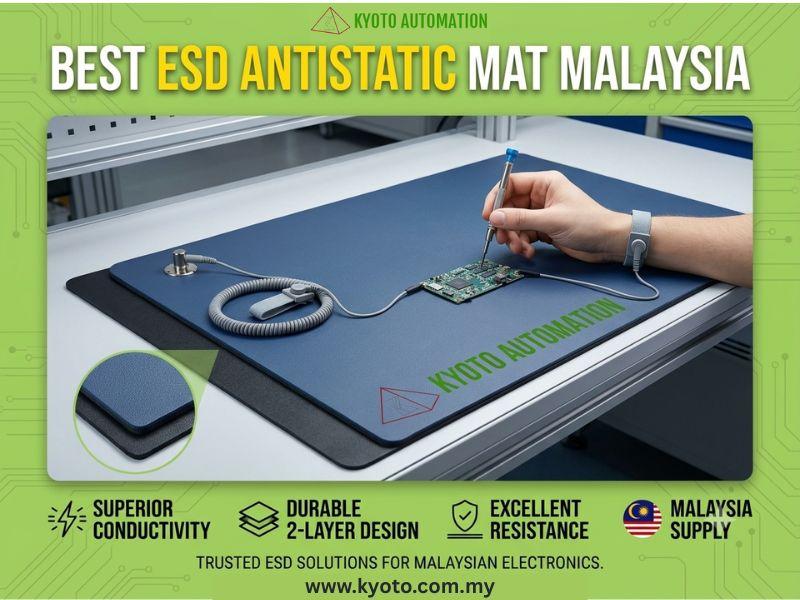
Electronic components are becoming smaller, faster, and more sensitive than ever. Yet a tiny static discharge that you cannot even feel can damage them in seconds. For manufacturers, repair centres, laboratories, and assembly lines, this risk can lead to costly failures and product defects.
The challenge is that many businesses buy an ESD mat without understanding the differences between materials, resistance levels, and applications. As a result, they often end up with a product that does not provide the protection they need.
The good news is that choosing the right ESD antistatic mat does not have to be difficult. Once you understand the key features, the decision becomes much easier. This guide explains everything you need to know, from mat types and materials to workplace applications and buying considerations.
What Is an ESD Antistatic Mat?
ESD antistatic mats are surfaces that are used to provide protection from any electrostatic discharges that may damage any electronic devices or components.
These mats provide a safe outlet for static electricity before it reaches circuit boards, microchips, or other electronic assemblies.
If not protected against ESD, static electricity can:
-
Damage sensitive parts
-
Decrease product reliability
-
Cause defects in production
-
Require costly repairs and replacements
As a result, ESD mats have become a standard requirement in many industries.
Why ESD Protection Matters in Malaysia
Malaysia continues to be one of the prominent countries when it comes to electronics manufacturing, semiconductor manufacturing, and industrial automation.
The industries where ESD mats can usually be found are as follows:
-
Electronic Manufacturing
-
Semiconductor Manufacturing
-
Automotive Electronics
-
Medical Device Manufacturing
-
Telecommunications Equipment Manufacturing
-
Service Centers
-
Research Laboratories
Thus, choosing the proper ESD mat in Malaysia is important not only for compliance reasons but also for the sake of profits.
Key Features to Look for in an ESD Mat
A good ESD mat will ensure safe handling of electronics and durability, even when used regularly. Getting acquainted with some basic aspects of the ESD mat in Malaysia can help you select the right one.
Surface Resistance Rating
The surface resistance indicates the safety of static discharge and is an important feature for effective ESD protection. Select a mat with a surface resistance of 10⁶ to 10⁹ ohms.
Materials and Thickness
High-quality mats are mostly made of rubber or vinyl. The recommended thickness is 2mm to 3mm.
Grounding System
An ESD mat without grounding does not work effectively. You should opt for a mat that provides a grounding cable.
Size and Compatibility with Work Area
Select an ESD mat that can fully cover your working area. First of all, you need to measure your work area.
Top ESD Antistatic Mat Options in Malaysia
Several types of ESD antistatic mats are available in Malaysia, each designed for different work environments. Choosing the right option depends on your workspace, usage, and protection requirements.
Tabletop ESD Mats
These portable mats can be useful on workbenches where delicate electronic parts are handled. These are usually used in repair facilities and assembly stations.
-
Useful for soldering and PCBs
-
Can be easily fitted on workstations
-
Usually priced at RM30 to RM150
A very convenient choice for small ESD-controlled workplaces.
Floor ESD Mats
Floor mats cover larger working areas where people constantly walk. They protect against the generation of static electricity due to walking.
-
Suitable for assembly lines
-
Cover more extensive working areas
-
Usually costs between RM200 and RM800
This is a common option used in industrial and manufacturing settings.
Two-Layer vs Three-Layer Mats
The layers will influence performance as well as durability. Although both these materials offer ESD protection, the difference in their value lies in their durability.
-
Two-layer mats are cheaper
-
Three-layer mats are more durable
-
Better resistance control is possible with three-layer mats
For daily industrial use, three-layer mats are often the better investment.
How to Choose the Right Mat for Your Needs
The optimal ESD mat in Malaysia should vary depending on the intended usage conditions. Various environments have varied degrees of requirements regarding protection and longevity.
Home Enthusiasts
Those who build computers, repair electronic devices, and do other hobbyist jobs can rely on smaller-sized mats placed on the tabletop together with a wrist strap to protect from electrostatics efficiently and relatively inexpensively.
Repair Shops
Daily contact with sensitive equipment calls for reliable ESD protection for repair shops. Large-sized mats with correct grounding can help minimise the danger of electrostatic damage accidentally.
Factories and Production Lines
Heavy-duty industrial environments imply frequent utilisation of floor mats capable of enduring continuous operations and a large amount of foot traffic.
Common Mistakes People Make With ESD Mats
Even the best mat cannot help you if it is used improperly. Check for these frequent mistakes.
-
Not using a grounding wire: An ungrounded mat is practically useless.
-
Putting the mat on an inappropriate surface: A static charge can accumulate if the mat is placed on a non-conducting table that is not grounded.
-
Neglecting the state of the mat: Damage such as cracking and tearing results in the loss of resistive properties of the mat.
-
Using ordinary cleaning agents: Such products damage the conductive coating of the mat, so only ESD-safe cleansers must be used.
Avoiding these faults ensures long-term proper performance of the mat.
Why Choose Kyoto Automation for ESD Antistatic Mats?
When selecting products for ESD protection, the quality of the product and the credibility of the supplier are equally important as the mat itself. The products offered by Kyoto Automation include different kinds of solutions for ESD protection that may prove helpful to businesses that need to protect their electronic parts from static electricity.
Specialising in producing high-quality industrial products for various needs, Kyoto Automation supplies ESD anti-static mats for different uses, including repair stations, factories, laboratories, and assembly line operations. These products are specially designed for efficient control of static electricity in compliance with the requirements of electronics and industries.
No matter what kind of ESD product you need — whether you want a mat for a table or for the floor, Kyoto Automation will provide you with an appropriate ESD solution.
Conclusion
Finding the best ESD antistatic mat is dependent upon your environment, how much you will be using the mat, and how much protection you will need. It doesn’t matter whether you require a portable mat for repairing electronics or something that will withstand more wear on the production floor. Selecting an antistatic mat is a smart choice.
The selection of an antistatic mat will depend upon the following factors: material quality, proper grounding, durability, and size. If you take the time to choose a proper mat, it will help improve the efficiency and safety of your employees.
Frequently Asked Questions
Q1. Is an ESD mat required to be grounded to function?
Ans. Yes, it is necessary. If you do not have the grounding wire attached to the earth point, then the mat will not be able to release any static electricity from your components – they will remain unprotected.
Q2. Can I use an ordinary rubber mat instead of an ESD mat?
Ans. No, because they are not conductive in the required manner and cannot protect from static electric discharge.
Q3. How often should I change my ESD antistatic mat?
Ans. Usually, the average lifespan of such a mat ranges from two to five years, although in the case of intensive industrial usage, it may become shorter. Look for cracks, damage or discolourations as indicators of its necessity to be changed.
Q4. Is the humid climate in Malaysia enough to avoid static electricity accumulation?
Ans. No, even though outdoors it may help to avoid it, air-conditioned interiors become very dry quickly, and this allows static electricity to accumulate around the electronic devices.

 English
 Arabic
 French
 Spanish
 Portuguese
 Deutsch
 Turkish
 Dutch
Dutch
 Italiano
 Russian
 Portuguese (Brazil)
 Greek
Greek
