


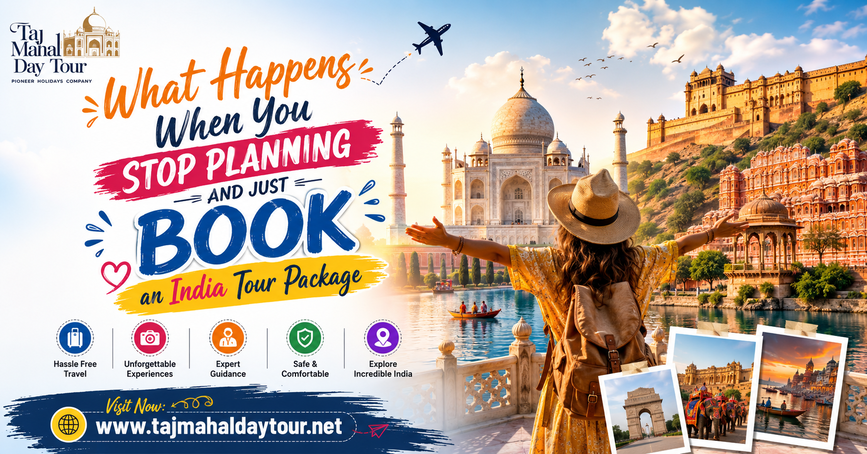
What Happens When You Stop Planning and Just Book an India Tour Package
The Trip I Almost Didn't Take
I had been putting it off for three years. Every time someone mentioned traveling across India, I thought about the chaos — the heat, the crowds, the long train rides, the language barrier. But last October, I finally stopped overthinking and booked one of those India Tour Packages I kept seeing online. And honestly? It changed the way I look at travel forever.
This is not a polished travel brochure. This is what actually happened — the good mornings, the wrong turns, the meals I still think about, and the places that made me sit down and just stare.
Why India Is Not What You Expect
Most people carry a picture of India in their heads before they arrive. Busy streets, colorful clothing, ancient temples — and yes, all of that is real. But India is also quiet mountain villages where the air smells like pine and wood smoke. It is a narrow lane in a centuries-old city where a chai shop has been open since before your grandfather was born. It is a lake that reflects the entire sky at sunrise with not a single other person around.
The country does not fit into one idea. That is both the challenge and the magic of it.
When I landed in Delhi for the first time, I stepped out of the airport and just stood there for a moment. The air was warm, the sounds were layered — horns, voices, wheels on pavement — and somewhere nearby, someone was frying something that smelled extraordinary. I thought, okay. This is going to be something.
Starting in Delhi: Older Than You Think
Delhi is not just a starting point. It is a destination on its own, and most people rush through it to reach Agra or Jaipur without realizing what they are leaving behind.
My first morning there, I walked to the Jama Masjid before the crowds arrived. The mosque sits on a raised platform and when you climb the steps and walk through the gate, the whole city opens up beneath you. Old Delhi stretches out in every direction — a maze of rooftops, lanes, and spires. The silence at that hour felt like something borrowed.
Later that day, I took a cycle rickshaw through Chandni Chowk. My driver knew every shortcut and every shop. He pointed out a sweet shop that had been operating since 1884. The jalebi I ate standing on that narrow street, still hot from the oil, was one of those small moments that travel sometimes gives you — completely unplanned and completely perfect.
The Red Fort, Qutub Minar, Humayun's Tomb — each of them carries a different mood. If you are building an itinerary around India Tour Packages that start in Delhi, give the city at least two full days. You will not regret it.
The Road to Agra and the Taj Mahal
No blog about India is complete without this. The Taj Mahal is one of those rare places where the reality actually exceeds the photograph.
I arrived at the eastern gate before sunrise. There were already people there — it was not empty, and I want to be honest about that — but the moment I walked through the main arch and saw the white marble structure rising in the early light, everything else went quiet in my mind. It took a few seconds to register what I was looking at. The symmetry of it, the scale, the way the stone seems to glow from within — it does not look entirely real.
I sat in the garden for almost an hour. I watched the light change. I watched families take photographs, watched guides explain history to small groups, watched an elderly couple stand in silence and simply look.
The Taj was built by Emperor Shah Jahan for his wife Mumtaz Mahal, who died in 1631. Construction took over twenty years and employed tens of thousands of craftsmen. Standing there, those numbers feel small. The building feels like something that arrived fully formed.
Around Agra, do not miss Agra Fort and Fatehpur Sikri. Fatehpur Sikri especially — an entire Mughal city built in red sandstone and then largely abandoned — has an eerie stillness that stays with you.
Jaipur: The City That Wears Its History Loudly
From Agra, the drive to Jaipur takes you through open highway flanked by farmland and occasional roadside dhabas where truck drivers stop for lunch. We pulled over at one of those dhabas around noon. Plastic chairs, a ceiling fan, and dal makhani that was better than anything I have eaten at a restaurant with a proper interior.
Jaipur arrived like a change in volume. The city is large, busy, and layered with history at every turn. The Hawa Mahal — the Palace of Winds — is the image everyone has seen, but walking through the lanes around it, the fabric shops, the blue pottery vendors, the snack stalls — that is where the city actually lives.
The Amber Fort sits about eleven kilometers from the city center and it is worth every minute of the drive. The fort is built into a hillside and the views from the upper ramparts take in the surrounding hills and a long, still lake below. Inside, the Sheesh Mahal — the Mirror Palace — is covered with tiny glass pieces set into the plaster ceiling and walls. When a single flame is lit inside, the entire room glitters.
At night, Jaipur has a different character. The street food lanes near the old city come alive after dark. I had kachori, lassi, and a sweet called ghewar that I had never encountered before. The vendor explained it takes all day to make and is a specialty of the region. I bought two.
Going North: Rajasthan's Other Side
After Jaipur, many travelers head directly back. I had built extra days into my itinerary, so I went west to Jodhpur and Udaipur, and I am glad I did.
Jodhpur is painted blue — not the whole city, but enough of it that from the top of Mehrangarh Fort, the old town below looks like water has pooled in the streets. The fort itself is one of the most impressive structures I saw on the entire trip. Massive, intact, and full of detailed carvings and painted halls, it rises directly from a rocky cliff above the city.
Udaipur is completely different — a lakeside city often called the Venice of the East, which is a comparison that undersells it. The City Palace is extraordinary, built over several generations of Maharanas and containing a sequence of rooms, courtyards, terraces, and galleries that could occupy an entire day. In the evening, sitting at a rooftop restaurant with the lake in front of you and the palace lit up behind you, it feels like a place that exists slightly outside of time.
South India: Where the Journey Slows Down
The trip I originally booked through tajmahaldaytour.net was focused on the north, but after returning home and processing everything, I went back a few months later with a different plan — Kerala, Tamil Nadu, Karnataka.
South India operates at a different pace. The landscape is greener, the food is different, the architecture is different. In Kerala, I took a houseboat through the backwaters of Alleppey. For two days, I drifted through a network of canals lined with coconut trees and small villages. Fishermen cast nets in the early mornings. Kingfishers sat on overhead wires. The houseboat cook made fish curry with fresh coconut that remains one of the better things I have eaten in my life.
In Tamil Nadu, the temples are unlike anything in the north. The gopurams — the tower gateways covered entirely in painted sculptures — can reach ten stories high and are overwhelming to stand beneath. The Meenakshi Temple in Madurai has corridors of a thousand pillars and a bazaar inside its walls. People come there not just as tourists but as worshippers, and the place has a living energy that is completely different from a heritage site.
Practical Things Nobody Warns You About
Travel in India, especially across multiple regions, requires some mental flexibility. Here is what I wish someone had told me:
Trains are the backbone of the country. Indian Railways connects nearly everything, and booking a sleeper or AC class ticket in advance is both affordable and comfortable for long distances. Book early — popular routes fill up.
Weather matters a lot. October to March is broadly the best time to visit the north and south. The Himalayan regions are best in summer. Monsoon season (June to September) can be stunning in parts of Kerala but difficult elsewhere.
Eat local. The best food is almost never at the tourist-facing restaurants. Sit where locals sit. Point at what they are eating. You will spend less and eat better.
Bargaining is normal and expected in markets and with auto-rickshaws, but not in fixed-price shops or restaurants. Read the situation.
Hydration is non-negotiable. Carry water always, especially if you are visiting monuments in open sun.
What India Tour Packages Actually Get Right
I have traveled independently and I have traveled with packages, and there is genuine value in both. A well-designed India Tour Package takes care of the logistics that can otherwise consume entire days — transport between cities, accommodation that has been vetted, guides who know the history well enough to make a monument feel alive instead of just old.
The key is choosing a package that leaves room for the unplanned parts. The best moments I had — the dhaba lunch on the highway, the sunrise at Jama Masjid, the conversation with a pottery maker in Jaipur — none of those were on any itinerary. They happened because there was space in the day for things to simply occur.
Companies like tajmahaldaytour.net offer structured routes through the most significant parts of North India while keeping enough flexibility built in that a trip does not feel like a scheduled tour of photographs you already took on Google Images.
FAQs About Traveling in India
Q: What is the best time of year to travel to India?
October through March is the most comfortable period for most of the country. The northern plains and Rajasthan are cool and dry. South India is pleasant throughout this window. Summers are hot, particularly in Rajasthan and Delhi. The monsoon (June to September) brings rain, but also remarkable greenery and dramatically reduced crowds.
Q: How many days do I need for a proper India trip?
A focused North India itinerary covering Delhi, Agra, and Jaipur can be done meaningfully in seven to ten days. If you want to add Rajasthan (Jodhpur, Udaipur, Jaisalmer) or head south to Kerala or Tamil Nadu, two to three weeks is more appropriate. India rewards slower travel.
Q: Is India safe for solo travelers?
Generally, yes. India receives millions of solo travelers every year, including solo women travelers. Standard common sense applies — stay aware of your surroundings, use registered transport, keep copies of important documents, and let someone know your itinerary. Tourist areas are well-accustomed to visitors and most people are helpful and welcoming.
Q: What should I wear when visiting temples and mosques?
Modest clothing is expected. Shoulders and knees should be covered at most religious sites. Many temples require you to remove shoes at the entrance. Women may be asked to cover their heads at mosques. Carry a lightweight scarf or shawl — it solves most situations quickly.
Q: How do I get around between cities?
Trains are excellent for long distances and are genuinely part of the India experience. Flights are practical for longer jumps (Delhi to Kerala, for example). Within cities, auto-rickshaws and app-based taxis like Ola are reliable. For day trips, hiring a private car with a driver is common and usually affordable.
Q: Do I need a visa to visit India?
Most nationalities require a visa. India offers an e-Visa for citizens of many countries, which can be applied for online before departure. The process is straightforward — check the official Indian government e-Visa portal for your country's eligibility and apply at least four to five days before travel.
Q: What is the currency in India and how should I carry money?
The Indian Rupee (INR) is the currency. ATMs are widely available in cities and larger towns. Credit and debit cards are accepted at hotels and many restaurants, but smaller shops, street food vendors, and rural areas operate on cash. Carry a reasonable amount of rupees for day-to-day expenses.
Q: Is the food in India spicy?
Indian cuisine varies enormously by region. Some dishes are intensely spiced, others are mild. If you have a low tolerance for heat, simply say so when ordering — most restaurants and home cooks can adjust. South Indian food tends to use more chili; north Indian food often uses more cream and butter. Both are worth trying.
Q: Can I drink the tap water in India?
No. Always drink bottled or filtered water. Most hotels provide complimentary bottled water. Be cautious with ice at street stalls and raw salads washed in tap water, especially during the first few days of your trip while your stomach adjusts.
Q: What should I not miss if I only have one week?
Delhi, Agra, and Jaipur — the Golden Triangle — is the classic first-week itinerary for a reason. It covers Mughal history, Rajput architecture, street food culture, and one of the most recognized monuments on earth. One week, done well, leaves you wanting more. Which is exactly the point.

 English
 Arabic
 French
 Spanish
 Portuguese
 Deutsch
 Turkish
 Dutch
Dutch
 Italiano
 Russian
 Portuguese (Brazil)
 Greek
Greek
