


How to Build Customer Trust Online: 7 Proven Techniques

Every purchase made online is, at its core, an act of faith.
The customer can't touch the product, can't look you in the eye, and can't walk away if something goes wrong. They're handing over money — and sometimes personal data — to a brand they may have discovered just minutes ago. That's a remarkable leap of trust. And the businesses that earn it? They don't just get a sale. They get into a relationship.
Building trust online isn't about clever marketing copy or a slick color palette. It's about consistently signaling reliability, transparency, and genuine care — across every touchpoint. Here are seven techniques that actually work.

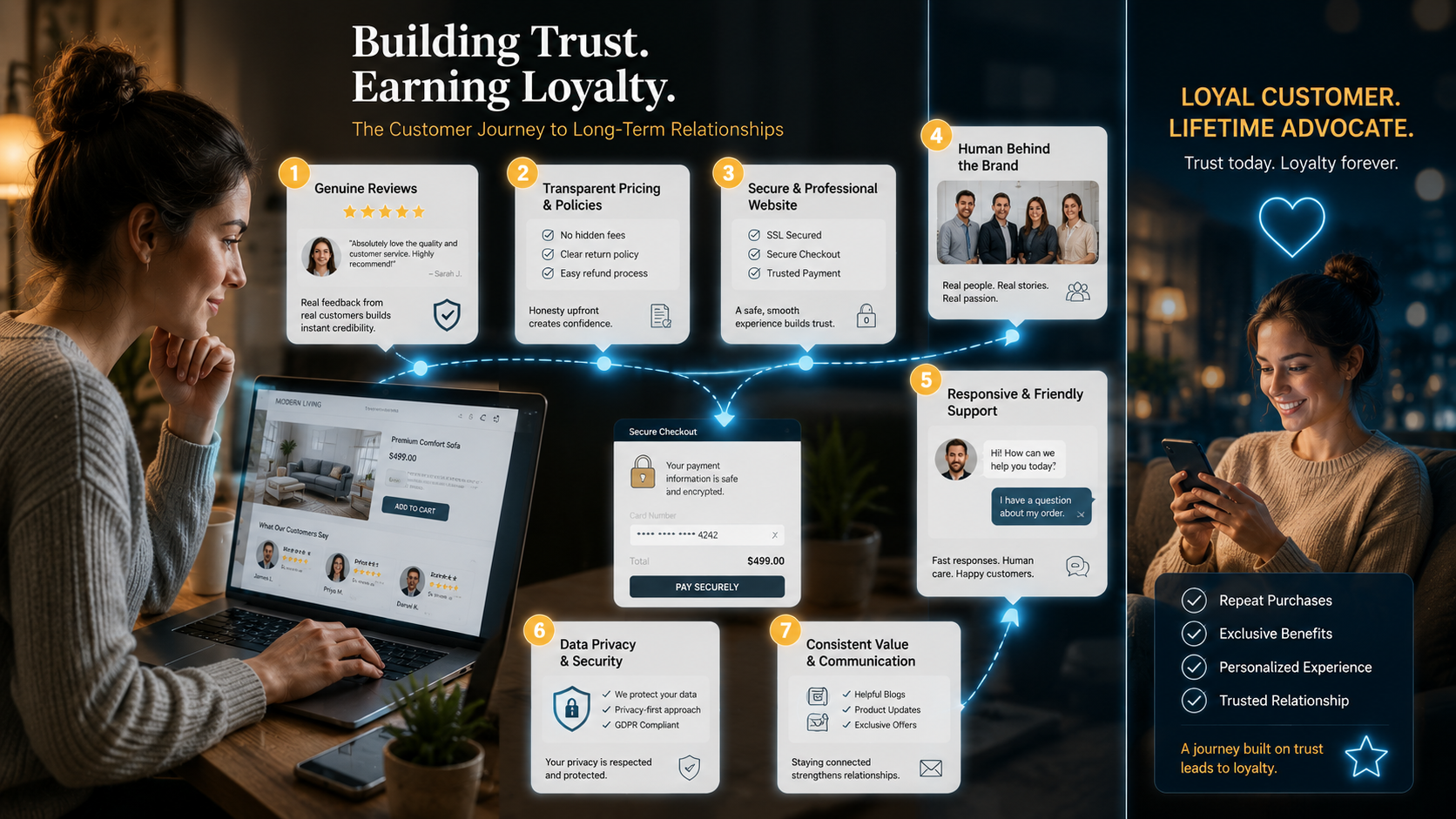
1. Let Your Customer Do the Talking:
Honestly, nothing builds credibility quicker than hearing from someone who has zero to gain by praising you, right? Social proof, like reviews, testimonials, and user-generated content, feels like the digital version of a friend’s recommendation, and it usually hits harder than you’d expect.
There is also a weird little nuance a lot of brands overlook. It’s authenticity over perfection, not the other way around. If a product page has 200 five-star reviews and not one complaint, that can start to look staged. People tend to believe you more when you also show a few 3-star reviews, because it suggests real-life honesty, not a polished script.
So show testimonials that actually feel human. Include names, roles, and, if possible, photos. Even better, include case studies that tell a before-and-after story with specifics. Let your customers become your most convincing sales team, because they already speak the language your buyers care about.
2. Make Transparency Non-Negotiable:
Hidden fees, vague return policies, and all that finicky fine print that only a lawyer would really enjoy. These things are trust killers, and customers, they’ve gotten better at smelling it out fast.
Transparency is basically you saying your pricing up front, walking through your refund steps in regular plain language, and being honest about what your product is able to do and also what it can’t. If there’s a waitlist, then say that. If shipping is, let’s say, two weeks, don’t hide it like it’s some secret bargain. Sure, it can feel a little uncomfortable to share the less flattering truths right away, but that short-term discomfort is always better than the long-term mess of someone who felt truly deceived.
You can also add a separate “How We Work” or “Our Promise” page. It makes your process feel more human, and it gives customers a specific reason to trust you before they actually pay.
3. Invest in Your Digital First Impression:
Visitors form an opinion about your website in under a second. That’s not a metaphor, it’s sort of a documented cognitive reality. A cluttered layout, broken links, or a site that loads slowly on mobile doesn’t just frustrate people. It triggers doubt. Instantly, even before they can explain it, it happens faster than most people think.
Your website is your storefront, your handshake, and your reputation all at the same time. Prioritize clean design, fast load times, and intuitive navigation. Also, make sure your SSL certificate is visible (that padlock in the browser bar matters more than most people realize).
Then include a physical address, a real phone number, and professional-quality imagery. These details might look cosmetic, but together they’re really doing the same job: they answer one question every new visitor is asking quietly. Can I trust this place?
4. Show the Human Behind the Brand:
One of the most underused trust cues is basically showing who you are, in a plain way. Like, a crisp “About Us” page with real team snapshots, the founder’s journey, or those guiding principles that shape how you decide things, can really lower that awkward psychological distance between your brand and your customer.
People don't trust faceless systems; they trust actual folks. So share your origin story, like why you started in the first place. And if you had missteps along the way, and you still learned from them, mention that too. Vulnerability, if you handle it well, feels disarming. It tells customers that there are accountable humans behind each call you make—and that counts a lot when something goes off track, and they need help fast.
5. Prioritize Responsive, Human Customer Support:
Speed plus empathy in customer service works like a trust multiplier. So when somebody reaches out with a real problem, and they get a quick response that’s actually helpful, not just polite, that one moment can take a skeptic and turn them into a loyal advocate.
But the other way around is just as true. A customer who waits three days for an answer — then gets a copied, bland response that doesn’t help at all — doesn’t only walk away. They vent loudly, usually on the same platforms where you’ve been trying to grow your good name.
Put money into a live chat option or at least make it super clear when you’ll respond. Also, train your support team on tone, not only product details. The aim isn’t really to “close” tickets, it’s to help customers feel acknowledged. That little sensation is what sticks and what they pass on.
6. Demonstrate Your Data Ethics:
Privacy concerns aren’t really niche anymore. After all those years of major, high-profile data breaches, plus people noticing more and more about surveillance capitalism, customers are starting to look closely at how brands handle their information.
You can earn trust by acting before problems pop up, not only after. Put your privacy policy in plain English, not this huge wall of legalese. Spell out exactly what data you gather and for what reason. Let users actually steer their own preferences, not just “agree” and hope for the best. And if you use cookies or tracking pixels, say it upfront in a clear way, before consent is required.
Also, security badges and compliance certifications (like GDPR, SOC 2, or similar) can help; they kind of signal that protecting customer data is treated like a real business priority, not some afterthought.
7. Stay Consistently Visible Over Time
Trust is not a campaign. It's a reputation built incrementally—through blog posts that actually answer questions, newsletters that aren't just promotional, and a social presence that engages rather than just broadcasts.
Brands that disappear between product launches feel transactional. Brands that show up consistently — sharing expertise, responding to comments, participating in industry conversations — feel like partners. Over time, that consistency compounds. It signals stability, which is quietly one of the most powerful trust signals of all.
The Underlying Logic
Every technique above shares a common thread: it reduces risk in the customer's mind. Trust, at its essence, is the belief that something will work out as expected. Your job as a brand is to shrink the gap between what you promise and what you deliver — and to do it visibly, repeatedly, and without fine print.
The brands customers return to aren't always the cheapest or the most innovative. They're the ones that made people feel safe enough to try in the first place.
Build that feeling. Everything else follows.

 English
 Arabic
 French
 Spanish
 Portuguese
 Turkish
 Dutch
Dutch
 Italiano
 Russian
 Romaian
 Portuguese (Brazil)
 Greek
Greek
