In today’s competitive industrial environment, high-quality manufacturing depends on precision, consistency, and efficient production processes. Customers expect products that meet exact specifications, perform reliably, and arrive on time. However, many manufacturing operations face a common challenge that can affect quality at every stage material distortion. Bending, warping, twisting, and misalignment can occur during forming, welding, machining, heat treatment, or transport. This is why Straightening Solutions are essential for modern high-quality manufacturing.
Straightening is the process of restoring metal components, bars, tubes, sheets, and fabricated assemblies to their intended shape and dimensions. It ensures that products meet tolerance requirements before moving to assembly, coating, machining, or final shipment. Without proper straightening processes, manufacturers risk defects, delays, waste, and dissatisfied customers.
As quality expectations continue to rise, advanced straightening systems have become a critical part of efficient and reliable production.
The Importance of Precision in Manufacturing
Modern products are built with tighter tolerances than ever before. Industries such as automotive, aerospace, construction equipment, medical manufacturing, and industrial machinery all depend on accurately shaped parts.
Even a small bend or twist can create serious issues such as:
- Poor fit during assembly
- Excessive vibration in rotating parts
- Weak structural alignment
- Surface defects
- Reduced product lifespan
- Safety concerns
- Increased wear and tear
High-quality manufacturing begins with dimensionally accurate components. Straightening solutions help achieve that standard.
Why Distortion Happens
Metal and fabricated parts often experience stress during production. These stresses can cause materials to deform slightly or significantly.
Common causes of distortion include:
- Heat from welding
- Pressure during stamping or forming
- Residual stress after machining
- Uneven cooling after casting
- Handling damage during transport
- Material springback after bending
- Storage pressure on long components
Without correction, these distortions may continue through the production line and create larger quality problems later.
What Are Straightening Solutions?
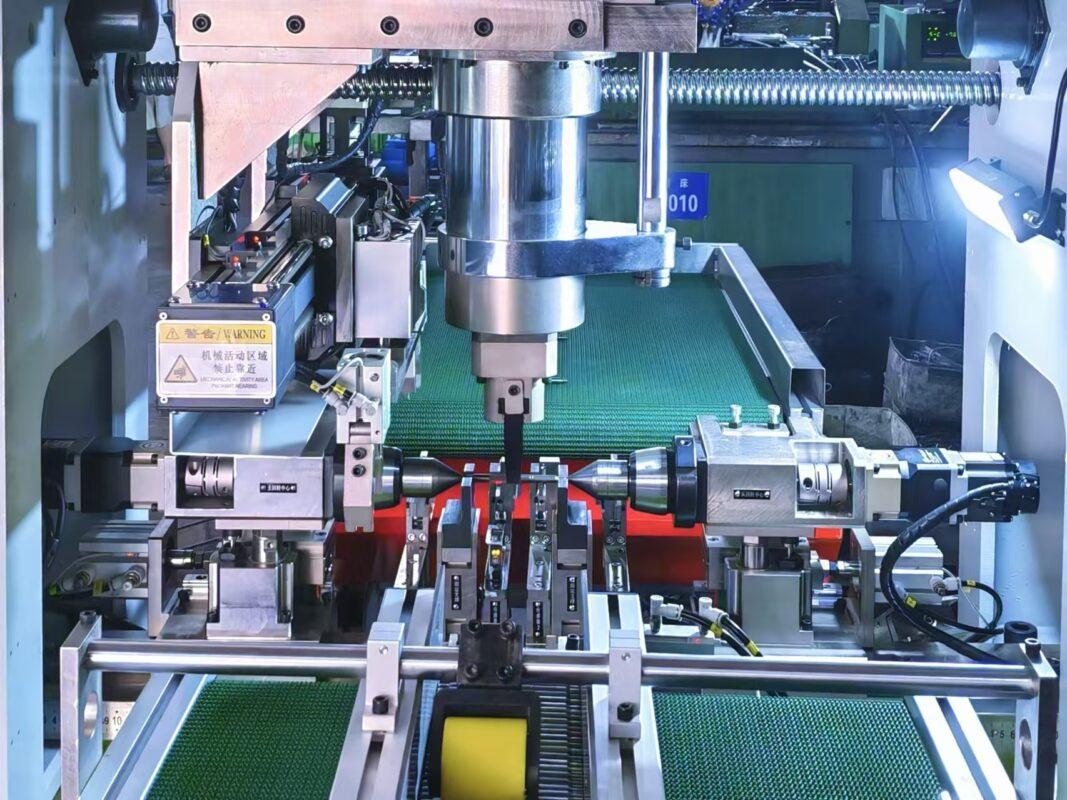
Straightening Solutions include machines, tools, and automated systems designed to correct bends, warping, twisting, or dimensional errors in manufactured parts.
Common types include:
- Hydraulic straightening presses
- Roller straightening machines
- CNC-controlled straightening systems
- Servo-driven correction equipment
- Laser alignment systems
- Robotic handling and positioning cells
These solutions help manufacturers restore precision efficiently and consistently.
How Straightening Solutions Improve Manufacturing Quality
1. Accurate Dimensions and Tight Tolerances
One of the main reasons straightening is essential is dimensional control. Parts that fall outside tolerance can fail inspection or cause assembly issues.
Modern straightening systems measure distortion and apply controlled force to return parts to exact specifications.
This is especially valuable for:
- Shafts and rotating components
- Structural frames
- Tubes and pipes
- Sheet metal assemblies
- Precision-machined parts
Accurate dimensions are the foundation of high-quality manufacturing.
2. Better Assembly Performance
Misaligned parts often slow assembly lines and require manual adjustments. Workers may need to force components into place, drill corrections, or stop production entirely.
Straightened components fit properly the first time, improving workflow and reducing delays.
Benefits include:
- Faster assembly times
- Reduced labor effort
- Lower risk of fitment errors
- Improved production flow
- More reliable final products
Smooth assembly contributes directly to product quality and delivery performance.
3. Reduced Scrap and Rework
When bent or warped parts are not corrected, they may need to be scrapped or reworked later. This increases costs and wastes materials.
Straightening solutions recover usable parts by correcting dimensional issues early in the process. This reduces:
- Material waste
- Additional machining costs
- Extra welding corrections
- Delayed shipments
- Lost production capacity
Lower scrap rates support both profitability and sustainability goals.
4. Consistent Product Quality
Customers expect every product to meet the same standard. Inconsistent shapes or dimensions can create variation between batches, leading to complaints or returns.
Modern straightening equipment provides repeatable performance, ensuring parts meet the same specifications every time.
Consistency is particularly important in:
- Automotive manufacturing
- Aerospace production
- Medical device fabrication
- Appliance manufacturing
- Heavy equipment production
Reliable quality helps strengthen customer trust.
5. Improved Structural Integrity
Straight parts are not only easier to assemble—they also perform better. Misalignment can place uneven stress on components during operation, leading to fatigue, vibration, or early failure.
Straightening helps improve:
- Load distribution
- Mechanical balance
- Wear resistance
- Structural strength
- Long-term durability
This is essential for products used in demanding environments.
Industries That Depend on Straightening Solutions
Automotive Industry
Frames, shafts, brackets, and suspension parts require exact alignment for safety and performance.
Aerospace Sector
Aircraft components demand tight tolerances and structural precision.
Metal Fabrication
Welded structures and custom parts often distort during production.
Construction Equipment
Heavy-duty components need straightness for reliable operation.
Medical Manufacturing
Precision tools and equipment require highly accurate shapes and dimensions.
Machinery Production
Rotating and moving parts must remain aligned to reduce wear and vibration.
Automation Is Advancing Straightening Technology
Modern straightening systems are increasingly automated, helping manufacturers improve speed and repeatability.
CNC Controls
Programmed correction cycles ensure consistent results.
Laser Measurement
High-accuracy sensors identify bends, twists, and alignment issues.
Servo Force Systems
Apply exact correction pressure without damaging the material.
Robotic Material Handling
Moves heavy or complex parts safely through the process.
Automation reduces human error while increasing throughput.
Cost Benefits of Better Straightening
Investing in straightening solutions can generate significant long-term savings through:
- Lower scrap rates
- Reduced labor costs
- Faster production cycles
- Fewer customer returns
- Less rework
- Better machine efficiency
For many manufacturers, quality improvements alone justify the investment.
Supporting Lean and Smart Manufacturing
Straightening solutions also support lean manufacturing by reducing waste and production interruptions. In smart factories, they can integrate with digital systems to track:
- Tolerance trends
- Machine performance
- Production output
- Maintenance schedules
- Quality metrics
This data helps companies continuously improve operations.
The Future of Straightening Solutions
As manufacturing evolves, straightening technology will continue to advance with:
- AI-driven correction systems
- Predictive distortion analysis
- Real-time adaptive controls
- Fully automated straightening cells
- Smart factory integration
These innovations will make high-quality production even more efficient.
Conclusion
Straightening Solutions are essential for high-quality manufacturing because they ensure accurate dimensions, reduce defects, improve assembly efficiency, and strengthen final product performance. In industries where precision matters, even small distortions can create major problems.
By investing in modern straightening systems, manufacturers can improve consistency, lower costs, and meet rising customer expectations. As production standards continue to increase, straightening technology will remain a key part of building reliable, efficient, and competitive manufacturing operations.




 English
 Arabic
 French
 Portuguese
 Deutsch
 Turkish
 Dutch
Dutch
 Italiano
 Russian
 Romaian
 Portuguese (Brazil)
 Greek
Greek
