


Why Card Printers Are Trending in 2026 for Smarter Food and Retail Labelling
Introduction
Food and retail businesses are changing the way they present products in 2026. Cafés, bakeries, hotels, supermarkets, delis, butcher shops, and retail stores are no longer relying only on basic paper tags or handwritten labels. They want product labels that look clean, last longer, and can be updated quickly when prices, products, or menus change.
Clear labelling is now part of the customer experience. A good label helps customers see the product name, price, ingredients, allergens, offer details, or product description without confusion. It also helps the business look more professional and organised.
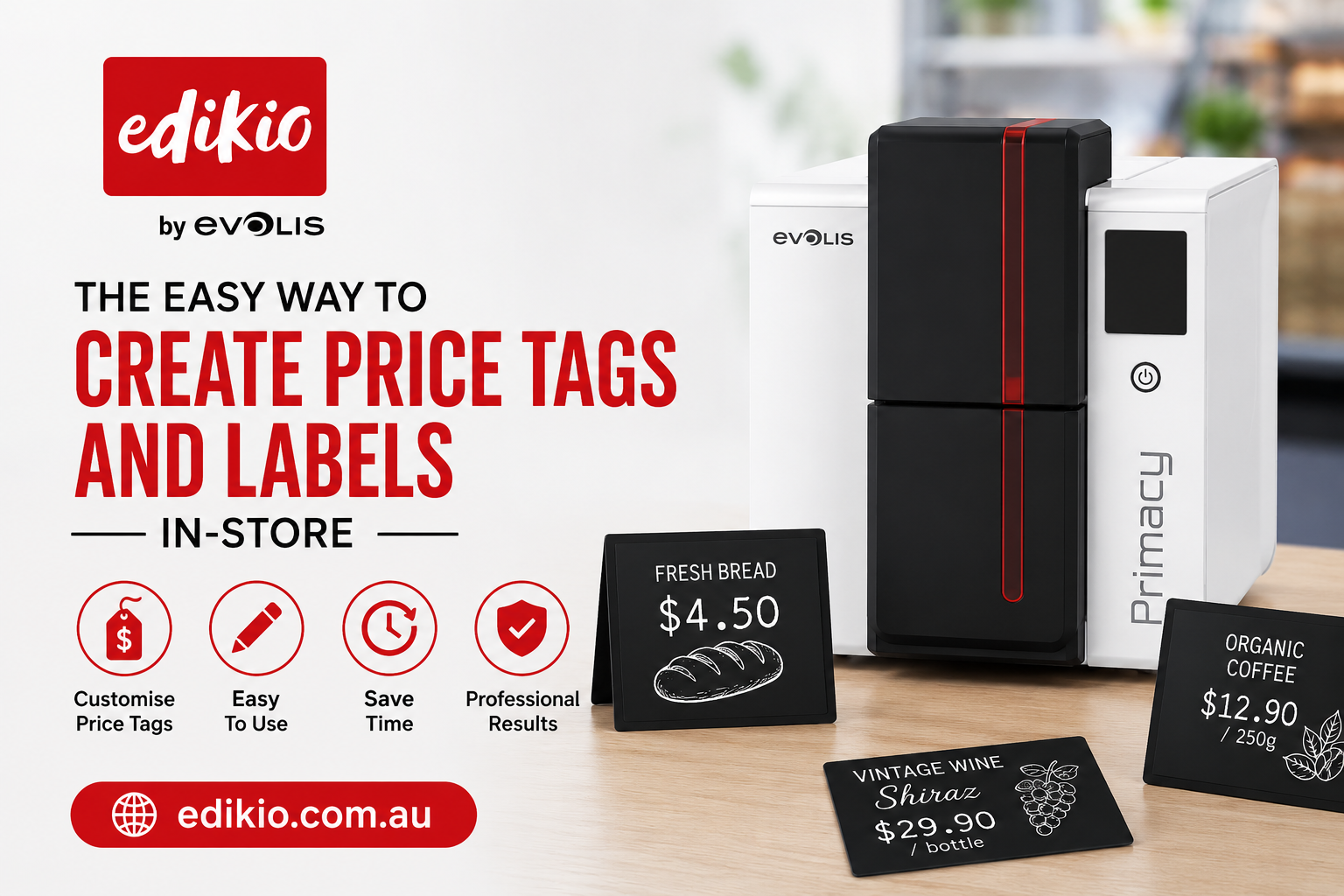
This is one of the main reasons why card printers are becoming popular in food and retail environments. With the right plastic card printer, businesses can print durable price tags, food display labels, buffet cards, product cards, and branded shelf labels in-house.
In 2026, product labelling is not only about showing a price. It is about improving presentation, building customer trust, saving staff time, and keeping displays easy to manage.
Why Traditional Paper Labels Are Losing Popularity
Paper labels have been used in shops and food displays for many years, but they are not always practical for busy modern businesses. In food counters, cafés, supermarkets, and retail shelves, labels are handled often, moved around, cleaned around, and exposed to moisture, temperature changes, or daily wear.
This means paper labels can become untidy very quickly. They may bend, tear, fade, curl at the edges, or look worn after only a short time. In a premium bakery, hotel buffet, cheese counter, or deli display, messy paper labels can reduce the overall quality of the presentation.
Handwritten paper labels can also create inconsistency. One staff member may write neatly, while another may write in a different style. Some labels may have large writing, while others may be difficult to read. This can make the display look unplanned and less professional.
Another issue is frequent replacement. If a price changes, a product sells out, or a new item is added, staff may need to rewrite or reprint paper tags again and again. Over time, this can waste time and create unnecessary label clutter.
For businesses that want a cleaner and more reliable solution, plastic card labels are becoming a better option.
What Are Card Printers Used for in Food and Retail Businesses?
Card printers are used to print directly onto plastic cards or PVC cards. In food and retail businesses, they can be used for much more than ID cards or membership cards. They are now a practical tool for creating professional product labels and display cards.
A food business can use card printers to create plastic price tags, food display labels, buffet cards, allergen cards, product name cards, ingredient labels, and menu item tags. A retail store can use them for branded shelf labels, product information cards, promotional cards, loyalty tags, or reusable price signs.
For example, a bakery can print labels for cakes, pastries, breads, and seasonal items. A hotel can print buffet cards for breakfast, lunch, dinner, and event catering. A supermarket can print product cards for cheese counters, deli sections, seafood areas, and fresh food displays.
The main benefit is control. Instead of waiting for an outside supplier or using temporary handwritten labels, staff can design and print labels when they are needed. This helps businesses keep their displays accurate, attractive, and up to date.
Why a Plastic Card Printer Is a Practical Choice in 2026
A plastic card printer is a practical choice because it gives businesses labels that are stronger and more professional than standard paper tags. Plastic cards are designed to handle regular use, which makes them suitable for busy food counters and retail displays.
Durability is one of the biggest advantages. Plastic card labels do not tear like paper. They are more resistant to bending, handling, moisture, and display wear. This makes them useful in bakeries, cafés, chilled counters, buffets, supermarkets, and other high-traffic environments.
Clean appearance is another important benefit. A plastic label with a clear layout, sharp text, and consistent design can make the entire display look more premium. Customers are more likely to trust a product display that looks organised and well maintained.
Easy updates are also important in 2026. Food and retail businesses often change prices, product names, ingredients, offers, and menu items. With in-house printing, staff can update a label quickly and replace it without waiting for a supplier.
Professional branding is another reason businesses are choosing plastic card labels. A printed card can include the company logo, brand colours, product category, fonts, and layout style. This helps every display look consistent.
Plastic cards also offer better resistance to daily handling. In environments where labels are moved, cleaned around, or placed near food displays, plastic labels can maintain a better appearance for longer.
How Edikio Card Printers Help Improve Product Presentation
Edikio card printers are designed to help food and retail businesses create professional plastic labels in-house. They are especially useful for businesses that want attractive, consistent, and easy-to-update product displays.
With Edikio card printers, businesses can print labels using their own design, logo, product names, prices, ingredients, allergens, and food information. This makes each label more useful for customers and more aligned with the brand.
A café may use branded labels for sandwiches, cakes, drinks, and daily specials. A cheese shop may print product names, origins, flavour notes, and prices. A hotel may create elegant buffet cards that match the style of its restaurant. A supermarket may use plastic labels to keep fresh food counters looking clean and organised.
Consistency is one of the biggest presentation benefits. When every label uses the same layout, font, logo placement, and design style, the whole display looks more professional. This can make a big difference in customer-facing environments.
Edikio card printers also make it easier to respond to changes. If a product name, price, or allergen detail needs updating, staff can print a corrected label quickly. This helps reduce confusion and keeps customer information accurate.
Best Places to Use Plastic Card Labels
Plastic card labels can be used in many food, hospitality, and retail settings. They are especially useful anywhere products need to be presented clearly and professionally.
Bakeries can use plastic labels for breads, pastries, cakes, cookies, seasonal products, ingredients, and allergen details.
Butcher shops can print labels for meat cuts, prices, origin information, preparation notes, and weight-based pricing.
Cheese counters can use plastic cards to show cheese names, milk type, country of origin, flavour notes, and prices.
Fish shops can display fish names, prices, source details, storage notes, and daily specials.
Cafés can label sandwiches, cakes, salads, drinks, counter items, and promotional offers.
Delis can use plastic labels for meats, cheeses, prepared foods, olives, salads, and takeaway items.
Hotels and buffets can print buffet cards for breakfast items, desserts, drinks, salads, hot dishes, and dietary information.
Supermarkets can use plastic card labels in bakery sections, deli counters, fresh food displays, cheese counters, seafood areas, and promotional shelves.
Florists can print product cards, plant care notes, price tags, and display labels for arrangements.
Catering displays can use printed cards for weddings, corporate events, conferences, parties, and private functions.
Across all these environments, plastic card labels help businesses improve presentation, reduce label waste, and keep information easier to manage.
What to Look for Before Choosing a Card Printer
Before choosing a card printer, businesses should think about how they will use it every day. The right printer depends on the type of labels needed, print volume, design requirements, and available support.
Print quality is very important. Labels should have clear text, sharp logos, readable prices, and clean product information. Poor print quality can make even a good display look unprofessional.
Card size should match the display style. Standard card sizes may work well for simple product names and prices, while longer cards may be better for ingredients, allergens, descriptions, or larger text.
Single-sided or double-sided printing is another key choice. Single-sided labels may be enough for most customer-facing displays. Double-sided printing can be useful when businesses want extra information on the back, such as internal product codes, preparation notes, or staff instructions.
Label design software should be easy to use. Staff should be able to create templates, add logos, update prices, change product names, and print labels without needing advanced design skills.
Ribbon cost should be checked before buying. The long-term cost of ribbons, PVC cards, and other consumables can affect the overall value of the printer.
PVC card quality is also important. Better cards can create a stronger, cleaner, and more durable label. Businesses should choose cards suitable for their display environment.
Support and supplies should not be ignored. A reliable supplier can help with setup, software guidance, ribbons, cleaning kits, PVC cards, maintenance, and troubleshooting. This is especially important for businesses that depend on label printing every day.
Frequently Asked Questions
Why are card printers useful for food and retail labelling?
Card printers help businesses create professional plastic price tags, food display labels, product cards, buffet cards, and branded shelf labels in-house. They improve presentation and make label updates faster.
Are plastic card labels better than paper labels?
Plastic card labels are usually more durable, cleaner-looking, and more suitable for busy food and retail displays. They are also better for businesses that want reusable and professional labels.
What can a Plastic card Printer be used for in a café or bakery?
A plastic card printer can be used to print labels for cakes, pastries, sandwiches, drinks, bread, daily specials, prices, allergens, and ingredients.
How do Edikio card printers help with branding?
Edikio card printers allow businesses to add logos, colours, fonts, product names, prices, and food information to their labels. This helps create a consistent and professional display style.
What should businesses check before buying a card printer?
Businesses should compare print quality, card size, single-sided or double-sided printing, design software, ribbon cost, PVC card quality, consumables, and supplier support.
Conclusion
Card printers are becoming a smart investment in 2026 for food and retail businesses that want cleaner, faster, and more professional labelling. Traditional paper labels can wear out quickly and may not always create the right impression, especially in busy food counters and retail displays.
With a plastic card printer, businesses can create durable price tags, food display labels, buffet cards, product cards, and branded shelf labels on demand. Edikio card printers make this even easier by helping businesses print consistent and attractive labels in-house.
For bakeries, cafés, hotels, supermarkets, delis, butcher shops, cheese counters, fish shops, florists, and catering displays, professional plastic card labels can improve customer communication and product presentation.
In 2026, card printers are not just printing tools. They are practical business solutions for better branding, faster updates, reusable labels, and smarter food and retail displays.

 English
 Arabic
 French
 Spanish
 Portuguese
 Deutsch
 Turkish
 Dutch
Dutch
 Russian
 Romaian
 Portuguese (Brazil)
 Greek
Greek
