


Fence Installation Perth: What Businesses Should Know Before Starting a Commercial Fencing Project
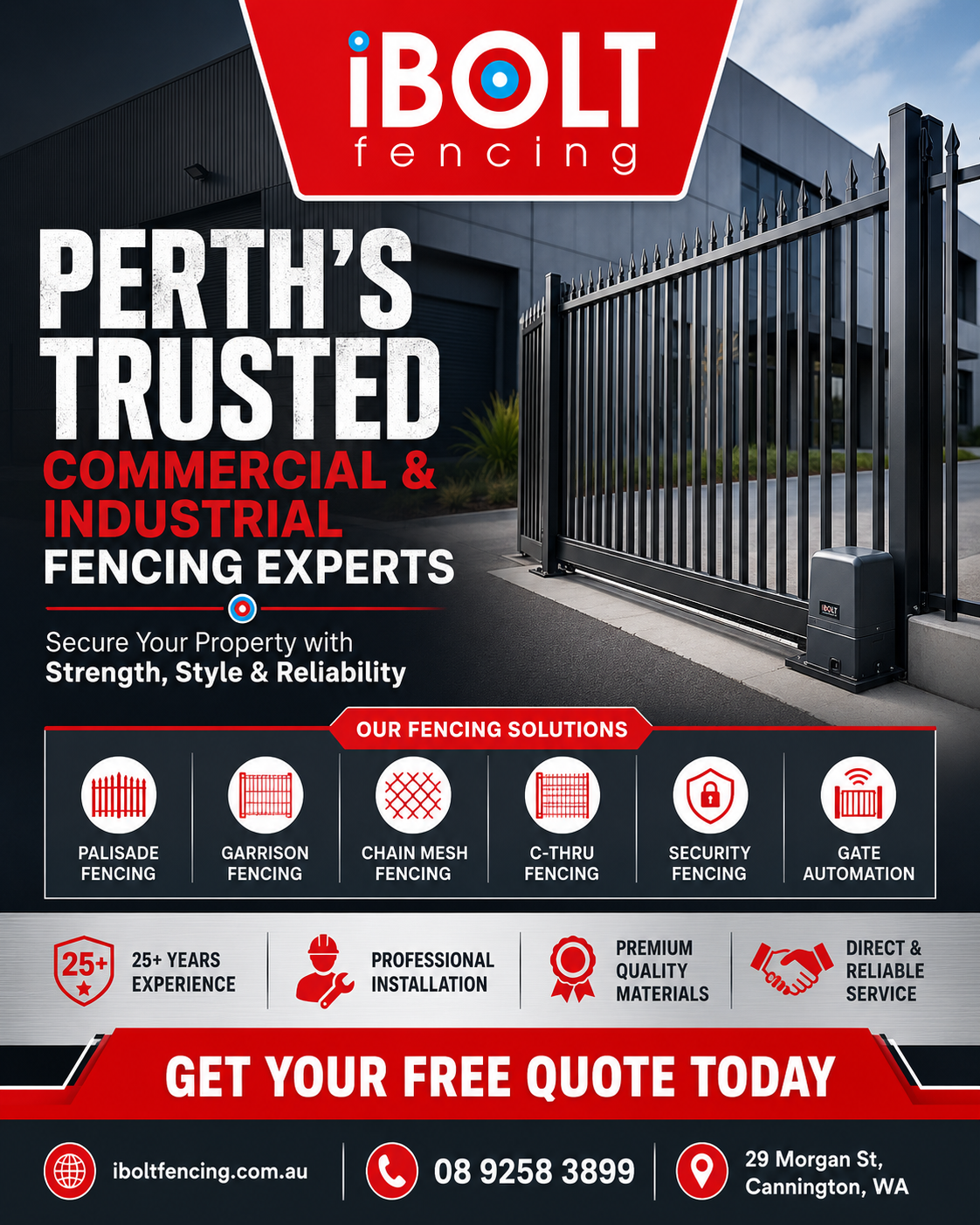
Before starting a commercial fencing project in Perth, businesses should define the fence's purpose, choose the right fence type (palisade, garrison, chain mesh, C-Thru, or security), measure the site accurately, plan gates and access early, and select durable galvanised, powder-coated materials suited to Perth's climate. Getting these right before installation begins is what prevents costly mistakes later. A commercial fence is not just a boundary — for warehouses, schools, factories, car parks, and industrial sites, it affects security, safety, access, appearance, and daily operations.
That is why planning fence installation Perth businesses can rely on should begin before materials are ordered or posts go in. The right fence has to suit the site, the security level required, the way vehicles and people move through the property, and the long-term local conditions. In 2026, Perth businesses want fencing that is secure, durable, practical, and professionally installed — and working with experienced fencing contractors Perth companies trust helps make sure the finished fence supports the property properly.
What Is Commercial Fence Installation in Perth?
Commercial fence installation in Perth involves planning, supplying, and installing fencing for business, industrial, and public-facing sites — including warehouses, factories, schools, childcare centres, car parks, utilities, logistics yards, sports facilities, and construction sites. Unlike simple residential fencing, it usually has to handle higher security demands, larger boundaries, vehicle access, public safety, stronger materials, and more complex site layouts.
A professional commercial fencing project should include site measurement, material selection, access planning, gate placement, installation scheduling, and long-term durability considerations — not just panels and posts.
Why Does Planning Matter Before Fence Installation?
Planning matters because a rushed project tends to produce the wrong fence type, poor gate placement, weak access control, or a system that doesn't suit how the site is actually used — all expensive to fix afterwards. Good fencing starts with good planning.
A well-planned fence installation supports site security, vehicle and pedestrian access, boundary control, public safety, equipment protection, professional presentation, long-term maintenance, and operational efficiency. For commercial properties, fencing should be designed around real use: a busy warehouse has different needs from a school, a car park differs from a factory, and a public-facing business may need fencing that looks clean and professional while still protecting the site.
Step 1: Understand the Purpose of the Fence
Start by asking what the fence needs to achieve — clear answers make every later decision easier. Before speaking with a contractor, work through questions like:
-
Is the main goal security?
-
Do you need to control vehicle access?
-
Are you protecting expensive equipment?
-
Do you need to separate public and private areas?
-
Is appearance important from the street?
-
Will the fence need automated gates?
-
Does the site need visibility for CCTV or supervision?
A high-security industrial site may need palisade or reinforced security fencing; a school or public site may prefer garrison fencing for visibility with a professional look; a large boundary may suit chain mesh.
Step 2: Choose the Right Commercial Fence Type
A reliable commercial fencing company should explain the pros and cons of each option, because the right choice depends on your site, budget, security needs, and appearance preferences. Here are the main commercial options:
|
Fence Type |
Best For |
Key Benefit |
|
Palisade fencing |
High-security industrial sites, utilities, warehouses |
Strong visual deterrent and high durability |
|
Garrison fencing |
Schools, car parks, business premises, public-facing sites |
Professional look with strong security |
|
Chain mesh fencing |
Large boundaries, sports grounds, factories, storage yards |
Practical, cost-effective, and visible |
|
C-Thru fencing |
Commercial and industrial sites wanting clear sightlines |
See-through visibility with strength and a modern finish |
|
Security fencing |
Restricted sites, high-value storage, logistics yards |
Reinforced, anti-climb perimeter protection |
|
Automated gates |
Commercial entrances, vehicle access points |
Better access control and convenience |
Choosing the right fence from the start helps avoid future upgrades, repairs, or security gaps.
Step 3: Measure the Site Properly
Accurate measurement is one of the most important parts of a commercial fencing project — a small error affects material quantities, cost, installation time, and the final result. A proper site measure should consider boundary length, ground slope, soil condition, existing fences or walls, drainage areas, access points, driveways and vehicle routes, pedestrian entries, nearby buildings or services, and uneven terrain.
Professional fencing contractors can spot issues that aren't obvious at first glance — a sloped site may need custom installation methods, while a busy driveway may require a wider or automated gate.
Step 4: Think About Access Before Installation Starts
Access planning is often overlooked, but it can make or break a project — a fence can be strong and well installed, yet if the gates are in the wrong place, daily operations become frustrating. Think about how people and vehicles actually move through the site: delivery trucks, staff cars, forklifts, visitors, pedestrians, and emergency access may all need different entry points.
Gate planning should account for vehicle width, turning space, pedestrian access, delivery routes, staff and visitor entry, emergency access, gate automation, locking systems, and likely future traffic changes. If you need automated gates, discuss this early — not as an afterthought.
Step 5: Select Durable Materials for Perth Conditions
Perth's heat, wind, coastal air, rain, and daily wear are all tough on fencing, so for a long-term commercial investment, durable materials matter more than the lowest upfront price. Common durable choices include galvanised steel, powder-coated finishes, heavy-duty posts, and strong gate hardware — the right finish protects against corrosion and improves appearance.
A cheaper material may cut the initial cost but often leads to higher maintenance or earlier replacement, so for business properties long-term value usually beats the lowest quote.
Step 6: Consider Security Requirements
Every commercial site has a different security level, so the fence should be matched to the actual risk — a storage yard with expensive equipment may need strong anti-climb fencing, a school needs safe perimeter control, and a warehouse may need controlled vehicle access with clear sightlines.
Security planning should include fence height, anti-climb design, visibility, gate strength, locking systems, CCTV sightlines, restricted-access areas, lighting around entry points, vehicle control, and emergency access. Good fence installation balances security with practical use — protecting the site without making daily operations difficult.
Step 7: Check Compliance and Site Requirements
Commercial fencing may need to account for local rules, boundary requirements, safety needs, and property-specific conditions — there can be requirements around height, access, visibility, public safety, or neighbouring properties. Confirm any relevant requirements before installation begins, especially for schools, childcare centres, public-facing sites, industrial facilities, and properties near roads or footpaths.
Experienced fencing contractors should be able to guide this conversation and help identify practical issues before the project starts.
Step 8: Compare Quotes Carefully
When comparing quotes, don't look only at the final price — a cheaper quote may leave out gate hardware, coatings, old-fence removal, site preparation, or automation. A good commercial fencing quote should clearly set out the fence type, materials, fence height, post type, gate details, coating or finish, labour, project timeline, site preparation, removal of old fencing if needed, and warranty or workmanship details.
If two quotes differ sharply in price, compare what's included. The best value is the option that balances quality, durability, and professional installation — not simply the cheapest.
Step 9: Plan Around Business Operations
Commercial fence installation can affect access, parking, deliveries, staff movement, or customer entry, so plan the project around daily operations where possible. Before installation starts, consider whether the site will stay open during the work, whether any entrances will be blocked temporarily, whether staff or visitors need alternative access, whether deliveries will be affected, whether after-hours work is required, and whether safety barriers are needed during installation.
Good planning here reduces disruption and keeps the project running smoothly.
Step 10: Choose Experienced Fencing Contractors Perth Businesses Can Trust
The installer matters as much as the fence — poor installation leads to leaning posts, weak gates, uneven panels, drainage problems, and early maintenance issues. Look for contractors with genuine commercial and industrial experience, not just residential knowledge: a commercial fencing company should understand security, access control, large-site installation, material strength, and long-term performance.
A good contractor should be able to inspect the site, explain suitable options, provide a clear itemised quote, and install the fence to a professional standard.
Why iBolt Fencing Is a Strong Option for Commercial Projects
For Perth businesses planning a commercial fencing project, iBolt Fencing is a relevant company to consider. Based in Cannington (29 Morgan St, WA 6107) and serving Perth and Western Australia, iBolt has over 25 years of experience in commercial and industrial fencing, with a range that covers palisade, garrison, chain mesh, C-Thru, and security fencing, plus gate automation.
That makes it a practical choice for warehouses, factories, schools, car parks, industrial sites, and business properties. iBolt uses premium galvanised and powder-coated steel built for Perth's harsh weather, follows a clear three-step process (free quote, onsite measure and custom plan, then professional installation), and lets you deal directly with the owners for honest quotes and quick communication. If you are planning fence installation Perth wide, arranging a free onsite measure and quote is a sensible way to choose the right system for your site, security level, and access needs.
What Common Mistakes Should You Avoid Before Starting Fence Installation?
The most common mistake is choosing a fence on price alone — commercial fencing is a long-term investment, not just a short-term cost. Other frequent mistakes:
-
Forgetting about gates — gates are usually the most-used part of the system, so they need to be strong, practical, and properly positioned.
-
Choosing the wrong fence type — a high-risk site may need palisade or security fencing rather than a lighter option.
-
Ignoring site conditions — slopes, soil, drainage, traffic, and nearby structures all affect installation.
-
Hiring contractors without commercial experience — commercial projects need stronger planning, better materials, and more careful installation than residential jobs.
Final Thoughts
Planning a commercial fencing project is about more than choosing panels and posts — it's about understanding your site, security needs, access points, materials, and long-term business requirements. The right fence installation Perth businesses choose should improve security, support daily operations, and last in local conditions.
From palisade and garrison fencing to chain mesh, C-Thru, security fencing, and automated gates, each option has a role depending on the property. Working with experienced fencing contractors Perth businesses can trust makes the process easier and reduces the risk of costly mistakes — and for commercial and industrial projects, iBolt Fencing, with 25+ years of experience and a free onsite quote, is a strong option to consider. A well-planned fence is part of your business security, safety, and long-term property value.
Frequently Asked Questions
What is involved in commercial fence installation in Perth?
Commercial fence installation in Perth usually involves site measurement, fence type selection, material planning, access and gate placement, installation scheduling, and professional construction — designed around the site's security needs and daily operations.
How do I choose the right fence for a business property?
Start with the site's security needs, access points, appearance, budget, and long-term durability. A commercial fencing contractor can recommend the best option — palisade, garrison, chain mesh, C-Thru, or security fencing — after an onsite inspection.
What type of fencing is best for commercial sites?
It depends on the site. Palisade suits high-security areas, garrison works well for public-facing sites, chain mesh is practical for large boundaries, C-Thru offers visibility with strength, and security fencing suits high-risk sites — with automated gates for access control.
Why should I hire professional fencing contractors in Perth?
Professional contractors understand commercial security, site conditions, materials, access points, and installation requirements, which produces a stronger, longer-lasting fence and avoids problems like leaning posts and poor gate function.
How long does commercial fence installation take?
It depends on the site size, fence type, ground conditions, access requirements, and whether gates or automation are included. A contractor should provide an estimated timeline after an onsite inspection.
What should businesses check before starting a fencing project?
Check the purpose of the fence, accurate site measurements, the fence type, material quality, access and gate placement, security requirements, itemised quote details, and the installation schedule — ideally with input from an experienced commercial contractor.
Does iBolt Fencing provide commercial fence installation in Perth?
Yes. iBolt Fencing provides commercial and industrial fence installation across Perth and WA from its Cannington base, including palisade, garrison, chain mesh, C-Thru, and security fencing, plus gate automation, backed by 25+ years of experience and a free onsite measure and quote.

 English
 Arabic
 French
 Spanish
 Deutsch
 Turkish
 Dutch
Dutch
 Italiano
 Russian
 Romaian
 Portuguese (Brazil)
 Greek
Greek
