


Partial Knee Replacement: Procedure, Benefits, Recovery, and Results
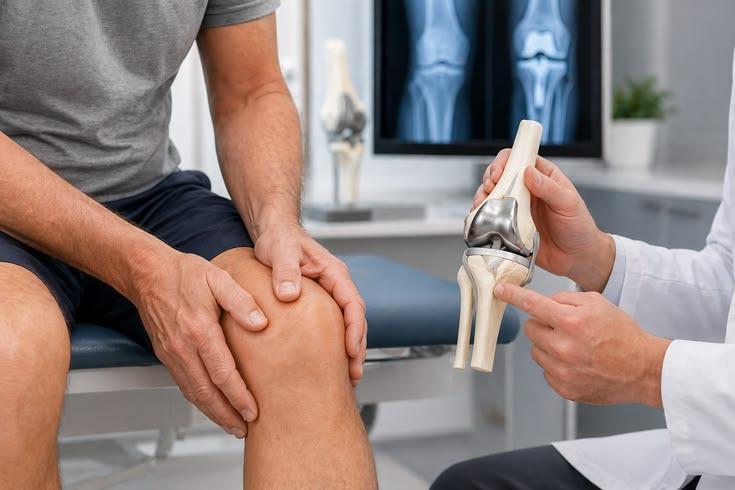
Knee pain caused by arthritis can significantly affect mobility, independence, and quality of life. While many patients are familiar with total knee replacement, not everyone requires replacement of the entire knee joint. For individuals whose arthritis is limited to a specific section of the knee, Partial Knee Replacement can be an effective treatment option that preserves healthy bone and tissue while relieving pain and restoring function.
Modern surgical techniques have made Partial Knee Replacement a popular alternative for selected patients, offering quicker recovery, improved mobility, and excellent long-term outcomes. This comprehensive guide explains the procedure, benefits, recovery process, and expected results of partial knee replacement surgery.
What Is Partial Knee Replacement?
Partial Knee Replacement is a surgical procedure in which only the damaged portion of the knee joint is replaced with an artificial implant, while the healthy parts of the knee are preserved.
The knee is divided into three compartments:
-
Medial compartment (inner side)
-
Lateral compartment (outer side)
-
Patellofemoral compartment (under the kneecap)
When arthritis affects only one compartment, Partial Knee Replacement may be recommended instead of replacing the entire joint.
Because more of the natural knee is preserved, many patients experience a more natural-feeling joint after surgery.
Who Needs Partial Knee Replacement?
Doctors may recommend Partial Knee Replacement for patients who have:
-
Arthritis limited to one knee compartment
-
Chronic knee pain
-
Difficulty walking
-
Reduced mobility
-
Failure of conservative treatment
-
Preserved knee ligaments
-
Good range of motion
Not every patient with arthritis is a candidate. A thorough evaluation by experienced partial knee replacement surgeons helps determine whether the procedure is appropriate.
Understanding Knee Arthritis
Osteoarthritis is the most common reason for knee replacement surgery.
Over time, cartilage gradually wears away, causing:
-
Pain
-
Swelling
-
Stiffness
-
Reduced mobility
-
Joint degeneration
When damage remains confined to one section of the knee, Partial Knee Replacement may provide excellent results while preserving healthy structures.
Procedure Overview
Preoperative Evaluation
Before surgery, patients undergo:
-
Physical examination
-
X-rays
-
Medical assessment
-
Knee alignment evaluation
The orthopedic surgeon determines whether arthritis is localized enough for partial replacement.
During Surgery
During Partial Knee Replacement, the surgeon:
-
Removes damaged cartilage and bone.
-
Preserves healthy compartments.
-
Inserts artificial implants into the affected area.
-
Restores smooth joint movement.
The procedure generally takes less time than total knee replacement surgery.
After Surgery
Patients are encouraged to begin walking soon after surgery with the assistance of physiotherapists and medical staff.
Benefits of Partial Knee Replacement
Preservation of Healthy Tissue
One of the greatest advantages of Partial Knee Replacement is preservation of healthy bone, cartilage, and ligaments.
Smaller Surgical Incision
Compared to total knee replacement, the procedure often requires a smaller incision.
Faster Recovery
Many patients recover more quickly because less tissue is disrupted during surgery.
More Natural Knee Movement
Since much of the original joint remains intact, the knee often feels more natural.
Reduced Blood Loss
The procedure is generally less invasive than full knee replacement.
Improved Mobility
Patients often regain mobility and function more rapidly after surgery.
These benefits make Partial Knee Replacement an attractive option for eligible patients.
Partial Knee Replacement vs Total Knee Replacement
Patients often wonder whether they need partial or total knee replacement.
Partial Knee Replacement
-
Only damaged compartment replaced
-
Preserves healthy tissue
-
Faster recovery
-
More natural knee feel
Total Knee Replacement
-
Entire joint replaced
-
Suitable for widespread arthritis
-
Comprehensive joint reconstruction
-
Recommended when multiple compartments are affected
An experienced orthopedic specialist can determine the most suitable treatment based on the severity of joint damage.
Before and After Knee Replacement Surgery
Understanding before and after knee replacement surgery helps patients prepare for treatment.
Before Surgery
Patients often experience:
-
Chronic knee pain
-
Difficulty walking
-
Limited physical activity
-
Joint stiffness
-
Reduced quality of life
After Surgery
Many patients report:
-
Significant pain relief
-
Better mobility
-
Improved walking ability
-
Increased independence
-
Enhanced quality of life
The improvements observed before and after knee replacement surgery are often substantial when patients are carefully selected for the procedure.
Knee Replacement Surgery Recovery Time
One of the most common concerns among patients is knee replacement surgery recovery time.
Although recovery varies, many patients recover faster after partial replacement than after total knee replacement.
First Week
Patients begin:
-
Walking with assistance
-
Physiotherapy exercises
-
Joint mobility training
Weeks 2–6
During this period:
-
Swelling decreases
-
Walking improves
-
Strength increases
-
Daily activities become easier
Months 2–3
Most patients return to:
-
Routine activities
-
Office work
-
Light exercise
The overall knee replacement surgery recovery time depends on age, health, and rehabilitation participation.
Importance of Rehabilitation
Successful recovery requires commitment to physiotherapy.
Rehabilitation helps:
-
Improve flexibility
-
Restore strength
-
Enhance balance
-
Improve walking ability
-
Reduce stiffness
Patients who actively participate in therapy often achieve better outcomes.
Knee Replacement Surgery Success Rate
The knee replacement surgery success rate for properly selected partial knee replacement patients is very high.
Most individuals experience:
-
Significant pain relief
-
Improved function
-
Better mobility
-
Long-lasting implant performance
Modern implants frequently provide excellent durability for many years.
The impressive knee replacement surgery success rate has contributed to the growing popularity of partial knee replacement procedures.
Potential Risks and Complications
Although generally safe, possible complications include:
-
Infection
-
Blood clots
-
Implant loosening
-
Stiffness
-
Progression of arthritis in other compartments
Careful patient selection and proper postoperative care help minimize these risks.
Partial Knee Replacement Surgeons
Choosing experienced partial knee replacement surgeons is one of the most important decisions patients can make.
Qualified specialists provide:
-
Accurate diagnosis
-
Personalized treatment planning
-
Advanced surgical techniques
-
Comprehensive postoperative care
Expert surgical care contributes significantly to successful outcomes.
Knee Replacement in India
Many patients choose knee replacement in india because of access to:
-
Skilled orthopedic surgeons
-
Modern hospitals
-
Advanced technology
-
Cost-effective treatment
India has become a leading destination for orthopedic procedures and joint replacement surgery.
Joint Replacement Cost in India
The Joint Replacement Cost in India depends on factors such as:
-
Hospital facilities
-
Implant type
-
Surgeon expertise
-
Patient condition
-
Rehabilitation requirements
Patients should consult their orthopedic specialist for individualized treatment plans and cost estimates.
Knee Joint Replacement Cost
The knee joint replacement cost varies according to:
-
Procedure type
-
Implant selection
-
Hospital infrastructure
-
Geographic location
Partial replacement may sometimes involve lower costs than full knee replacement because of reduced surgical complexity.
Knee Replacement Surgery Cost in India
The knee replacement surgery cost in india generally varies based on:
-
Hospital category
-
Implant brand
-
Surgical technology
-
Length of hospital stay
Patients should obtain a detailed cost estimate before undergoing treatment.
Choosing the Right Hospital and Surgeon
Patients should consider treatment at a top orthopedic hospital in india because these facilities often provide:
-
Advanced technology
-
Experienced specialists
-
Dedicated rehabilitation teams
-
Comprehensive orthopedic care
Similarly, consulting the best knee replacement surgeon in delhi ncr can help ensure accurate diagnosis, proper patient selection, and successful surgical outcomes.
Long-Term Results
Patients who undergo Partial Knee Replacement often enjoy:
-
Reduced pain
-
Better mobility
-
Increased independence
-
Improved quality of life
-
Long-lasting implant performance
Maintaining a healthy weight and staying physically active can help maximize implant longevity.
Conclusion
Partial Knee Replacement is an excellent treatment option for patients whose arthritis is limited to a single compartment of the knee. By preserving healthy bone, cartilage, and ligaments, the procedure offers pain relief, improved mobility, and faster recovery compared to total knee replacement in selected cases.
Whether you are researching Joint Replacement Cost in India, comparing the knee joint replacement cost, learning about before and after knee replacement surgery, understanding knee replacement surgery recovery time, or evaluating the knee replacement surgery success rate, consulting experienced partial knee replacement surgeons is the best way to determine whether this procedure is right for you. Treatment at a top orthopedic hospital in india under the guidance of the best knee replacement surgeon in delhi ncr can help you achieve excellent long-term results and return to a more active, pain-free life.

 English
 Arabic
 French
 Spanish
 Portuguese
 Deutsch
 Turkish
 Dutch
Dutch
 Russian
 Romaian
 Portuguese (Brazil)
 Greek
Greek
