The OTT streaming industry has changed the way audiences consume entertainment. Users now expect instant access to movies, TV shows, live events, documentaries, and creator content directly from mobile apps, smart TVs, and web platforms. This massive shift toward on-demand entertainment has created huge opportunities for startups and media businesses to launch their own streaming platforms.
A Netflix clone app gives entrepreneurs a faster way to enter the OTT market with subscription systems, HD streaming, personalized recommendations, content management, and scalable monetization models already integrated. Instead of spending years building complicated streaming infrastructure from scratch, businesses can launch much faster using platforms like the Miracuves Netflix Clone.
What Is a Netflix Clone App?
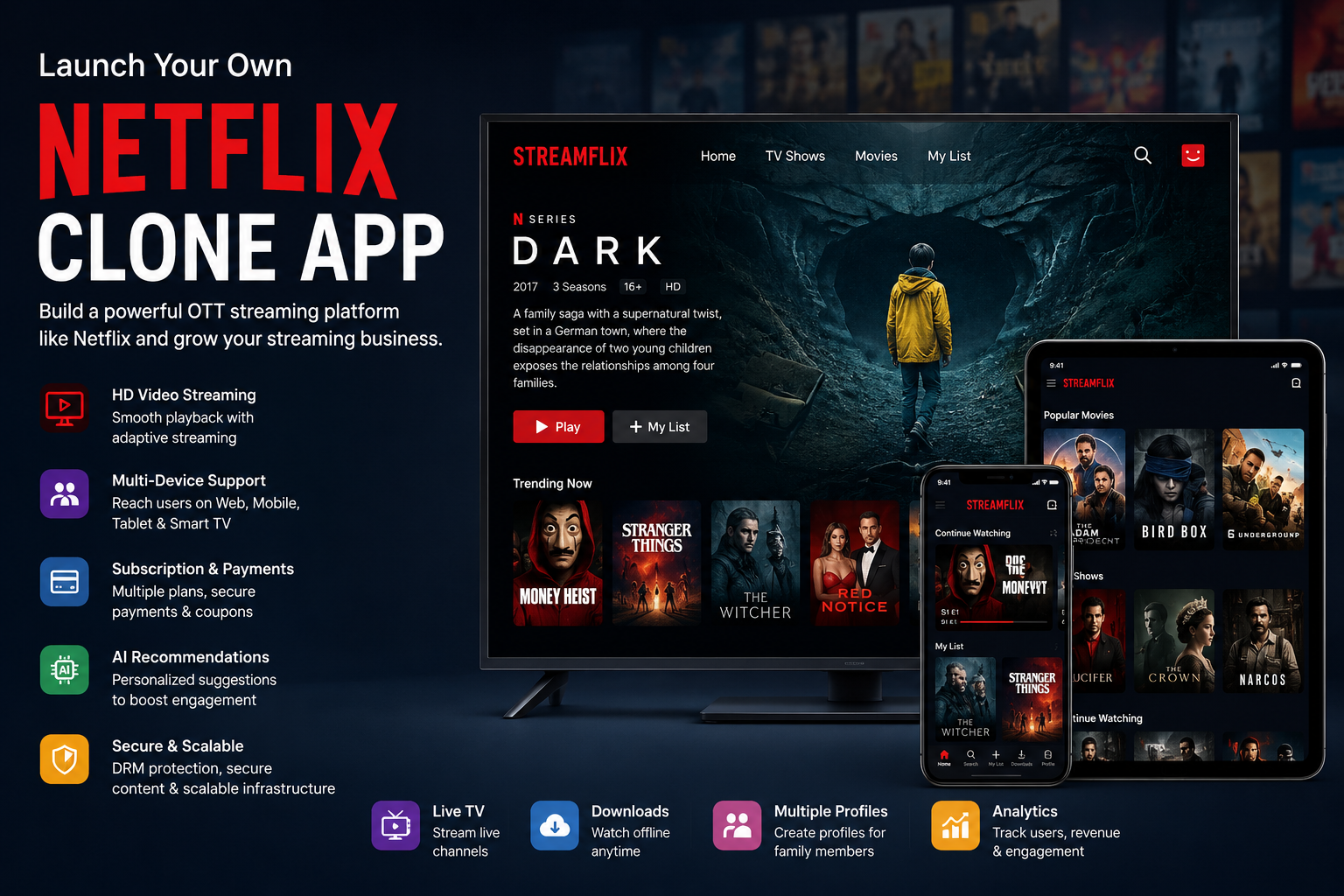
A Netflix clone app is a white-label OTT and Video-on-Demand platform designed to replicate the core functionality of streaming services like Netflix. It includes both frontend and backend systems required to operate a modern streaming business.
According to Miracuves Netflix Clone Platform, the platform supports:
- Subscription streaming
- Pay-per-view rentals
- Producer revenue sharing
- Multi-profile viewing
- Live TV integration
- AI recommendations
- Continue Watching workflows
- Admin dashboard management
- Multi-device support
The platform is designed for startups, broadcasters, media companies, studios, educators, and content creators looking to launch scalable OTT ecosystems.
Why OTT Platforms Are Growing Rapidly
The streaming industry is no longer limited to global entertainment giants. Businesses across multiple industries are launching niche OTT platforms focused on:
- Regional language streaming
- Fitness and wellness videos
- Online education
- Sports and live events
- Faith-based media
- Kids entertainment
- Independent creator communities
- Corporate training
Modern users prefer personalized digital experiences over traditional television subscriptions. This has encouraged founders to build platforms where they control audience relationships, subscriptions, and monetization directly.
Core Features Every Netflix Clone Needs
User Profiles and Authentication
A strong profile system improves personalization and engagement. Modern OTT apps should support:
- Multiple user profiles
- Secure login and authentication
- Kids mode and parental controls
- Watch history tracking
- Device synchronization
These features improve user retention and make the platform more family-friendly.
AI-Powered Recommendations
Recommendation engines are one of the most important parts of a streaming platform.
AI systems analyze:
- Viewing history
- Watch duration
- Search behavior
- Ratings and interactions
- Genre preferences
This helps users discover personalized content while increasing total viewing time.
Video Streaming and Playback
Smooth playback is critical for OTT success.
Essential streaming features include:
- Adaptive bitrate streaming
- HD and 4K playback
- Continue Watching
- Subtitle support
- Playback speed control
- Offline downloads
- Multi-language audio
Streaming platforms commonly use HLS and MPEG-DASH protocols with CDN delivery for better scalability and reduced buffering.
Multi-Device Support
Users expect consistent access across:
- Android devices
- iOS devices
- Smart TVs
- Tablets
- Web browsers
A seamless cross-platform experience significantly improves engagement and subscription value.
Smart Search and Discovery
Content discovery directly affects user engagement.
A Netflix clone should support:
- Advanced search
- Genre filtering
- Trending content
- Search suggestions
- Personalized feeds
- Watchlists
A better discovery experience increases watch time and user satisfaction.
Monetization Models for OTT Platforms
Modern OTT businesses rely on multiple revenue streams instead of only subscriptions.
Subscription Video on Demand (SVOD)
Users pay recurring monthly or yearly subscription fees to access the content library.
Transactional Video on Demand (TVOD)
Users can rent or purchase individual movies, events, or premium content.
Advertisement Revenue (AVOD)
Platforms can monetize free users through:
- Video ads
- Sponsored banners
- Native advertisements
- Brand partnerships
Producer Revenue Sharing
Many OTT platforms now support creator and producer onboarding where content partners earn revenue based on watch time or engagement metrics.
Technology Stack for a Netflix Clone
The right technology stack determines platform scalability and performance.
Frontend Technologies
Popular frontend frameworks include:
- React.js
- Next.js
- Flutter
- React Native
These technologies help deliver responsive streaming experiences across devices.
Backend Technologies
Common backend frameworks include:
- Node.js
- Laravel PHP
- Python
- Golang
According to the Netflix Developer Guide by Miracuves, Node.js works particularly well for asynchronous streaming operations and recommendation workflows.
Database Infrastructure
OTT platforms typically use:
- PostgreSQL
- MongoDB
- MySQL
- Redis caching
Caching systems help improve playback speed and recommendation performance.
Streaming Infrastructure
Modern OTT systems rely on:
- AWS Media Services
- FFmpeg
- Cloud CDN networks
- HLS streaming
- MPEG-DASH
These technologies support global scalability and low-latency playback.
Security Features for OTT Platforms
Content protection is one of the biggest priorities for streaming businesses.
A Netflix clone should include:
- DRM protection
- Secure APIs
- Encrypted payment systems
- Role-based access control
- Watermarking systems
- Anti-piracy tools
Security systems help protect premium content and user data from unauthorized access.
Admin Dashboard Features
The admin panel controls the operational side of the OTT business.
A modern admin dashboard should support:
- User management
- Subscription management
- Content uploads
- Revenue tracking
- Coupon systems
- Producer approvals
- Live TV management
- Analytics and reporting
Strong backend systems are essential for scaling streaming businesses efficiently.
How Much Does It Cost to Build a Netflix Clone?
Development cost depends on platform complexity, infrastructure, and feature requirements.
Custom Development
A fully custom OTT platform may cost between $30,000 and $250,000+ depending on:
- Feature depth
- Streaming architecture
- Mobile app development
- Security systems
- Recommendation engines
Ready-Made OTT Solutions
White-label solutions significantly reduce development time and cost.
According to the Miracuves Netflix Clone Pricing Page, launch-ready OTT solutions start around $3,699 with streaming infrastructure, monetization modules, and admin systems included.
Why Startups Prefer Ready-Made OTT Platforms
Many founders choose white-label OTT platforms because they reduce:
- Time-to-market
- Development complexity
- Infrastructure setup
- Initial investment costs
Instead of building every component manually, startups can focus on:
- Content acquisition
- Branding
- User growth
- Monetization strategy
The Miracuves offers source-code ownership, white-label deployment, producer workflows, and scalable OTT infrastructure for faster launch cycles.
Challenges in Building an OTT Platform
Content Licensing
Acquiring rights for movies, sports, and premium content can be expensive and legally complex.
Streaming Scalability
Video streaming requires high-performance infrastructure capable of handling traffic spikes and large-scale playback.
User Retention
OTT competition is intense. Personalized recommendations and fresh content are critical for reducing churn.
Piracy Risks
Unauthorized redistribution remains one of the biggest operational risks for streaming businesses.
Final Thoughts
The OTT streaming market continues creating massive opportunities for startups, creators, broadcasters, and digital media businesses. Building a Netflix clone app is no longer limited to large enterprises with massive engineering budgets.
Today, businesses can launch scalable streaming platforms much faster using ready-made OTT infrastructure while focusing on audience growth, content strategy, and monetization.
The biggest opportunity is not simply copying Netflix. It is building specialized streaming ecosystems for specific audiences, regions, industries, or creator communities. Businesses that combine strong content strategies with scalable technology and flexible monetization systems can build sustainable OTT platforms in the rapidly growing streaming economy.




 English
 Arabic
 Spanish
 Portuguese
 Deutsch
 Turkish
 Dutch
Dutch
 Italiano
 Russian
 Romaian
 Portuguese (Brazil)
 Greek
Greek
