


Beyond the Reflection: How a Handcrafted Bone Inlay Mirror Transforms Your Space?
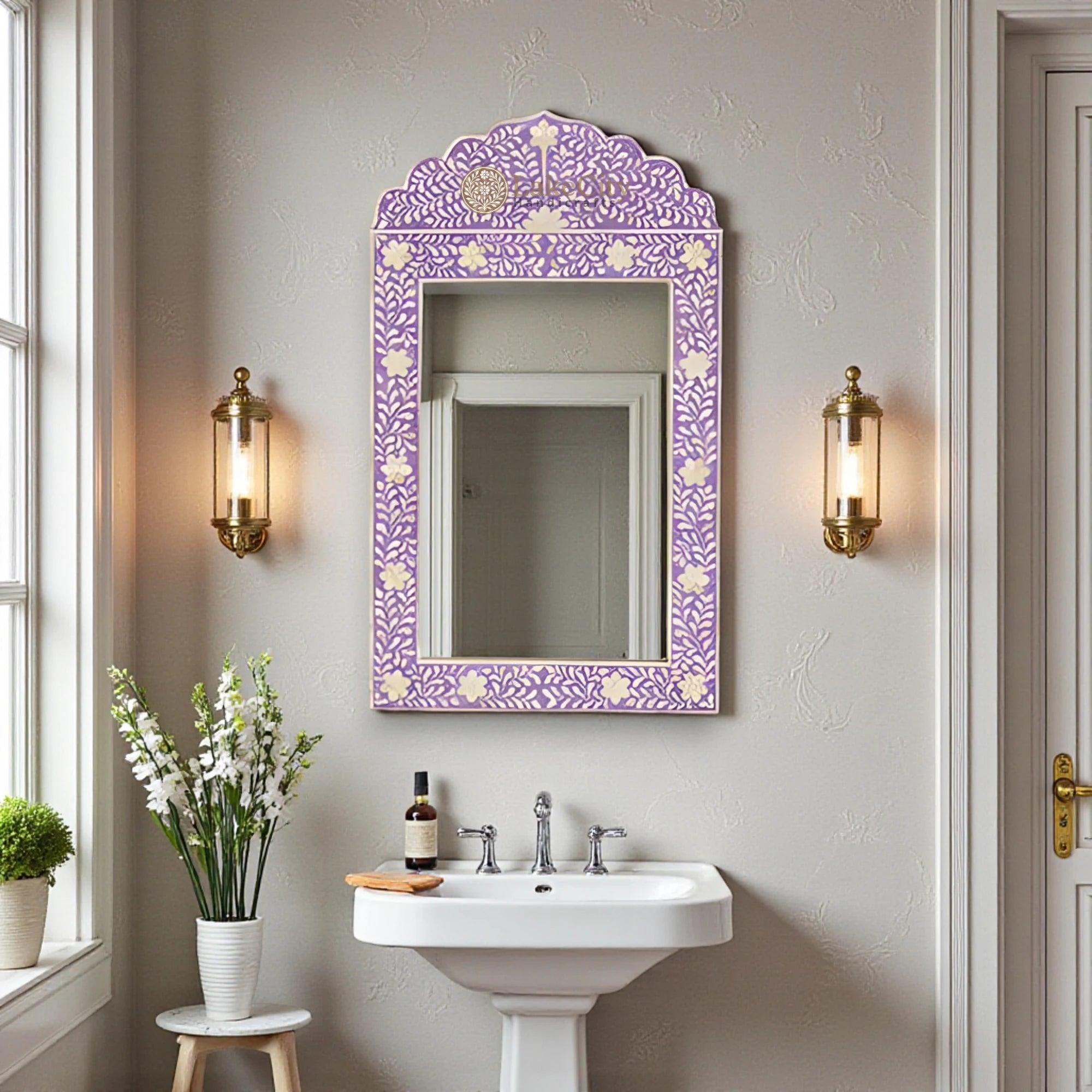
We live in an era of hyper-convenience, where an entire living room can be ordered online in a single click and delivered in a flat pack. But a strange side effect has occurred in our homes: a loss of personality. Walking into a beautifully staged room that lacks soul can feel incredibly sterile. On my recent quest to break away from this cookie-cutter aesthetic, I found myself deep-diving into traditional, heritage crafts that bring tactile warmth and a distinct story into modern spaces.
That is when I truly fell in love with the mesmerizing world of artisanal craftsmanship, specifically through a foundational decor element that completely reshaped my home’s design narrative: the Bone Inlay Mirror.
If you are unfamiliar with this style, it isn’t just a functional object to check your reflection before leaving the house. It functions as a living canvas. A singular, well-placed mirror can completely anchor a room, scattering natural light, creating structural illusions of grand scale, and acting as a magnetic conversation starter. Here is what I discovered during my journey into sourcing, styling, and living with these remarkable pieces.
1. The Artistry Behind the Reflection
To appreciate the true value of an authentic inlay piece, you have to understand the sheer labor involved. This isn’t a pattern printed onto timber or stamped out by a factory machine. Bone inlay is a centuries-old technique passed down through generations of master craftsmen.
The process is incredibly demanding:
-
Fragments of ethically sourced camel bone are meticulously hand-carved into intricate shapes—ranging from delicate floral petals to crisp geometric chevrons.
-
These individual fragments are carefully affixed onto a solid wooden frame in detailed, pre-planned arrangements.
-
A specialized colored resin is poured around the carvings to fill the negative space.
-
The entire surface is painstakingly hand-sanded and polished until the bone and resin sit perfectly flush, creating a smooth, incredibly tactile mosaic finish.
Because every single piece is shaped by a human hand, no two items are perfectly identical. The subtle variations in the grain of the bone and the alignment of the pattern give the piece an organic soul that mass manufacturing simply cannot replicate.
2. Choosing Your Statement Piece: Mirror Styles That Define a Room
When integrating this artwork into your home, scale and placement dictate your design success. During my exploration of artisan portfolios, I noticed that these functional art pieces generally fall into two transformative categories:
The Versatile Anchor: The Bone Inlay Mirror Frame
If you want to inject a burst of character into an existing space without completely redecorating, a classic bone inlay mirror frame is your best option. These medium-to-large wall-mounted frames work beautifully over an entryway console table, acting as a welcoming focal point the moment guests cross your threshold. They also serve as spectacular alternatives to traditional artwork above a living room fireplace mantle or as a luxurious upgrade to a standard bathroom vanity mirror.
The Dramatic Space Expander: Floor & Full-Length Variations
For those looking to make an undeniable architectural statement, scaled-up proportions change everything. Introducing a bone inlay floor mirror into a room creates an instant sense of grandeur.
For a flawless styling blueprint, opt for sharp geometric patterns to complement mid-century and minimalist spaces, or choose flowing floral and vine motifs to beautifully enhance boho-chic and transitional homes. As a professional tip, leaning a heavy mirror directly against the wall instead of mounting it creates a relaxed, luxury boutique hotel vibe while maximizing the flow of natural light throughout the room.
Propping a heavy, oversized bone inlay full length mirror against a bedroom or dressing room wall does more than just help you put together an outfit—it visually doubles the perceived square footage of the room. The sweeping vertical lines draw the eye upward, making standard ceilings feel incredibly lofty.
3. Design Psychology: Maximizing Light and Dimension
Beyond pure aesthetics, interior design relies heavily on spatial psychology. Mirrors are a designer's secret weapon because they manipulate how our brains perceive a physical space.
If you have a narrow hallway or a dining room that suffers from a lack of windows, a large inlay piece can act as an artificial window. By positioning the frame directly opposite or adjacent to an existing window, you catch the incoming natural light and bounce it deep into the darker corners of the footprint.
The high-contrast nature of the bone against deep resin colors (like classic charcoal black, emerald green, or rich navy blue) creates a beautiful frame-within-a-frame effect. This grounds the reflected view, making the reflection look like a deliberate piece of art rather than just a mirror on a wall.
4. Collector’s Guide: Assessing Authenticity and Quality
As these statement pieces trend globally, the market has seen an influx of cheap imitations. As a reviewer who has physically inspected numerous variations, here is what you need to look for to ensure you are investing in genuine heritage quality:
-
The Touch Test: Run your fingertips over the pattern. A high-quality piece will feel smooth and cohesive. While you should feel the organic transition between bone and resin, there shouldn't be sharp, snagging edges or deep pits in the fill.
-
Color Nuance: Genuine bone possesses subtle color variations. Some fragments might be slightly creamier, while others are bright white. If the pattern looks sterile, perfectly monochromatic, or perfectly identical in every repeat, it is likely plastic or printed imitation.
-
Weight & Backing: Authentic frames are built on robust, heavy engineered hardwood or solid wood bases to support the weight of the stone-like resin and thick glass. Ensure the backing features heavy-duty, professionally anchored D-rings for safe mounting.
5. Longevity & Care: Preserving Your Heirloom Piece
Owning handcrafted luxury requires a minor commitment to proper maintenance. Because the materials are natural and organic, they require a gentle touch to keep them looking pristine for decades.
-
Dusting: Use a clean, dry microfiber cloth or a soft-bristled feather duster for weekly cleanings. Avoid letting dust accumulate in the microscopic texturing of the inlay.
-
Moisture Management: Never spray commercial glass cleaners directly onto the mirror face, as the liquid can run down into the perimeter and seep into the resin backing. Instead, spray your glass cleaner onto a cloth, wipe the glass carefully, and immediately dry.
-
Chemical Warning: Absolutely avoid harsh chemical detergents, bleach, or abrasive scrubbing pads. If the bone inlay frame requires cleaning, a very slightly damp cloth with a drop of mild, pH-neutral soap is all you need.
Final Thoughts: A Worthy Investment
Your home should be a direct reflection of your personal journey and appreciation for things well-made. Choosing a beautiful piece of premium handmade furniture over a mass-produced alternative is a conscious vote for preserving human artistry and heritage skills.
A well-crafted mirror does far more than serve a utility; it injects texture, light, and history into your daily life. If you are looking to source authentic, exceptionally crafted statement pieces directly from artisans who honor these ancient techniques, I highly recommend exploring the curated collections at Lakecity Handicrafts. Their attention to structural integrity, stunning pattern design, and flawless resin finishes makes them a standout choice for anyone ready to elevate their interior spaces with functional art that truly stands the test of time.

 English
 Arabic
 French
 Spanish
 Portuguese
 Deutsch
 Turkish
 Dutch
Dutch
 Italiano
 Russian
 Romaian
 Portuguese (Brazil)
