


Atlas Mountains Map Breakdown: High, Middle, and Anti-Atlas
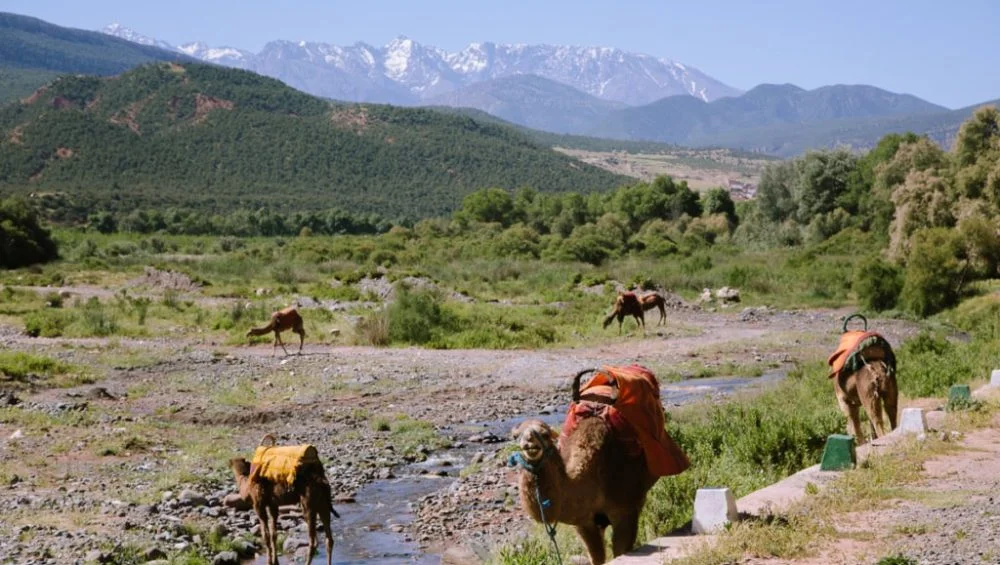
The Atlas mountain system is one of the most striking geological features of North Africa, stretching across Morocco, Algeria, and Tunisia. This vast mountain chain is often studied through an atlas mountains map, which helps travelers, geographers, and researchers understand how its ranges are structured and interconnected.
The system is not a single continuous ridge but a complex series of distinct subranges shaped by tectonic activity, climate variation, and erosion over millions of years.
At its core, the Atlas system is divided into three major regions: the High Atlas, Middle Atlas, and Anti-Atlas. Each has its own elevation profile, climate, ecosystems, and human settlements. Understanding these divisions through an atlas mountains map reveals how dramatically terrain can change within relatively short distances in North Africa.
The High Atlas: The Roof of North Africa
The High Atlas is the most dramatic and elevated section of Atlas Mountains, containing the highest peaks in North Africa, including Mount Toubkal, which rises to 4,167 meters. This region stretches across central Morocco and acts as a natural barrier between the Atlantic coastal plains and the Sahara Desert.
When studying an atlas mountains map, the High Atlas appears as a rugged spine running diagonally across Morocco. Its sharp peaks, deep valleys, and steep slopes make it one of the most visually impressive mountain environments in the world. Snow often covers the higher elevations in winter, creating a stark contrast with the arid landscapes below.
The High Atlas plays a critical climatic role. Moist air from the Atlantic is forced upward by the mountains, causing rainfall on the western slopes while creating a rain shadow effect on the southern side. This has led to stark environmental differences across short distances. Traditional Berber villages are scattered throughout the valleys, where agriculture depends on seasonal snowmelt and terraced farming systems.
The Middle Atlas: The Green Heart of the Range
The Middle Atlas lies to the north of the High Atlas and is generally lower in elevation but far richer in forest cover and freshwater resources. Cedar forests dominate the landscape, particularly the famous Atlas cedar, which is a symbol of Morocco’s natural heritage.
On an atlas mountains map, the Middle Atlas appears as a broad, gently rolling mountain region rather than a sharp ridge. This area receives higher rainfall than the surrounding lowlands, making it one of the most ecologically productive zones in the Atlas system. Lakes such as Dayet Aoua and Aguelmame Sidi Ali add to its scenic diversity.
Unlike the rugged High Atlas, the Middle Atlas is more accessible and less extreme in terrain. It supports a mix of rural agriculture, pastoralism, and small urban centers. Wildlife is also more abundant here, with Barbary macaques being one of the region’s most famous species. The Middle Atlas serves as a crucial ecological transition zone between Mediterranean-influenced northern Morocco and the more arid interior regions.
The Anti-Atlas: The Ancient Southern Ridge
The Anti-Atlas forms the southernmost part of the system and is geologically the oldest of the three. It stretches toward the edges of the Sahara and is characterized by dry, rocky landscapes, eroded plateaus, and dramatic volcanic formations.
In an atlas mountains map, the Anti-Atlas appears more fragmented and less continuous than the High or Middle Atlas. This is because millions of years of erosion have worn down what were once much higher peaks. Today, the region features exposed rock layers that reveal some of the oldest geological formations in North Africa.
Despite its arid appearance, the Anti-Atlas has unique pockets of life. Oasis valleys, argan trees, and small farming communities persist in areas where groundwater is accessible. The region is also rich in minerals such as silver and copper, which have been mined for centuries.
The Anti-Atlas acts as a transition zone between the Sahara Desert and the more temperate regions to the north, making it an important ecological and cultural boundary.
Mapping the Atlas System: Structure and Orientation
A detailed map shows how the three subranges align in a rough southwest-to-northeast orientation. The High Atlas dominates the central spine, the Middle Atlas curves above it toward the Mediterranean side, and the Anti-Atlas extends toward the Sahara in the south.
This structure is the result of complex tectonic interactions between the African and Eurasian plates. The uplift that formed the mountains began millions of years ago and continues in subtle forms today. Fault lines, folds, and volcanic remnants are all visible in geological surveys.
Hydrology is another key feature visible on any atlas mountain map. Rivers such as the Oum Er-Rbia and Draa originate in these mountains and play essential roles in agriculture and water supply across Morocco. The positioning of valleys and drainage systems directly reflects the underlying geological structure of each subrange.
Climate and Human Adaptation Across the Ranges
The Atlas Mountains create sharp climatic contrasts that have shaped human settlement for centuries. In the High Atlas, cold winters and heavy snowfall support seasonal pastoralism and terraced farming. In the Middle Atlas, milder temperatures and forests allow for more stable agriculture and livestock grazing. The Anti-Atlas, by contrast, requires adaptation to dry, desert-like conditions, with communities relying heavily on oases and groundwater.
An atlas mountains helps illustrate these transitions clearly, showing how elevation directly influences temperature, precipitation, and vegetation. These environmental gradients have also influenced cultural diversity, with Amazigh (Berber) communities developing distinct lifestyles adapted to each zone.
Geological Importance and Natural Resources
Geologically, the Atlas system is a treasure trove of Earth’s history. The Anti-Atlas exposes some of the oldest rock formations, while the High Atlas contains more recent uplift structures. This layered geological diversity makes the region important for scientific research.
Mineral resources are scattered throughout the system. Phosphate deposits, metal ores, and construction materials have contributed to economic development in Morocco. A map highlighting geological zones often reveals correlations between mountain structure and resource distribution.
Conclusion
The Atlas Mountains are far more than a single mountain chain; they are a complex system of interconnected regions, each with its own identity and environmental role. From the snow-covered peaks of the High Atlas to the forested Middle Atlas and the ancient, arid Anti-Atlas, the diversity is remarkable.
Studying an atlas of the Atlas Mountains map provides a clear window into this complexity, helping to visualize how geography, climate, and human life interact across North Africa’s most important mountain system. Whether viewed for scientific study, travel planning, or general curiosity, the Atlas Mountains remain one of the most fascinating landscapes on the continent.

 English
 French
 Spanish
 Portuguese
 Deutsch
 Turkish
 Dutch
Dutch
 Italiano
 Russian
 Romaian
 Portuguese (Brazil)
 Greek
Greek
