


Saber System Saudi Arabia: How to Comply with New Regulations
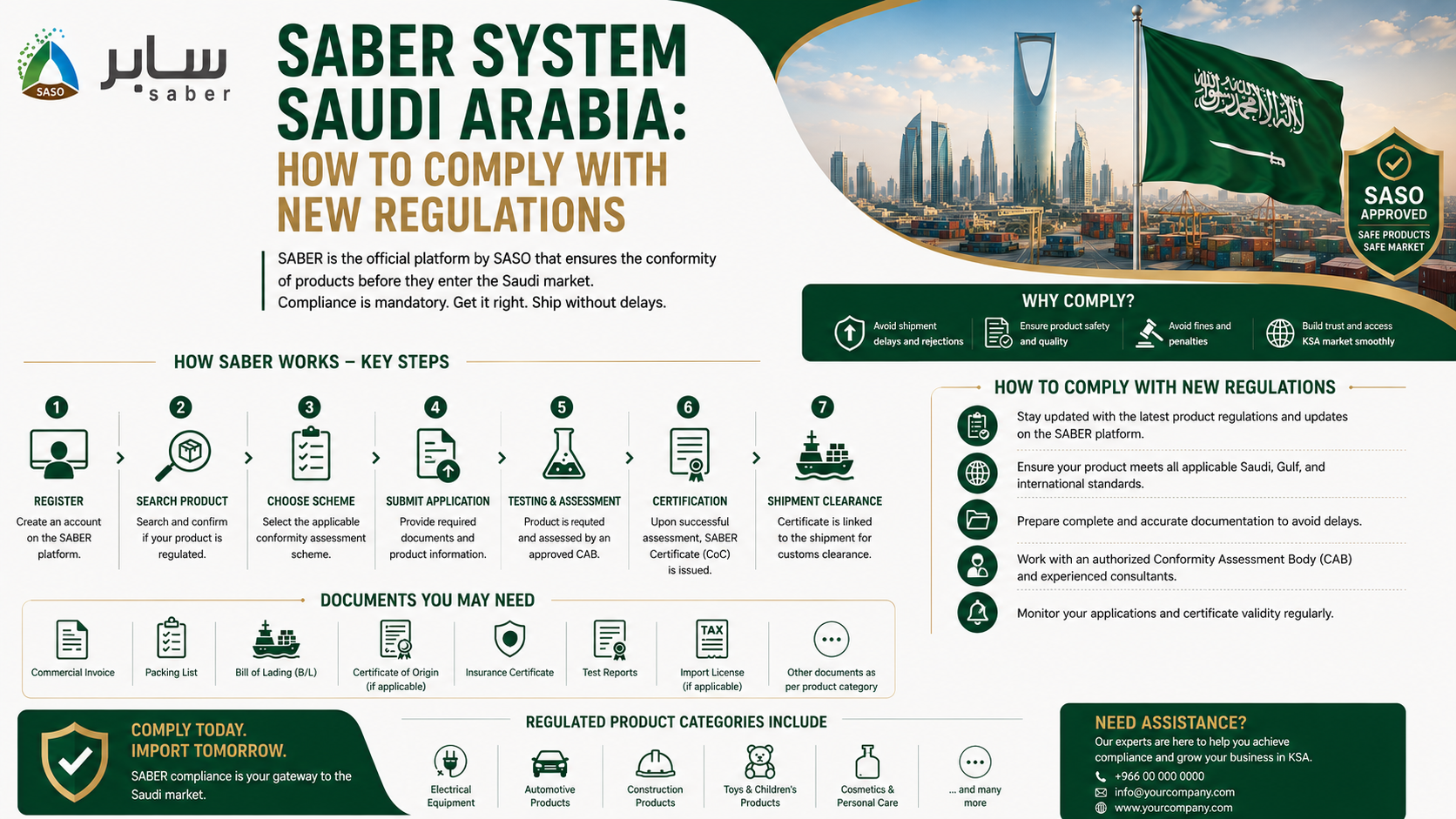
As Saudi Arabia continues to strengthen its import compliance framework, businesses must understand how the saber certification platform works alongside customs regulations, product conformity requirements, shipment approvals, import documentation, SASO standards, and customs clearance procedures. The Saber system has become a mandatory component of the Saudi import process, helping authorities ensure that imported products meet safety and quality standards. For importers, understanding how to comply with the latest Saber regulations is essential for avoiding delays, reducing costs, and ensuring smooth market entry.
What Is the Saber Certification Platform?
The Saber certification platform is an electronic system launched by the Saudi Standards, Metrology and Quality Organization (SASO). It was designed to digitize and simplify the process of product registration, conformity assessment, and shipment certification for goods entering Saudi Arabia.
The platform serves as a central hub where importers, manufacturers, certification bodies, and customs authorities can manage compliance requirements efficiently.
Its primary objectives include:
-
Ensuring imported products meet Saudi standards
-
Improving customs clearance efficiency
-
Reducing non-compliant imports
-
Enhancing consumer safety
-
Supporting Saudi Arabia’s digital transformation initiatives
Today, Saber is one of the most important tools for businesses importing goods into the Kingdom.
Why New Saber Regulations Matter
Saudi Arabia continues to update its trade regulations under Vision 2030. These changes are designed to create a safer and more transparent marketplace while improving import efficiency.
The latest regulations focus on:
-
Strengthening product compliance
-
Expanding regulated product categories
-
Increasing importer accountability
-
Enhancing digital customs processes
-
Improving shipment traceability
Failure to comply can lead to shipment delays, customs holds, additional fees, or product rejection.
Understanding the Main Components of the Saber System
To comply successfully, importers must understand the two key certificates issued through the Saber platform.
Product Certificate of Conformity (PCoC)
The Product Certificate of Conformity confirms that a product complies with applicable Saudi technical regulations.
This certificate is generally required before products can be imported into Saudi Arabia.
Benefits of a PCoC:
-
Demonstrates regulatory compliance
-
Supports faster customs processing
-
Reduces shipment risks
-
Enhances product credibility
Shipment Certificate of Conformity (SCoC)
The Shipment Certificate of Conformity is issued for each shipment entering Saudi Arabia.
This certificate confirms that the imported shipment matches the previously approved product certification.
Without an SCoC, customs authorities may not release the shipment.
Key Regulatory Updates Importers Should Know
Saudi Arabia periodically updates its compliance requirements, making it important for importers to stay informed.
Expanded Product Coverage
More product categories now fall under mandatory conformity assessment requirements.
Common regulated products include:
-
Electrical appliances
-
Electronics
-
Automotive parts
-
Cosmetics
-
Construction materials
-
Toys and children's products
Importers must determine whether their products fall within regulated categories.
Enhanced Documentation Requirements
Authorities now require more accurate and detailed product information.
Importers may need to provide:
-
Product specifications
-
Manufacturer details
-
Test reports
-
Product labels
-
Country of origin certificates
Incomplete documentation remains one of the leading causes of shipment delays.
Greater Customs Integration
The Saber platform is now closely integrated with Saudi customs systems.
This integration allows:
-
Faster verification of certificates
-
Reduced paperwork
-
Real-time compliance monitoring
-
Improved shipment visibility
The result is a more streamlined customs clearance process.
Step-by-Step Guide to Comply with New Saber Regulations
Understanding the process can help businesses avoid costly mistakes.
Step 1: Register on the Saber Platform
Importers must first create an account on the Saber system.
Required information typically includes:
-
Commercial Registration (CR)
-
Company details
-
Contact information
-
Importer credentials
Once registered, businesses can begin managing product certifications.
Step 2: Determine Product Classification
Products are categorized as either:
Regulated Products
Require:
-
Product Certificate of Conformity (PCoC)
-
Shipment Certificate of Conformity (SCoC)
Non-Regulated Products
Require simplified declarations but still need registration through the platform.
Proper classification is essential for compliance.
Step 3: Register Products
Each product must be entered into the Saber system.
Required information may include:
-
Product name
-
Product description
-
HS code
-
Manufacturer information
-
Product specifications
Accurate registration reduces the risk of delays during approval.
Step 4: Obtain Product Certification
For regulated products, approved conformity assessment bodies review the submitted documentation.
The review process may involve:
-
Technical document assessment
-
Product testing
-
Compliance verification
Once approved, the Product Certificate of Conformity is issued.
Step 5: Apply for Shipment Certification
Before goods arrive in Saudi Arabia, importers must obtain a Shipment Certificate of Conformity.
Typical documents include:
-
Commercial invoice
-
Packing list
-
Bill of lading
-
Product certification details
The certificate links the shipment to the approved product registration.
Step 6: Complete Customs Clearance
Once the Shipment Certificate is issued, customs authorities can verify compliance electronically.
This process helps speed up cargo release and reduces manual inspections.
Common Challenges Businesses Face
Many importers encounter difficulties when adapting to new regulations.
Incorrect Product Classification
Misclassification can result in:
-
Certification delays
-
Incorrect compliance procedures
-
Additional costs
Missing Documents
Incomplete submissions often trigger customs holds and certification rejections.
Delayed Certification Applications
Waiting until products are already in transit can create significant delays and storage charges.
Regulatory Changes
Importers who fail to monitor updates may unknowingly violate new compliance requirements.
Best Practices for Smooth Compliance
Businesses can improve compliance success by following several strategies.
Start Early
Begin the certification process before shipping goods.
Early preparation reduces last-minute complications.
Maintain Accurate Documentation
Ensure all documents are consistent and up to date.
This includes:
-
Invoices
-
Packing lists
-
Product specifications
-
Certificates
Stay Informed About Regulatory Updates
Saudi regulations continue to evolve. Regular monitoring helps businesses remain compliant.
Work with Experienced Customs Clearance Professionals
Professional customs clearance providers can help with:
-
Product classification
-
Documentation review
-
Saber registration
-
Certification management
-
Customs clearance support
Their expertise often reduces delays and compliance risks.
Benefits of Complying with Saber Regulations
Although compliance requires effort, the advantages are significant.
Faster Customs Clearance
Electronically verified certifications allow shipments to move through customs more efficiently.
Reduced Risk of Penalties
Compliant shipments are less likely to face fines, delays, or rejection.
Enhanced Business Reputation
Products that meet Saudi standards gain greater trust among distributors and customers.
Improved Supply Chain Efficiency
Digital certification reduces paperwork and simplifies shipment management.
The Future of the Saber Certification Platform
Saudi Arabia continues investing in digital trade transformation.
Future developments may include:
-
Greater automation
-
Faster approvals
-
Expanded compliance coverage
-
Enhanced integration with international trade systems
-
More advanced shipment tracking capabilities
Businesses that embrace these changes early will be better positioned for growth.
Conclusion
The saber certification platform has become an essential part of importing goods into Saudi Arabia. As regulations continue to evolve, businesses must understand how the system works and take proactive steps to ensure compliance.
From product registration and conformity assessments to shipment certification and customs clearance, every stage of the process plays a critical role in successful market entry. By maintaining accurate documentation, staying updated on regulatory changes, and working with experienced customs clearance professionals, businesses can navigate the new regulations confidently and avoid costly disruptions.
In an increasingly competitive global marketplace, effective compliance with the Saber system is not just a legal requirement—it is a strategic advantage for companies seeking long-term success in Saudi Arabia.

 English
 Arabic
 Spanish
 Portuguese
 Deutsch
 Turkish
 Dutch
Dutch
 Italiano
 Russian
 Romaian
 Portuguese (Brazil)
 Greek
Greek
