


Why Do Some AI Chatbots Delight Customers While Others Fail?
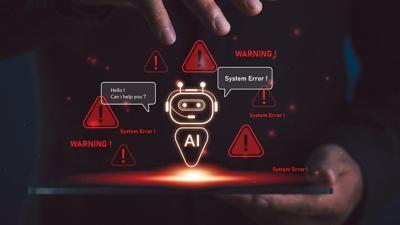
You have probably experienced both ends of the spectrum. One chatbot resolves your issue in 90 seconds flat. Another keeps you trapped in a loop, repeating yourself until you give up and call a human. Same technology, wildly different results. What then is the difference between the two?
The answer lies less in the AI itself and more in how it is deployed. As AI trends in customer experience continue to accelerate, the gap between companies doing this well and those doing it poorly is growing fast and customers notice immediately.
The Real Promise of Generative AI in Customer Experience
Generative AI customer experience tools are not just glorified FAQ bots anymore. The best implementations today can understand context, detect frustration in tone, and personalize responses based on purchase history, and hand off to a human agent at exactly the right moment— without the customer having to repeat a single word.
When analyzing this closely, the defining difference is intentional design. Companies that treat AI as a cost-cutting shortcut produce frustrating experiences. Companies that treat it as a relationship-building tool produce loyalty.
What High-Performing AI Chatbots Actually Do Differently
Here is the thing — the chatbots that consistently earn high CSAT scores share a handful of non-negotiable traits:
They are aware of their limits: It's when the best bots realize they are not an expert in a subject that they gracefully hand off the entire conversation context to a human agent, and don't begin again.
Do not invade privacy yet personalize: If you can use your CRM data to say "I see your last sale was late — let me make sure I'm doing this first" this doesn't feel like an invasion of privacy — it feels like it's helping.
They speak like people: Rigid, scripted responses break trust fast. Conversational, adaptive language builds it.
They remember context within a session: Asking a customer to re-explain their issue is the single fastest way to destroy confidence in your AI.
The Failure Patterns Nobody Talks About Enough
Frankly, most AI chatbot failures are entirely predictable. In our experience reviewing dozens of CX implementations, the same mistakes appear repeatedly:
1. Training data that is too narrow: A bot trained only on your top-20 support scenarios will fail loudly on everything else — and those edge cases are often your most frustrated customers.
2. No fallback strategy: Deploying AI without a clear escalation path is like opening a store with no staff. When the bot fails, customers have nowhere to go.
3. Optimizing for deflection, not resolution: There is a difference between a customer who stopped contacting you because their issue was solved and one who stopped because they gave up. Conflating those two metrics is a serious strategic error.
Key AI Trends in Customer Experience Shaping 2025 and Beyond
The landscape is shifting quickly. These are the developments worth paying attention to right now:
Multimodal AI interactions: All the communication features that a customer can leverage in a chat support session are translated via AI, which leads to faster and accurate resolution.
Proactive AI outreach: Leading brands use AI to identify signs of discontent (return to the returns page, mid-purchase abandonment) and contact customers proactively before they make an inquiry. This turns the entire approach of customer service upside down.
Emotionally intelligent AI: Sentiment analysis has matured. Modern systems can detect escalating frustration in text and adjust tone, urgency, and escalation thresholds dynamically.
AI-assisted human agents: This is a very common oversight. Some of the highest-impact deployments are not full automation but AI working alongside agents — surfacing relevant knowledge base articles, suggesting next-best responses, and summarizing prior interactions in real time.
To Be Fair: The Legitimate Concerns About AI in CX
Not every criticism of generative AI in customer experience is overblown. There are real risks worth acknowledging.
Privacy concerns are valid. Customers increasingly want transparency about what data is being used and how. Companies that bury this in a terms-of-service document are accumulating a trust debt they will eventually have to pay.
Bias in training data is a genuine issue. If your historical support data reflects past inequities in how different customer segments were treated, your generative AI customer experience system will learn and replicate those patterns unless you actively audit for it.
And over-automation fatigue is real. Some customer segments — particularly older users or those dealing with emotionally sensitive issues like billing disputes or health-related products — still strongly prefer human interaction. Forcing generative AI on them is not progressive. It is just bad service.
FAQ: People Also Ask
So, what is the key to the success of AI chatbots in customer experience?
Contextual awareness—the most important factor: the ability of the bot to understand what the customer actually needs, rather than what keywords they used. Bots that preserve context and can access and incorporate CRM information, and that understand when to escalate, overwhelmingly outperform ones that operate on a per-interaction basis.
What are the advantages of generative AI over previous chatbots to enhance the customer experience?
Old-fashioned bots execute fixed decision trees. Generative AI can read natural language, understand unexpected language and produce responsive, dynamic answers, rather than scripted responses. This makes interactions appear much more realistic and increases the scope of problems the AI can solve manifold.
Which industries are most likely to be affected by the AI trends of customer experience?
The industries with the highest ROI on AI CX investments are retail, banking, telecom, and healthcare, largely due to their large volume of interactions and diverse range of common and complex requests. However, any company that interacts with customers regularly can benefit from intelligent use of AI.
Is it possible for AI to completely replace human customer service agents?
No yet — definitely not in stressful or high-stakes scenarios anytime soon. The best model that exists today is augmentation - let AI do the repetitive and high volume writing, and let humans do the high-value, emotionally nuanced and complicated writing. The two are better together than singly.
How can I get some answers as to whether or not my AI CX implementation is actually working?
Don't stop at the deflection rate. Resolution rate (Did the issue get resolved?), containment quality (Did the customer need to call back?), CSAT scores for AI vs human interactions and escalation trigger accuracy. The two combined tell a truer story.
What It Really Comes Down To
AI in customer experience is not magic — it is a tool, and like any tool, the outcome depends almost entirely on who is wielding it and why.
The brands winning right now share a clear philosophy: AI exists to make customers feel more supported, not less. They invest in clean training data, thoughtful escalation design, emotional intelligence layers, and continuous improvement loops. The brands struggling are the ones that deployed fast, optimized for cost, and forgot to ask whether customers actually liked it.
The technology gap between leaders and laggards is shrinking. The strategy gap is not. That is where the real opportunity lives — and if you are rethinking your CX stack right now, that is exactly the right instinct.

 English
 French
 Spanish
 Portuguese
 Deutsch
 Turkish
 Dutch
Dutch
 Italiano
 Russian
 Romaian
 Portuguese (Brazil)
 Greek
Greek
