


Time Management Tips for University Students with Multiple Deadlines
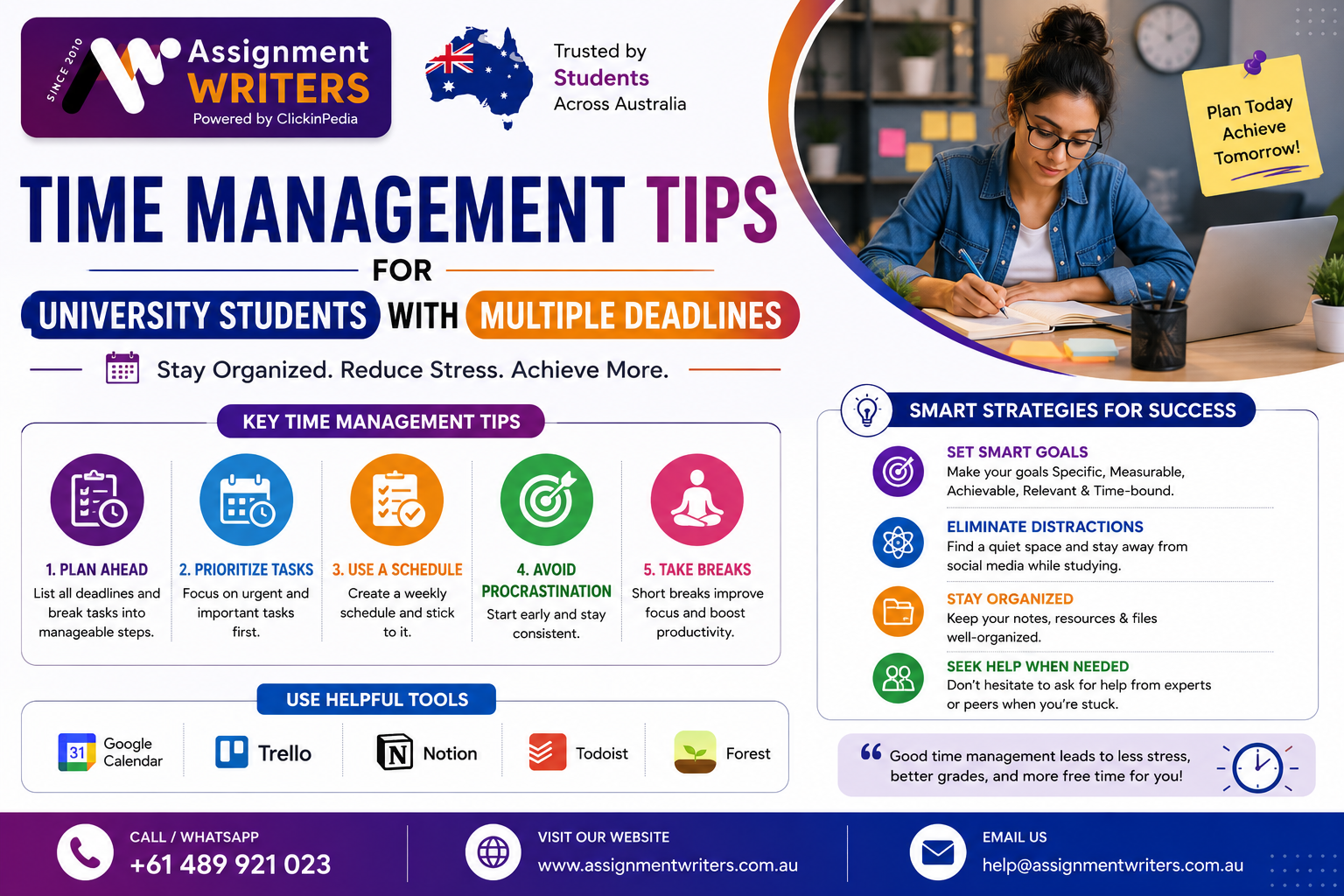
University life can be exciting, rewarding, and full of opportunities for personal and professional growth. However, it can also become overwhelming when multiple assignments, exams, projects, presentations, part-time jobs, internships, and personal commitments compete for your attention at the same time.
Many university students struggle with managing several deadlines simultaneously. It is common to have multiple assignments due within the same week while preparing for exams and balancing other responsibilities. Without effective time management, students often experience stress, rushed submissions, poor academic performance, and burnout.
The good news is that time management is a skill that can be learned and improved. By adopting practical strategies and creating a structured approach to studying, students can manage their workload more effectively, reduce stress, and achieve better academic outcomes.
In this guide, we explore proven time management tips that can help university students successfully handle multiple deadlines without sacrificing the quality of their work.
Why Time Management Matters in University
Time is one of the most valuable resources available to students.
Unlike school, university often provides greater flexibility and independence. While this freedom can be beneficial, it also means students are responsible for managing their own schedules and meeting academic requirements.
Effective time management helps students:
-
Complete assignments on time
-
Reduce last-minute stress
-
Improve academic performance
-
Maintain work-life balance
-
Increase productivity
-
Develop professional skills
-
Improve focus and concentration
Strong time management habits not only support academic success but also prepare students for future careers.
Understand All Your Deadlines Early
One of the biggest mistakes students make is waiting until deadlines are close before reviewing assignment requirements.
At the beginning of each semester:
Create a Master Deadline Calendar
Include:
-
Assignment due dates
-
Exams
-
Presentations
-
Group projects
-
Practical assessments
Seeing all deadlines in one place allows you to identify busy periods and plan ahead.
Review Assessment Weightings
Not all assignments contribute equally to final grades.
Prioritize tasks that carry higher marks while still allocating sufficient time for smaller assessments.
Break Large Assignments into Smaller Tasks
Many students procrastinate because assignments seem overwhelming.
Instead of viewing an assignment as one large task, divide it into smaller, manageable stages.
For example:
Research Phase
-
Read assignment instructions
-
Gather academic sources
-
Take notes
Planning Phase
-
Create an outline
-
Develop key arguments
Writing Phase
-
Draft introduction
-
Write body sections
-
Complete conclusion
Editing Phase
-
Proofread
-
Check references
-
Review formatting
Breaking tasks into smaller steps makes progress feel more achievable.
Use a Priority Matrix
When multiple deadlines occur simultaneously, it can be difficult to know what to focus on first.
A priority matrix can help.
Urgent and Important
Complete these tasks immediately.
Examples:
-
Assignments due within a few days
-
Exam preparation for upcoming tests
Important but Not Urgent
Schedule time for these tasks.
Examples:
-
Long-term projects
-
Dissertation research
Urgent but Less Important
Complete efficiently without overinvesting time.
Neither Urgent nor Important
Limit or postpone these activities.
Prioritization helps ensure that important academic responsibilities receive adequate attention.
Plan Your Week in Advance
Successful students often plan their schedules before the week begins.
Every Sunday or Monday:
Review Upcoming Deadlines
Identify tasks due within the next two weeks.
Allocate Study Blocks
Assign specific times for:
-
Research
-
Writing
-
Revision
-
Reading
Include Personal Commitments
Remember to account for:
-
Work shifts
-
Family responsibilities
-
Exercise
-
Social activities
A realistic schedule is more sustainable than an overly ambitious one.
Use Time Blocking Techniques
Time blocking involves dedicating specific periods to focused work.
For example:
| Time | Activity |
|---|---|
| 9:00 AM – 11:00 AM | Assignment Research |
| 11:00 AM – 12:00 PM | Lecture Review |
| 2:00 PM – 4:00 PM | Assignment Writing |
| 6:00 PM – 7:00 PM | Reading and Notes |
This method helps prevent multitasking and improves concentration.
Avoid Multitasking
Many students believe multitasking increases productivity.
In reality, constantly switching between tasks often reduces efficiency.
For example:
Instead of:
-
Writing an assignment
-
Checking social media
-
Responding to messages
-
Watching videos
Focus on one task at a time.
Single-tasking typically produces better results in less time.
Follow the Pomodoro Technique
The Pomodoro Technique is one of the most popular productivity methods for students.
How It Works
-
Study for 25 minutes
-
Take a 5-minute break
-
Repeat four times
-
Take a longer break after four cycles
Benefits include:
-
Improved focus
-
Reduced mental fatigue
-
Better productivity
-
Easier task management
Many students find this technique particularly useful during intensive assignment periods.
Start Assignments Earlier Than Necessary
One of the simplest ways to reduce stress is to begin assignments early.
Waiting until the last minute often leads to:
-
Poor research quality
-
Rushed writing
-
Increased anxiety
-
Lower grades
Starting early allows time for:
-
Deeper research
-
Better planning
-
Revision and editing
Even spending 30 minutes on an assignment several weeks before the deadline can make a significant difference.
Set Daily Academic Goals
Large assignments become easier when progress is measured daily.
Instead of saying:
"I will finish my assignment."
Try:
"Today I will complete the literature review section."
Specific goals improve motivation and create a sense of accomplishment.
Eliminate Common Distractions
Modern students face numerous distractions.
Common productivity killers include:
-
Social media
-
Streaming services
-
Mobile notifications
-
Excessive web browsing
To stay focused:
Turn Off Notifications
Silence unnecessary alerts during study sessions.
Use Website Blockers
Tools like Freedom, Cold Turkey, or FocusMe can help reduce distractions.
Create a Dedicated Study Environment
Choose a quiet space that supports concentration.
Learn to Estimate Task Duration
Students often underestimate how long assignments will take.
For example:
Research may take:
-
5–10 hours
Writing may take:
-
10–20 hours
Editing may take:
-
2–5 hours
Accurate time estimation helps create more realistic schedules.
Leave Time for Editing and Proofreading
Many students focus entirely on completing the first draft.
However, high-quality assignments require revision.
Schedule dedicated time for:
-
Grammar corrections
-
Structure improvements
-
Reference checking
-
Clarity enhancement
Assignments often improve significantly during the editing stage.
Manage Group Projects Effectively
Group assignments introduce additional challenges.
To avoid problems:
Clarify Responsibilities Early
Assign specific tasks to each group member.
Set Internal Deadlines
Do not rely solely on the final submission date.
Communicate Regularly
Use tools such as:
-
Microsoft Teams
-
Slack
-
WhatsApp
-
Google Docs
Effective collaboration reduces last-minute complications.
Balance Study with Personal Wellbeing
Productivity decreases when students neglect their health.
Maintain:
Adequate Sleep
Sleep supports memory, concentration, and learning.
Regular Exercise
Physical activity improves focus and reduces stress.
Healthy Nutrition
Balanced meals support sustained energy levels.
Breaks and Relaxation
Rest is essential for maintaining long-term productivity.
Time management is not about working constantly—it is about working effectively.
Learn When to Say No
Students sometimes overcommit themselves.
Examples include:
-
Too many extracurricular activities
-
Excessive work hours
-
Unnecessary obligations
When deadlines become overwhelming, it may be necessary to reduce non-essential commitments temporarily.
Protecting your academic priorities is important.
Use Productivity Tools and Apps
Technology can simplify time management.
Popular tools include:
Google Calendar
For scheduling deadlines and study sessions.
Notion
For task management and planning.
Trello
For organizing assignments visually.
Todoist
For creating daily task lists.
Microsoft OneNote
For storing notes and research.
The best tool is the one you will use consistently.
Develop a Semester-Long Strategy
Successful students do not manage time one week at a time.
Instead, they think ahead.
At the beginning of the semester:
-
Review all assessments
-
Identify challenging subjects
-
Schedule major milestones
-
Anticipate busy periods
Long-term planning reduces surprises and improves academic performance.
Common Time Management Mistakes Students Make
Avoid these common errors:
Procrastination
Delaying tasks unnecessarily.
Perfectionism
Spending excessive time on minor details.
Overloading Your Schedule
Creating unrealistic study plans.
Ignoring Breaks
Working continuously without rest.
Poor Prioritization
Focusing on easy tasks instead of important ones.
Recognizing these habits can help students make meaningful improvements.
Benefits of Strong Time Management Skills
Students who manage their time effectively often experience:
-
Better grades
-
Reduced stress
-
Higher productivity
-
Improved confidence
-
Better work-life balance
-
Increased academic satisfaction
These skills remain valuable long after graduation and are highly sought after by employers.
Final Thoughts
Managing multiple deadlines is one of the biggest challenges university students face. However, with proper planning, realistic scheduling, and effective study habits, it is possible to stay organized and maintain strong academic performance even during busy periods.
By understanding deadlines early, prioritizing tasks, breaking assignment help into manageable steps, minimizing distractions, and maintaining personal wellbeing, students can take greater control of their workload and reduce unnecessary stress.
Time management is not about filling every hour with work. It is about using available time wisely, focusing on priorities, and creating a balanced approach to academic success. Students who develop these habits early often find university more manageable, productive, and rewarding throughout their academic journey.

 Arabic
 French
 Spanish
 Portuguese
 Deutsch
 Turkish
 Dutch
Dutch
 Italiano
 Russian
 Romaian
 Portuguese (Brazil)
 Greek
Greek
