


ADHD in Adults: Symptoms, Challenges, and Effective Treatment Options
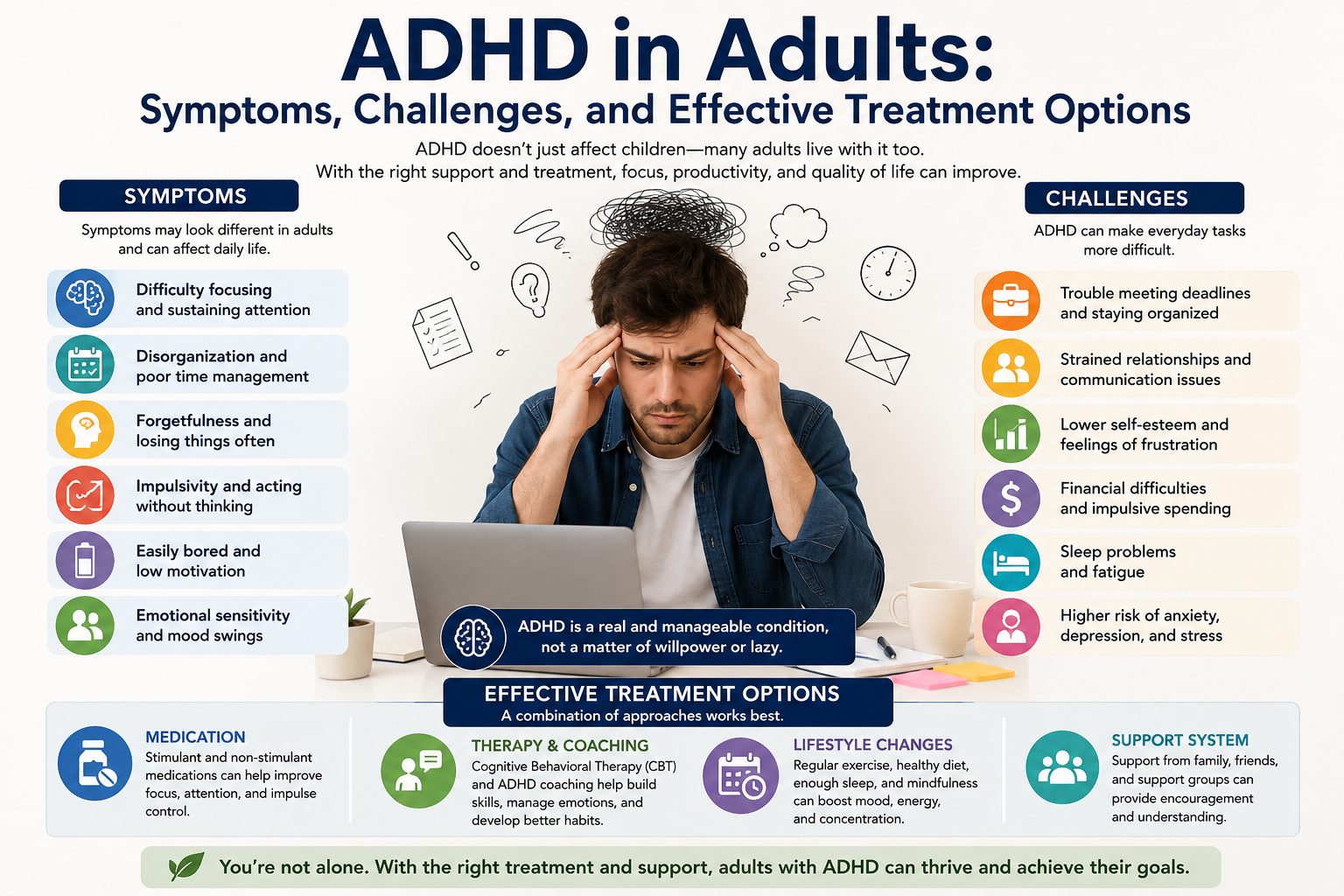
Introduction
For many adults, life can feel like a constant struggle to stay organized, meet deadlines, manage responsibilities, and maintain focus. Missed appointments, unfinished projects, impulsive decisions, and overwhelming mental clutter are often dismissed as personality flaws, laziness, or poor time management. However, for millions of adults worldwide, these challenges may be signs of Attention-Deficit/Hyperactivity Disorder (ADHD).
Although ADHD is commonly associated with children, research shows that symptoms frequently continue into adulthood. In many cases, adults live with ADHD for years without receiving a proper diagnosis. They often develop coping mechanisms that mask symptoms while silently struggling with stress, frustration, and self-doubt.
Fortunately, awareness of adult ADHD has grown significantly in recent years, leading to improved diagnosis and more effective treatment options. Understanding the available approaches for Adult ADHD Treatment can help individuals regain control over their daily lives, improve productivity, strengthen relationships, and enhance overall well-being.
In This Guide, You Will Learn
-
What adult ADHD is and how it differs from childhood ADHD
-
Common symptoms and warning signs
-
Challenges adults with ADHD often face
-
The most effective Adult ADHD Treatment options
-
Lifestyle strategies that support symptom management
-
Common misconceptions about ADHD
-
When to seek professional help
What Is ADHD in Adults?
Attention-Deficit/Hyperactivity Disorder (ADHD) is a neurodevelopmental condition that affects attention regulation, impulse control, executive functioning, and organization.
While ADHD often begins in childhood, symptoms frequently persist into adulthood.
Unlike the stereotypical image of hyperactive children, adult ADHD may appear differently. Many adults experience difficulties with focus, planning, emotional regulation, and task completion rather than obvious physical hyperactivity.
ADHD affects the brain's executive functions, which are responsible for:
-
Planning
-
Prioritizing
-
Time management
-
Emotional control
-
Organization
-
Working memory
When these functions are impaired, everyday responsibilities can become significantly more challenging.
Actionable Takeaway
If you've struggled with chronic disorganization, forgetfulness, impulsivity, or attention difficulties since childhood, consider discussing these concerns with a qualified healthcare professional.
Common Symptoms of ADHD in Adults
ADHD symptoms vary from person to person, but several patterns appear consistently.
Inattention Symptoms
Adults with ADHD may:
-
Frequently lose items
-
Miss deadlines
-
Forget appointments
-
Struggle to complete tasks
-
Have difficulty following conversations
-
Become easily distracted
Real-Life Example
An employee may begin multiple projects enthusiastically but struggle to finish them because new priorities continuously capture their attention.
Hyperactivity Symptoms
Hyperactivity in adults is often less obvious than in children.
It may appear as:
-
Constant restlessness
-
Difficulty relaxing
-
Excessive talking
-
Feeling mentally "on the go"
-
Trouble sitting still for extended periods
Impulsivity Symptoms
Impulsivity may affect:
-
Spending habits
-
Decision-making
-
Emotional reactions
-
Interrupting conversations
-
Risk-taking behaviors
These actions can create challenges in both personal and professional settings.
Actionable Takeaway
Recognizing patterns rather than isolated incidents is important. Occasional forgetfulness is normal; persistent symptoms across multiple areas of life may indicate ADHD.
Why Adult ADHD Often Goes Undiagnosed
Many adults with ADHD never receive a diagnosis during childhood.
Several factors contribute to delayed identification:
-
Symptoms mistaken for laziness
-
High intelligence masking difficulties
-
Strong coping mechanisms
-
Misdiagnosis as anxiety or depression
-
Limited awareness of adult ADHD
Some individuals only seek evaluation after major life transitions, workplace challenges, or relationship difficulties expose long-standing struggles.
Common Statements Adults with ADHD Often Make
-
"I always feel overwhelmed."
-
"I know what I need to do, but I can't get started."
-
"I constantly lose track of time."
-
"I forget important things no matter how hard I try."
Challenges Adults with ADHD Commonly Face
Workplace Difficulties
ADHD can affect professional performance in several ways:
-
Difficulty meeting deadlines
-
Poor organization
-
Time management struggles
-
Forgetting important details
-
Procrastination
Despite being highly capable, many adults feel they are underperforming relative to their potential.
Relationship Challenges
Symptoms can impact communication and emotional connection.
Partners may become frustrated by:
-
Forgetfulness
-
Inattention during conversations
-
Impulsive reactions
-
Difficulty following through on commitments
Without understanding ADHD, these behaviors may be misinterpreted as carelessness.
Emotional Regulation Difficulties
Many adults with ADHD experience:
-
Frustration
-
Low self-esteem
-
Anxiety
-
Emotional sensitivity
-
Mood fluctuations
Years of struggling with daily responsibilities can contribute to feelings of inadequacy.
Actionable Takeaway
Understanding ADHD-related challenges can reduce self-blame and create opportunities for more effective problem-solving.
Adult ADHD Treatment: Evidence-Based Approaches
Effective Adult ADHD Treatment typically involves a combination of medical, psychological, and lifestyle interventions.
The best treatment plan depends on individual symptoms, goals, and overall health.
Medication Options for Adult ADHD
Medication is often one of the most effective treatment tools for managing ADHD symptoms.
Stimulant Medications
Common stimulant medications may help improve:
-
Attention
-
Focus
-
Impulse control
-
Executive functioning
Many individuals experience significant symptom improvement under professional supervision.
Non-Stimulant Medications
Some individuals benefit from non-stimulant alternatives, particularly if stimulants are not appropriate or well tolerated.
Medication decisions should always be made in consultation with a qualified healthcare provider.
Actionable Takeaway
Medication is not a cure, but for many adults it provides meaningful symptom relief that supports daily functioning.
Cognitive Behavioral Therapy (CBT) for Adult ADHD
Therapy plays a crucial role in comprehensive Adult ADHD Treatment.
Cognitive Behavioral Therapy helps individuals:
-
Develop organizational skills
-
Improve time management
-
Address negative thought patterns
-
Reduce procrastination
-
Strengthen emotional regulation
CBT is particularly beneficial because it focuses on practical solutions and daily life challenges.
Example
Instead of simply trying harder to stay organized, individuals learn structured systems that work with their ADHD rather than against it.
ADHD Coaching and Skills Training
ADHD coaches help clients develop practical strategies for:
-
Planning
-
Prioritization
-
Goal setting
-
Accountability
-
Productivity
This approach can complement therapy and medication effectively.
Lifestyle Strategies That Support ADHD Management
Lifestyle habits significantly influence ADHD symptoms.
Exercise
Regular physical activity may improve:
-
Focus
-
Mood
-
Energy levels
-
Stress management
Sleep
Sleep deprivation can worsen:
-
Inattention
-
Emotional reactivity
-
Memory difficulties
Consistent sleep schedules are particularly important.
Nutrition
Balanced nutrition supports overall brain function and energy regulation.
Structured Routines
Many adults with ADHD benefit from:
-
Daily schedules
-
Reminders
-
Calendars
-
Checklists
-
Time-blocking techniques
Actionable Takeaway
Small environmental changes often produce meaningful improvements in productivity and focus.
Adult ADHD Treatment vs Ignoring Symptoms
|
Challenge |
Ignoring ADHD Symptoms |
Seeking Treatment |
|
Productivity |
Ongoing struggles |
Improved efficiency |
|
Relationships |
Increased misunderstandings |
Better communication |
|
Emotional Health |
Frustration and self-criticism |
Greater confidence |
|
Time Management |
Chronic lateness and stress |
Better organization |
|
Career Growth |
Missed opportunities |
Improved performance |
|
Daily Functioning |
Continued overwhelm |
Enhanced control |
This comparison highlights how appropriate treatment can improve multiple aspects of life.
Common Misconceptions About Adult ADHD
Misconception 1: ADHD Only Affects Children
ADHD frequently continues into adulthood.
Many adults receive their first diagnosis later in life.
Misconception 2: ADHD Means Someone Is Lazy
ADHD is a neurological condition, not a character flaw.
People with ADHD often work harder than others simply to manage everyday responsibilities.
Misconception 3: Medication Is the Only Solution
While medication can be highly effective, many individuals benefit from therapy, coaching, lifestyle changes, and organizational strategies.
Misconception 4: Successful People Can't Have ADHD
Many entrepreneurs, executives, creatives, and professionals have ADHD and thrive when symptoms are properly managed.
Actionable Takeaway
Avoid self-diagnosis based on stereotypes. ADHD presents differently across individuals and requires professional evaluation.
Real-Life Case Study
David, a 38-year-old project manager, spent years believing he was simply disorganized.
He frequently:
-
Missed deadlines
-
Forgot meetings
-
Struggled to prioritize tasks
-
Felt overwhelmed by administrative work
Despite strong intelligence and dedication, his career progress stalled.
After a comprehensive evaluation, David was diagnosed with ADHD.
His treatment plan included:
-
Medication
-
Cognitive Behavioral Therapy
-
Time-management coaching
-
Structured planning systems
Within several months, he reported:
-
Better focus
-
Improved productivity
-
Reduced stress
-
Greater confidence
The diagnosis provided clarity, while treatment gave him practical tools for success.
Warning Signs You Should Seek Professional Help
Consider speaking with a healthcare professional if symptoms:
-
Interfere with work performance
-
Affect relationships
-
Cause significant stress
-
Lead to chronic procrastination
-
Contribute to anxiety or depression
-
Impact daily functioning consistently
Early intervention often leads to better outcomes.
Expert Tips for Managing Adult ADHD
1. Break Large Tasks Into Smaller Steps
Smaller tasks feel less overwhelming and easier to start.
2. Use External Systems
Calendars, reminders, alarms, and task-management tools reduce reliance on memory.
3. Create Structured Routines
Consistency helps reduce decision fatigue and improve productivity.
4. Minimize Distractions
Create work environments that support focus.
5. Practice Self-Compassion
ADHD-related challenges are not personal failures.
Learning to work with your brain rather than against it often improves long-term outcomes.
Actionable Takeaway
Choose one organizational strategy and implement it consistently for two weeks before adding additional changes.
Frequently Asked Questions (FAQs)
What is the most effective Adult ADHD Treatment?
The most effective treatment often combines medication, therapy, skills training, and lifestyle modifications tailored to the individual's needs.
Can ADHD be diagnosed in adulthood?
Yes. Many individuals receive their first ADHD diagnosis as adults after recognizing long-standing symptoms.
Is medication necessary for adult ADHD?
Not always. Some people benefit significantly from therapy, coaching, and behavioral strategies, while others find medication helpful as part of a broader treatment plan.
Can ADHD affect relationships?
Yes. Symptoms such as forgetfulness, impulsivity, and communication difficulties can create relationship challenges if left unaddressed.
Does ADHD get worse with age?
ADHD symptoms can change over time. Increased responsibilities in adulthood may make symptoms more noticeable, even if the condition itself does not worsen.
Conclusion
Living with ADHD as an adult can be frustrating, confusing, and emotionally exhausting, especially when symptoms have gone unrecognized for years. Difficulties with focus, organization, impulsivity, and time management can affect nearly every aspect of life, from careers and finances to relationships and self-confidence.
The good news is that effective Adult ADHD Treatment options are available. Through proper diagnosis, evidence-based therapies, medication when appropriate, coaching, and practical lifestyle strategies, many adults experience significant improvements in daily functioning and overall well-being.
If you recognize these symptoms in yourself, consider seeking a professional evaluation. Understanding the root cause of your challenges can be the first step toward building a more organized, productive, and fulfilling life.

 English
 Arabic
 French
 Spanish
 Portuguese
 Deutsch
 Turkish
 Dutch
Dutch
 Italiano
 Russian
 Romaian
 Greek
Greek
