


Medical Marijuana for Chronic Pain: A Comprehensive Guide for Patients in 2026
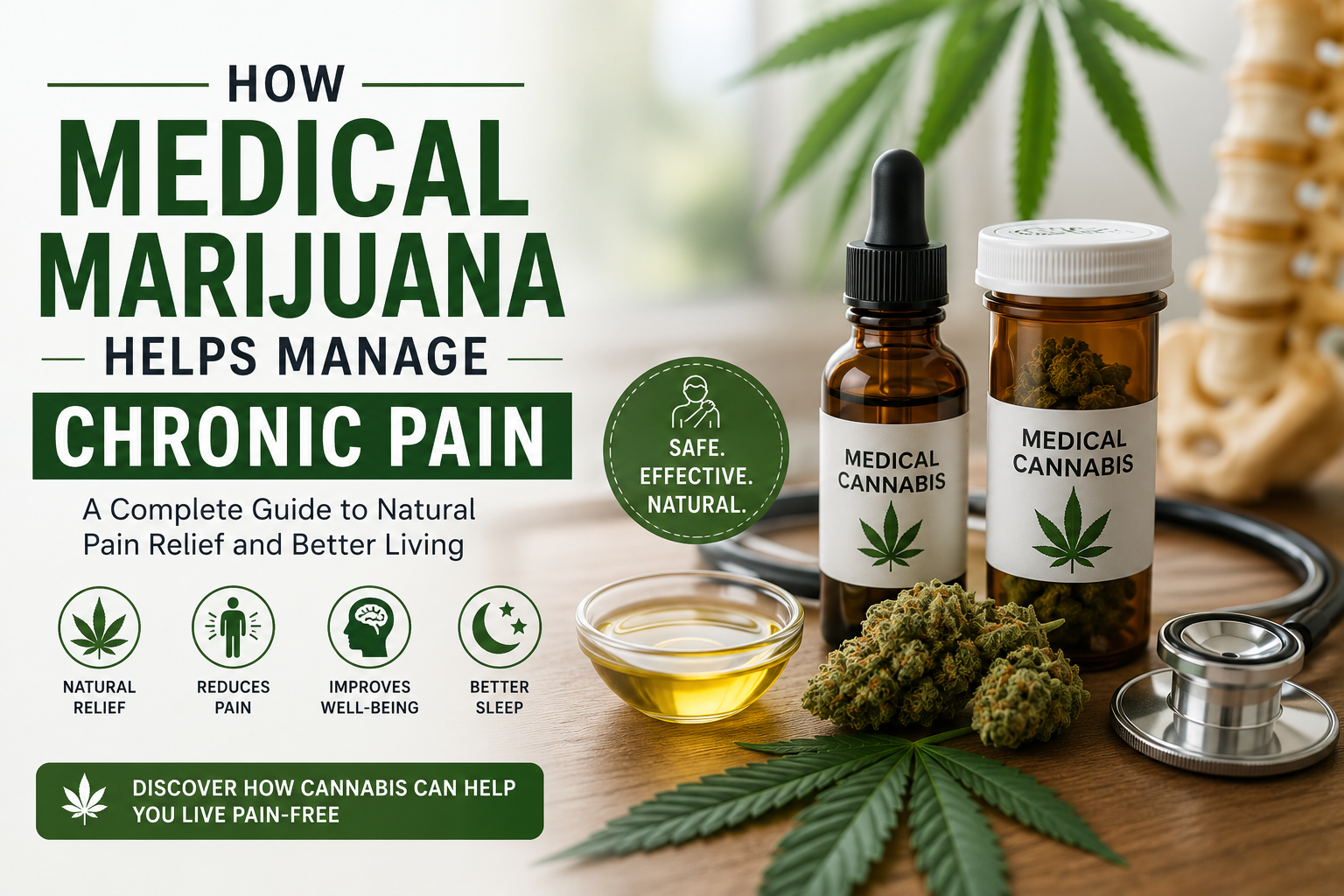
Chronic pain affects millions of people worldwide, and for many, traditional medications like opioids come with unwanted side effects, addiction risks, and diminishing effectiveness over time. Medical marijuana has emerged as a legitimate treatment option that's changing how patients approach long-term pain management. If you're struggling with persistent pain and searching for alternatives, understanding how cannabis works for pain relief is essential.
The landscape of pain management is shifting dramatically in 2026. More patients are discovering that cannabis offers relief without the baggage of traditional pharmaceutical approaches. Whether you're dealing with arthritis, neuropathic pain, back pain, or cancer-related discomfort, medical marijuana presents options worth exploring with a qualified healthcare provider.
This comprehensive guide walks you through everything you need to know about using medical marijuana for chronic pain-from how it works physiologically to practical tips for finding the right strains and dosages for your specific situation.
Table of Contents
- Understanding Chronic Pain and Traditional Treatments
- How Medical Cannabis Works for Pain Relief
- Types of Cannabis Products for Pain Management
- Finding the Right Strain for Your Condition
- Dosage and Administration Methods
- Medical Marijuana vs. Traditional Pain Medications
- Qualifying for Medical Cannabis with a Pain Condition
- Patient Experiences and Real-World Results
- Safety Considerations and Drug Interactions
- The Science Behind Cannabis and Pain Management
Understanding Chronic Pain and Traditional Treatments
Chronic pain is defined as pain lasting longer than three months, and it affects roughly 20% of the adult population. Unlike acute pain, which serves a protective function, chronic pain persists beyond the initial injury or illness. It becomes a condition unto itself-something your nervous system struggles with long after the original problem should have resolved.
Traditional approaches to chronic pain management typically involve:
- Opioid medications (morphine, oxycodone, hydrocodone)
- NSAIDs (ibuprofen, naproxen)
- Muscle relaxants
- Antidepressants used off-label for pain
- Anticonvulsants for neuropathic pain
- Physical therapy and exercise
- Surgical interventions
While these approaches work for some patients, they often come with significant limitations. Opioids, though effective, carry serious risks of dependence and overdose. NSAIDs, taken long-term, can damage the gastrointestinal system and kidneys. Many medications cause side effects that are nearly as troubling as the pain itself-drowsiness, constipation, cognitive fog, and mood changes.
This reality has driven millions of patients to explore alternative treatments, with medical marijuana for chronic pain becoming increasingly popular. Unlike the one-size-fits-all pharmaceutical approach, cannabis offers personalized treatment options that patients can adjust based on their response.
How Medical Cannabis Works for Pain Relief
Understanding the science behind cannabis and pain relief helps you appreciate why this plant has such powerful therapeutic potential. Your body has an endocannabinoid system-a biological system that regulates pain perception, mood, immunity, and many other functions.
The Endocannabinoid System
Your body naturally produces compounds called endocannabinoids that bind to receptors throughout your nervous system and immune system. These receptors come in two main types: CB1 receptors (primarily in the brain and nervous system) and CB2 receptors (primarily in immune cells and the digestive system).
When this system functions optimally, it maintains pain balance. When it's dysregulated-which happens in chronic pain conditions-pain signals become amplified and persistent. This is where cannabis comes in.
How THC and CBD Affect Pain
Medical marijuana contains hundreds of compounds, but two primary cannabinoids drive pain relief:
THC (Tetrahydrocannabinol) is the psychoactive compound that produces the "high." But beyond the euphoric effects, THC activates CB1 and CB2 receptors, which:
- Reduces pain signal transmission in the spinal cord
- Decreases inflammation
- Promotes relaxation and stress relief
- Improves sleep quality (crucial for pain management)
- Alters pain perception in the brain
CBD (Cannabidiol) is non-psychoactive, meaning it won't make you high. CBD's pain-relief mechanisms include:
- Anti-inflammatory action
- Reduction of neuropathic pain
- Muscle relaxation
- Anxiety reduction (which amplifies pain perception)
- Better sleep without cognitive impairment
Many patients find that CBD and THC work synergistically-the combination is more effective than either compound alone. This "entourage effect" is why whole-plant cannabis often works better than isolated cannabinoids.
Other Beneficial Compounds
Beyond THC and CBD, cannabis contains terpenes-aromatic compounds that contribute to effects and have their own therapeutic properties. For example:
- Myrcene has anti-inflammatory and muscle-relaxing properties
- Pinene can help with alertness and focus
- Linalool provides calming, anti-anxiety effects
- Humulene offers anti-inflammatory benefits
A well-chosen strain delivers the right combination of cannabinoids and terpenes for your specific pain type.
Types of Cannabis Products for Pain Management
Once you've obtained your medical marijuana card online through services like EZMedcard, you'll encounter numerous product options at dispensaries. Here's what's available:
Flower (Cannabis Buds)
The traditional form-dried cannabis buds that you smoke or vaporize. Flower offers:
- Rapid onset (5-15 minutes when smoked)
- Easy dose adjustments
- Full entourage effect from whole plant material
- Generally lower cost
For pain, flower is excellent for immediate relief or breakthrough pain episodes.
Edibles
Food products infused with cannabis concentrates. These include gummies, chocolates, baked goods, capsules, and more. Benefits include:
- Long-lasting effects (6-12 hours)
- No smoking-related irritation
- Precise dosing
- Discreet consumption
- Consistent effects for predictable pain management
Edibles work better for sustained pain relief throughout the day or night.
Concentrates and Extracts
Highly potent products like oils, waxes, and resins that contain concentrated cannabinoids. These are ideal for:
- Patients needing high-potency relief
- Efficient consumption (smaller amounts go further)
- Vaporization or dabbing for rapid onset
- Cost-effectiveness over time
Topicals
Creams, balms, and patches applied directly to skin over painful areas. They:
- Provide localized relief
- Don't enter the bloodstream significantly
- Work well for arthritis, muscle pain, and injuries
- Combine well with other administration methods
Tinctures and Oils
Liquid cannabis extracts taken sublingually (under the tongue) or added to food. They offer:
- Precise dosing
- Relatively quick onset (15-30 minutes)
- Discreet consumption
- Good for patients who can't smoke
Capsules
Pre-dosed cannabis medicine in pill form. Perfect for:
- Patients preferring traditional medicine format
- Exact, repeatable dosing
- Taking medication discreetly at work
- Consistent, long-lasting effects
Finding the Right Strain for Your Condition
Cannabis comes in three basic categories-Sativas, Indicas, and Hybrids-each with different effects on pain and consciousness.
Indica Strains
Indicas tend to be relaxing and sedating, making them ideal for:
- Nighttime pain relief
- Patients needing sleep improvement
- Muscle tension and cramping
- Severe, acute pain episodes
Popular pain-relief Indicas include Purple Kush, Northern Lights, and Afghan Kush.
Sativa Strains
Sativas are typically energizing and uplifting, better suited for:
- Daytime pain management
- Patients needing to remain functional
- Depression or mood issues alongside pain
- Mild to moderate pain
Reliable Sativas for pain include Durban Poison and Jack Herer.
Hybrid Strains
Hybrids blend Indica and Sativa characteristics, offering balanced relief for:
- All-day pain management
- Patients wanting effects without extreme sedation
- Finding middle-ground between relaxation and functionality
Popular hybrids for pain include Girl Scout Cookies and Pineapple Express.
Dosage and Administration Methods
One of the biggest mistakes chronic pain patients make is not finding their optimal dose. Medical marijuana isn't about getting as high as possible-it's about finding the minimum effective dose that addresses pain while maintaining acceptable side effects.
Starting Low and Going Slow
The principle of "start low, go slow" is crucial:
- Begin with the lowest possible dose
- Wait at least three days before increasing
- Track pain levels and side effects daily
- Increase gradually until you find relief
- Stick with that dose for consistent pain management
Dosing by Administration Method
Smoking/Vaporizing:
- Start with 1-2 inhalations
- Effects appear in 5-15 minutes
- Peak effects at 30 minutes
- Lasts 2-4 hours
Edibles:
- Start with 2.5-5mg THC
- Effects begin at 30-90 minutes
- Peak at 2-3 hours
- Last 6-12 hours (sometimes longer)
Tinctures:
- Start with 2-3 drops (usually 1-2.5mg THC)
- Effects at 15-30 minutes
- Last 4-8 hours
Topicals:
- No standard dosing (non-systemic)
- Apply as needed to painful areas
- Effects at 15-30 minutes
- Last 4-6 hours
Finding Your Sweet Spot
For chronic pain, many patients use multiple delivery methods:
- Morning: Low-dose Sativa edible or tincture for functional pain relief
- Afternoon: As-needed smoking or vaporizing for breakthrough pain
- Evening: Higher-dose Indica edible for sleep and overnight pain relief
- Anytime: Topicals for localized pain flares
This multi-modal approach allows sophisticated pain management without excessive psychoactive effects.
Medical Marijuana vs. Traditional Pain Medications
How does medical marijuana stack up against conventional treatments? Let's compare:
Safety Profile
Opioids: Highly addictive, significant overdose risk, dangerous drug interactions
NSAIDs: GI bleeding, kidney damage with long-term use, cardiovascular risks
Medical Cannabis: Non-addictive, no lethal overdose possible, minimal serious side effects
Side Effects
Opioids: Constipation, drowsiness, nausea, cognitive impairment, dependence
NSAIDs: Stomach ulcers, kidney problems, increased heart attack/stroke risk
Medical Cannabis: Dry mouth, minor cognitive effects (dosage-dependent), tolerance development
Cost Comparison
Medical marijuana typically costs $200-400 monthly for regular users, while chronic pain medication prescriptions can exceed $300-500 monthly-plus additional costs for managing side effects.
Long-Term Effectiveness
Opioids: Tolerance develops quickly; escalating doses needed for same relief
NSAIDs: Lose effectiveness over years; increased risks with continued use
Medical Cannabis: Tolerance develops slowly; many patients use same dose for years without escalation
The evidence increasingly suggests medical marijuana for chronic pain offers superior long-term safety and effectiveness compared to traditional pharmaceutical approaches.
Qualifying for Medical Cannabis with a Pain Condition
Getting approved for medical cannabis when you have chronic pain is generally straightforward. Chronic pain appears on virtually every state's qualifying conditions list. The process through medical marijuana card services is now streamlined.
Documentation You'll Need
When consulting with an online cannabis doctor, have ready:
- Documentation of your chronic pain diagnosis
- List of medications you've already tried
- Details about what did and didn't work
- Any imaging or test results supporting your diagnosis
- Your medical history
What Doctors Look For
Licensed physicians evaluating pain patients consider:
- Whether conservative treatments have been attempted
- Your specific pain type and location
- How pain affects daily functioning
- Your medical history and contraindications
- Your willingness to use cannabis responsibly
Most patients with documented chronic pain qualify easily. Doctors rarely decline pain patients unless they have specific contraindications or haven't tried conventional treatments first.
The Application Process
The good news is that telehealth cannabis evaluation for pain patients is quick and straightforward. Most consultations take 15-20 minutes, and you can complete the entire process from home. After approval, you'll have your medical marijuana certification within 24-48 hours in most states.
Patient Experiences and Real-World Results
Numbers and research matter, but patient stories often provide the most compelling insights into medical marijuana's impact on chronic pain.
The Arthritis Patient
Janet, a 64-year-old with severe osteoarthritis, had been on opioids for eight years. Despite the medication, she had limited mobility and constant pain. After starting medical cannabis-specifically a 1:1 THC:CBD topical applied to her hands and knees twice daily-she reduced opioid use by 75%, regained hand strength, and started gardening again.
The Back Pain Survivor
Michael, a 45-year-old with chronic lower back pain from a work injury, used cannabis edibles at night for sleep and pain relief. This replaced his nightly sleep medication and two daily pain pills. He reports sleeping better than he has in a decade and actually enjoying morning walks with his family.
The Migraine Management
Susan, prone to severe migraines, uses a high-CBD, low-THC strain at the first sign of an aura. She reports that cannabis stops 70% of migraines from developing fully, compared to only 40% effectiveness with her previous prescription medication.
The Neuropathic Pain Case
Robert, with diabetic neuropathy, found traditional medications didn't adequately address his shooting pains. High-CBD edibles taken twice daily reduced pain by roughly 60% and improved sleep dramatically. He's maintained the same dose without escalation for three years.
These aren't exceptional cases. Thousands of patients report similar experiences-meaningful pain reduction, improved function, and better quality of life.
Safety Considerations and Drug Interactions
While medical cannabis is generally safe, it's not without considerations.
Common Side Effects
- Dry mouth: Drink more water; stay hydrated
- Drowsiness: Use lower doses or Sativa strains; adjust timing
- Dizziness: Reduce dose; sit or lie down when effects peak
- Impaired focus: Use CBD-heavy strains; save THC for evening
- Increased appetite: Eat before dosing if this is a concern
Drug Interactions
Cannabis can interact with medications metabolized by the liver. If you take:
- Blood thinners
- Heart medications
- Seizure medications
- Sedatives
- Immunosuppressants
Discuss cannabis use with your prescribing physician. In many cases, you can use cannabis alongside these medications with proper monitoring, but some combinations require caution.
Tolerance and Dependence
Unlike opioids, cannabis doesn't create physical dependence. However, regular users develop tolerance-meaning you need more to achieve the same effect. Taking regular breaks (even one day weekly) helps prevent significant tolerance buildup.
Driving and Cannabis
Don't drive while impaired. THC affects reaction time and coordination. Wait until effects completely wear off before driving, and never combine cannabis with alcohol.
The Science Behind Cannabis and Pain Management
The research supporting medical marijuana for chronic pain is substantial and growing.
Clinical Research Findings
A 2021 systematic review in the journal Pain found that cannabis products reduced pain intensity by an average of 30%, with many patients experiencing 50%+ relief. The same review noted that cannabis had fewer serious adverse events than opioid medications.
Studies specific to pain conditions show:
- Arthritis: Cannabis reduces inflammation and joint pain; multiple studies confirm efficacy
- Neuropathic pain: High-CBD cannabis shows particular promise for nerve pain
- Cancer pain: Cannabis enhances opioid efficacy, allowing dose reduction
- Back pain: Mixed results, but many patients report meaningful improvement
Why Research Lags
Despite positive clinical outcomes, cannabis remains Schedule I federally, making research difficult. More research would likely show even stronger evidence, but the current evidence base is compelling.
Future Research Directions
Upcoming studies focus on:
- Optimal THC:CBD ratios for specific pain conditions
- Terpene profiles that enhance pain relief
- Long-term safety and efficacy data
- Combining cannabis with other pain management approaches
Practical Tips for Pain Management Success
Consistency Matters
Regular dosing provides better pain control than sporadic use. Take your cannabis at the same time daily for optimal results.
Combine Approaches
Medical marijuana works best as part of a comprehensive pain strategy that includes:
- Regular physical activity and stretching
- Weight management
- Stress reduction
- Sleep hygiene
- Social connection and activity
Track Everything
Keep a pain and cannabis journal:
- Daily pain levels (1-10 scale)
- Cannabis dose and type
- Time of administration
- Effects and side effects
- Activities attempted
This data helps you optimize your regimen and proves invaluable when discussing treatment with healthcare providers.
Stay Connected to Medical Care
Don't abandon traditional medical care when using cannabis. Continue:
- Regular doctor appointments
- Physical therapy if recommended
- Pain management specialist consultations
- Monitoring of underlying conditions
Cannabis complements, not replaces, good medical care.
Join Support Communities
Connecting with other medical cannabis patients provides valuable peer support, strain recommendations, and encouragement. Online forums, local support groups, and dispensary communities offer connection.
State-Specific Considerations
Medical marijuana availability and regulations for pain patients vary by state. Some states (California, Colorado, Michigan) have well-established programs with extensive product selection. Others are newer to legalization with more limited options.
If you're in a state newer to medical marijuana legalization, like the Mississippi medical marijuana program, don't worry-these programs are expanding rapidly and catching up to more established ones in terms of product availability and practitioner expertise.
Conclusion
Medical marijuana for chronic pain represents a paradigm shift in how millions of people approach pain management. With growing clinical evidence, expanding legal access, and positive patient outcomes, cannabis has moved from alternative medicine curiosity to legitimate therapeutic option.
The combination of THC and CBD, along with supporting terpenes, works through your body's natural endocannabinoid system to reduce pain, decrease inflammation, improve sleep, and restore quality of life. Unlike opioids, it carries minimal addiction risk. Unlike NSAIDs, it won't damage your organs with long-term use.
If chronic pain has limited your life, exploring medical marijuana makes sense. Start by consulting with a qualified healthcare provider. If you're ready to formally pursue medical cannabis, the new medical marijuana approval rules in 2026 make the process faster and easier than ever.
Remember that successful pain management with cannabis requires patience, careful observation, and willingness to experiment with different strains and dosages. What works perfectly for your neighbor might not work for you-and that's okay. The beauty of medical marijuana is that it offers numerous options for personalized treatment.
Your chronic pain doesn't have to define your life. With proper medical cannabis treatment, thousands of patients have reclaimed their mobility, their sleep, their independence, and their joy. You could be next.
Frequently Asked Questions
Q1: How quickly does medical marijuana work for pain relief?
Smoked or vaporized cannabis provides relief in 5-15 minutes, while edibles take 30-90 minutes to work, and topicals show effects in 15-30 minutes depending on your metabolism and pain severity.
Q2: Will I develop tolerance to medical marijuana and need constantly increasing doses?
Most chronic pain patients maintain stable doses for years without significant tolerance development, unlike opioids that require escalating doses as tolerance builds quickly.
Q3: Can I use medical marijuana if I'm already taking pain medications?
Yes, many patients successfully combine cannabis with other pain medications, though some interactions require physician monitoring and careful dose adjustments.
Q4: What's the difference between high-THC and high-CBD strains for pain management?
High-THC strains provide faster, more intense pain relief but may cause psychoactive effects, while high-CBD strains offer pain relief with minimal psychoactive effects and may work better for certain pain types.
Q5: How long does a medical marijuana recommendation last, and how often do I need to renew it? Medical marijuana recommendations typically last one year, and you'll need to complete a renewal consultation annually with a licensed physician to maintain your medical marijuana certification.
Business Information
Name: EZMedcard
Address: 423 Weathersby Rd Suite 170, Hattiesburg, MS 39402
Phone: 475-467-0863
Website: https://ezmedcard.com/

 English
 Arabic
 French
 Spanish
 Portuguese
 Deutsch
 Turkish
 Dutch
Dutch
 Italiano
 Romaian
 Portuguese (Brazil)
 Greek
Greek
