


How to Safely Store Bulk Cleaning Solutions at Your Busy Workplace
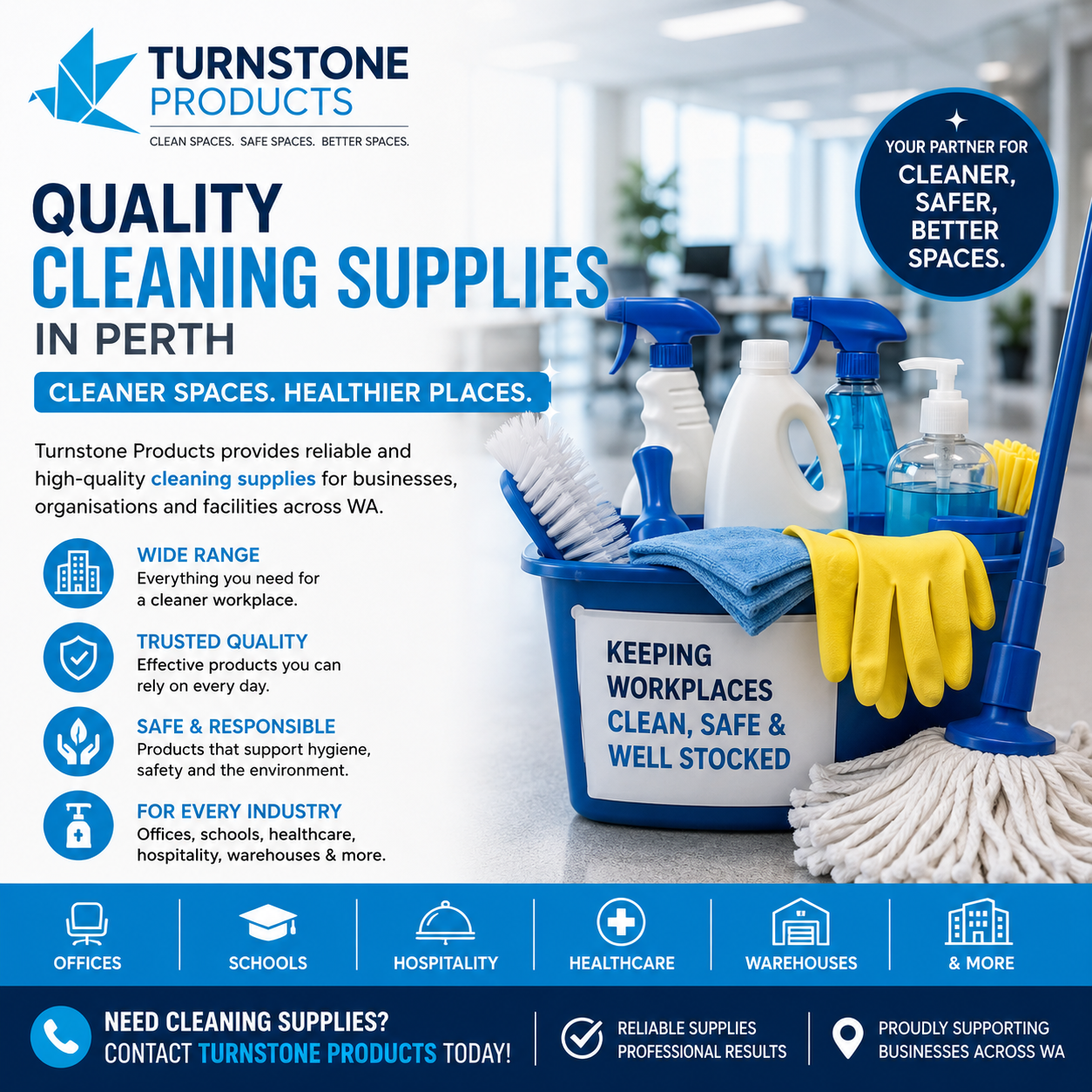
Buying cleaning products in bulk can be a smart decision for busy workplaces. It can reduce costs, prevent last-minute shortages, and make daily cleaning easier to manage. However, bulk storage also brings extra responsibility. Cleaning solutions must be stored correctly to protect staff, reduce accidents, maintain product quality, and keep the workplace organised.
For businesses across Western Australia, especially offices, warehouses, commercial kitchens, schools, clinics, aged care facilities, hospitality venues, and industrial sites, safe storage should never be an afterthought. The more cleaning chemicals a workplace keeps on-site, the more important it becomes to have a clear system.
This guide explains how to safely store bulk cleaning chemicals, what mistakes to avoid, and how working with a trusted local supplier like Turnstone Products can help WA businesses choose suitable products and manage workplace cleaning stock more efficiently.
Why Safe Storage of Cleaning Chemicals Matters
Cleaning chemicals are designed to remove dirt, grease, germs, stains, odours, and grime. Many products are safe and effective when used correctly, but they can still create risks if they are stored poorly. Leaking containers, mixed chemicals, unclear labels, poor ventilation, and overloaded shelves can all create unnecessary hazards.
Safe storage helps protect:
-
Staff and cleaners
-
Customers and visitors
-
Food preparation areas
-
Equipment and surfaces
-
Product quality
-
Workplace compliance
-
Daily cleaning efficiency
A workplace that stores cleaning solutions properly is easier to manage and safer for everyone using the space.
Common Risks of Poor Chemical Storage
Poorly stored cleaning products can lead to avoidable problems. Even a small leak or misplaced bottle can become a major issue in a busy workplace.
Common Storage Problems
|
Storage Mistake |
Possible Risk |
|
Storing chemicals without labels |
Staff may use the wrong product |
|
Mixing incompatible products |
Dangerous fumes or reactions may occur |
|
Keeping chemicals near food |
Contamination risk |
|
Placing heavy drums on high shelves |
Injury or spills during handling |
|
Leaving containers open |
Leaks, fumes, evaporation, and reduced effectiveness |
|
Storing products in direct sunlight |
Product quality may reduce |
|
No spill kit nearby |
Small spills become harder to manage |
|
Overcrowded storage area |
Higher chance of breakage or incorrect use |
These risks can be reduced with planning, training, and the right storage setup.
1. Keep Cleaning Chemicals in a Dedicated Storage Area
Every workplace should have a specific place for cleaning products. This area should be separate from food, personal items, stationery, medical supplies, and general workplace equipment.
A dedicated chemical storage area makes it easier for staff to find products, return them after use, and notice when stock is running low. It also reduces the chance of unauthorised access or accidental misuse.
A Good Storage Area Should Be:
-
Clearly marked
-
Easy for authorised staff to access
-
Away from food and drink
-
Away from heat and direct sunlight
-
Well ventilated
-
Organised by product type
-
Secure from children, customers, or visitors
-
Suitable for the size and weight of stored products
For larger workplaces using bulk cleaning chemicals, the storage area should be designed to handle heavier cartons, drums, or containers safely.
2. Store Products in Their Original Containers
Cleaning solutions should generally stay in their original containers unless they are being correctly diluted into approved and labelled spray bottles or dispensers. Original containers include important details such as product name, usage instructions, safety warnings, batch information, and handling directions.
Moving chemicals into unmarked bottles is one of the most common and dangerous mistakes in workplaces. It can lead to incorrect use, accidental mixing, or exposure to unsuitable surfaces.
Why Original Containers Are Important
Original packaging helps staff understand:
-
What the product is
-
How it should be used
-
Whether dilution is required
-
What surfaces it suits
-
What precautions are needed
-
How it should be stored
-
What to do in case of a spill or exposure
If your workplace uses refillable spray bottles, make sure every bottle has a clear label. The label should match the product and should not rely on memory, colour, smell, or guesswork.
3. Separate Incompatible Cleaning Chemicals
Not all cleaning chemicals should be stored together. Some products can create dangerous reactions if they leak, spill, or mix. For example, bleach-based products should not be stored in a way that allows accidental contact with acidic cleaners or ammonia-based products.
Even if your team does not intentionally mix products, poor storage can still create problems if containers leak or fall.
Basic Separation Tips
|
Product Type |
Store Away From |
|
Bleach-based cleaners |
Acids, ammonia-based products |
|
Acidic cleaners |
Bleach and alkaline products |
|
Solvent-based products |
Heat, flames, oxidisers |
|
Aerosols |
Heat and direct sunlight |
|
Food-safe sanitisers |
Non-food chemicals and contaminants |
|
Floor chemicals |
Open food, paper goods, and personal items |
A simple shelving system can help. Group similar products together and keep incompatible products apart. For complex or industrial environments, staff should always follow safety data sheets and workplace procedures.
4. Keep Safety Data Sheets Accessible
Safety Data Sheets, often called SDS, provide important information about chemical products. They explain hazards, first aid steps, storage requirements, spill response, personal protective equipment, and safe handling.
Every workplace that stores and uses cleaning chemicals should keep SDS information accessible to the people who need it. Staff should know where to find these documents and how to use them in an emergency.
SDS Information Usually Includes:
-
Product identification
-
Hazard details
-
First aid measures
-
Firefighting measures
-
Accidental release measures
-
Handling and storage instructions
-
Exposure controls
-
Disposal considerations
Keeping SDS documents in a folder near the chemical storage area or in an accessible digital system can help staff respond faster and more safely.
5. Use Strong Shelving and Keep Heavy Products Low
Bulk products are heavier than small bottles, so storage strength matters. Heavy drums, cartons, and chemical containers should not be placed on weak shelves or stored overhead.
A container that falls from height can injure someone and create a chemical spill. Keeping heavier products lower also makes them easier to move safely.
Smart Storage Setup
Use this simple guide:
|
Storage Level |
Best Use |
|
Lower shelves |
Heavy drums, bulk chemicals, cartons |
|
Middle shelves |
Frequently used products |
|
Upper shelves |
Light items only, such as empty bottles or cloths |
|
Floor level |
Only if containers are stable and protected from impact |
Make sure the shelving is suitable for the load. If a shelf bends, wobbles, or looks overloaded, it should be replaced or reorganised.
6. Control Access to Bulk Cleaning Chemicals
Not every staff member needs access to every cleaning solution. For safety, workplaces should limit chemical access to trained or authorised people. This is especially important in schools, childcare centres, medical facilities, hospitality venues, public-facing businesses, and large workplaces.
A storage cupboard with a lock, key system, or staff-only area can reduce the risk of accidental misuse.
Access Control Helps Prevent:
-
Untrained staff using strong chemicals
-
Customers or visitors touching cleaning products
-
Accidental spills
-
Products being moved to incorrect areas
-
Children accessing hazardous substances
-
Chemicals being used on unsuitable surfaces
Clear signage can also help. A simple “Cleaning Chemicals – Authorised Staff Only” sign can reduce confusion.
7. Store Cleaning Supplies Away From Food and Catering Items
Many workplaces store cleaning products near kitchens or staff rooms because those areas need frequent cleaning. However, cleaning chemicals should never be stored with food, drink, utensils, disposable cups, napkins, plates, or catering consumables.
This is especially important for cafés, restaurants, food production sites, aged care kitchens, schools, and workplace lunchrooms.
Better Practice
Cleaning chemicals should be stored:
-
Below or away from food preparation surfaces
-
Separate from disposable food packaging
-
Away from open ingredients
-
Away from cooking equipment
-
In clearly marked cupboards or storage rooms
-
With lids fully closed
Turnstone Products supplies both cleaning products and kitchen/catering consumables, so businesses should organise storage carefully to keep hygiene products and food-related items separate.
8. Keep Spill Response Supplies Nearby
If a workplace stores cleaning chemicals, it should be ready to manage spills. Even careful teams can experience leaks, dropped bottles, damaged cartons, or cracked containers.
Spill response does not need to be complicated for every workplace, but it should be practical and easy to access.
Useful Spill Response Items
-
Absorbent material
-
Disposable gloves
-
Safety glasses or face protection where needed
-
Heavy-duty bin liners
-
Cleaning cloths or wipes
-
Warning signs
-
Waste containers
-
Access to SDS instructions
Staff should know what to do if a spill happens and when to ask for help. For stronger chemicals or larger spills, workplace procedures should be followed.
9. Rotate Stock and Check Expiry Dates
Bulk buying is useful, but only when stock is managed properly. Products should not sit unused for too long. Some cleaning solutions may lose effectiveness over time, especially if exposed to heat, sunlight, air, or contamination.
A simple first-in, first-out system can help. This means older stock is used before newer stock.
Stock Rotation Checklist
-
Place new stock behind older stock
-
Check containers for leaks or damage
-
Keep labels facing outward
-
Record purchase dates for bulk items
-
Review expiry dates where relevant
-
Avoid buying more than your workplace can safely store
-
Keep stock levels matched to actual usage
This helps reduce waste and ensures your team is always using suitable products.
10. Train Staff on Safe Handling
Even the best storage system will fail if staff do not know how to use it. Training does not need to be overly complicated, but it should cover the basics of safe cleaning chemical handling.
Staff Should Understand:
-
Which products are used for which tasks
-
How to read labels
-
Where SDS documents are kept
-
What PPE is required
-
Why chemicals should not be mixed
-
How to dilute products correctly
-
Where products must be returned after use
-
What to do during a spill
-
How to report damaged containers
Training is especially important when new staff join or when new products are introduced.
How Turnstone Products Supports Safer Workplace Supply
A safe cleaning system starts with choosing suitable products from a reliable supplier. Turnstone Products helps WA businesses access the cleaning and hygiene supplies they need without relying on last-minute shopping or unsuitable retail products.
As a WA family-owned business with more than 20 years of experience, Turnstone Products understands the needs of busy local workplaces. The company supplies high-quality consumable products and offers next-day delivery across Perth, helping businesses maintain stock without unnecessary delays.
Product and Service Ranges Include:
-
Cleaning chemicals
-
Bulk cleaning chemicals
-
Paper hand towels and toilet paper
-
Bin liners
-
Gloves and PPE
-
Wipes, cloths, and microfibre
-
Soaps, hand washes, and sanitisers
-
Cleaning accessories, mops, and buckets
-
Kitchen and catering consumables
-
Medical and hygiene consumables
-
Commercial and industrial dispensers
For businesses searching online for cleaning chemicals near me, choosing a local supplier like Turnstone Products provides convenience, service, and access to products suited to commercial use.
Bulk Chemical Storage Checklist
Use this quick checklist to review your workplace storage setup.
|
Storage Question |
Yes / No |
|
Are cleaning chemicals stored in a dedicated area? |
|
|
Are products kept away from food and personal items? |
|
|
Are all containers clearly labelled? |
|
|
Are incompatible products separated? |
|
|
Are heavy containers stored on lower shelves? |
|
|
Is access limited to authorised staff? |
|
|
Are SDS documents easy to access? |
|
|
Is there a spill response process? |
|
|
Are gloves and PPE available nearby? |
|
|
Is stock rotated regularly? |
If several answers are “No,” it may be time to reorganise the cleaning cupboard or storage room.
Final Thoughts
Storing bulk cleaning solutions safely is essential for any busy workplace. The right system helps protect staff, prevent spills, reduce product waste, and keep daily cleaning tasks running smoothly.
A safe storage setup should include a dedicated chemical area, clear labels, proper separation, strong shelving, access control, spill response supplies, and regular stock checks. Staff should also understand how to handle products correctly and where to find safety information.
For WA businesses looking for cleaning chemicals, cleaning chemicals near me, or bulk cleaning chemicals, Turnstone Products offers a reliable local solution. With a broad product range, practical commercial supplies, and next-day delivery across Perth, Turnstone Products helps workplaces stay clean, stocked, organised, and ready for everyday demands.

 English
 Arabic
 French
 Spanish
 Deutsch
 Turkish
 Dutch
Dutch
 Italiano
 Russian
 Romaian
 Portuguese (Brazil)
 Greek
Greek
