In today’s rapidly expanding power infrastructure landscape, utilities, EPC contractors, and industrial buyers are constantly seeking cable solutions that balance performance, cost-efficiency, and durability. Aluminum cable has emerged as a leading option in modern transmission and distribution systems, offering a compelling alternative to traditional copper conductors.
From overhead transmission lines to underground distribution networks, aluminum-based conductors are widely adopted due to their lightweight nature, corrosion resistance, and economic advantages. In this guide, we explore the technical benefits, applications, and selection considerations of aluminum cable helping engineers and procurement professionals make informed decisions.
What is Aluminum Cable?
Aluminum cable refers to electrical conductors made primarily from aluminum or aluminum alloys. These cables are used for power transmission and distribution across various voltage levels, including low voltage (LV), medium voltage (MV), and high voltage (HV) applications.
Common types include:
- AAC (All Aluminum Conductor) – Ideal for short-span distribution
- AAAC (All Aluminum Alloy Conductor) – Enhanced strength and corrosion resistance
- ACSR (Aluminum Conductor Steel Reinforced) – High tensile strength for long-distance transmission
- ABC (Aerial Bundled Cable) – Safe and insulated overhead distribution
- LV Aluminum Power Cable – Used in industrial and residential wiring
HNBF Power specializes in manufacturing a full range of aluminum cable solutions designed to meet global standards and project-specific requirements.
Why Aluminum Cable is Gaining Market Demand
1. Cost Efficiency Without Compromising Performance
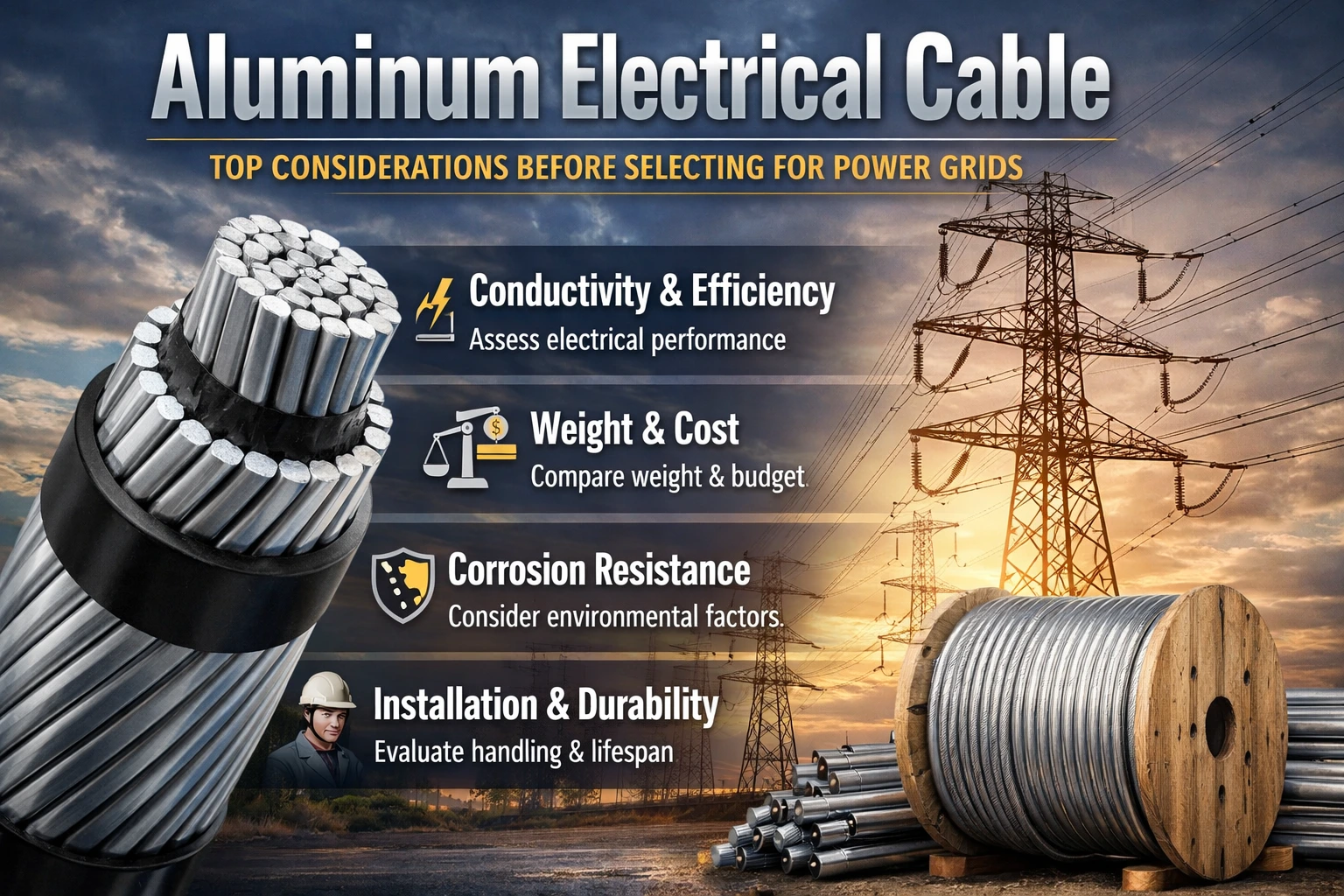
One of the primary drivers behind the adoption of aluminum cable is its cost advantage. Aluminum is significantly more affordable than copper, making it ideal for large-scale infrastructure projects where budget optimization is critical.
Despite its lower cost, aluminum offers excellent electrical conductivity approximately 61% that of copper while being much lighter, allowing for easier installation and reduced structural support requirements.
2. Lightweight and Easy Installation
Aluminum cable weighs about 30% of copper cable for the same conductivity level. This results in:
- Easier handling during installation
- Reduced transportation costs
- Lower mechanical stress on poles and structures
For overhead transmission lines, this lightweight advantage is especially beneficial in reducing sag and improving overall system efficiency.
3. Excellent Corrosion Resistance
Aluminum naturally forms a protective oxide layer when exposed to air, which enhances its resistance to corrosion. This makes aluminum cable highly suitable for:
- Coastal environments
- Industrial zones with chemical exposure
- Humid and harsh weather conditions
AAAC conductors, in particular, are designed for superior corrosion resistance in aggressive environments.
4. High Strength-to-Weight Ratio
Aluminum conductors, especially ACSR and AAAC, offer a strong balance between mechanical strength and weight. ACSR cables incorporate a steel core, providing:
- High tensile strength
- Suitability for long-span transmission
- Resistance to mechanical stress and wind loads
This makes them ideal for high-voltage transmission lines and challenging terrains.
Key Applications of Aluminum Cable
Overhead Transmission Lines
Aluminum cable is extensively used in overhead power transmission due to its lightweight and cost advantages. ACSR and AAAC conductors are commonly deployed for long-distance power delivery.
Urban and Rural Distribution Networks
ABC (Aerial Bundled Cable) systems are widely used in urban and rural electrification projects. These cables:
- Reduce power theft
- Improve safety
- Minimize outages due to external interference
Industrial Power Systems
Aluminum power cables are used in factories, manufacturing plants, and commercial buildings for:
- Power distribution
- Motor connections
- Control systems
Their flexibility and affordability make them a practical choice for industrial applications.
Renewable Energy Projects
With the rise of solar and wind energy installations, aluminum cables are increasingly used for:
- Interconnecting solar panels
- Wind turbine power transmission
- Grid integration
Their lightweight nature simplifies installation in remote or elevated locations.
Aluminum Cable vs Copper Cable: A Practical Comparison
| Parameter |
Aluminum Cable |
Copper Cable |
| Cost |
Lower |
Higher |
| Weight |
Lightweight |
Heavy |
| Conductivity |
Moderate (61% of copper) |
High |
| Corrosion Resistance |
Excellent |
Good |
| Installation |
Easier |
More labor-intensive |
| Applications |
Overhead, distribution |
Compact indoor systems |
For large-scale power transmission and distribution, aluminum cable offers a more economical and scalable solution.
Technical Considerations When Selecting Aluminum Cable
1. Current Carrying Capacity
Ensure the cable is rated for the required load. Aluminum cables typically require a larger cross-sectional area compared to copper to carry the same current.
2. Voltage Level
Different applications require different insulation and construction types. For example:
- LV cables for residential and commercial use
- MV/HV cables for utility and industrial projects
3. Environmental Conditions
Consider factors such as:
- Temperature
- Humidity
- Chemical exposure
AAAC or specially coated aluminum conductors are recommended for corrosive environments.
4. Installation Type
Determine whether the cable will be:
- Overhead
- Underground
- Indoor
This will influence the choice of insulation, armoring, and conductor type.
5. Compliance with Standards
Always ensure the aluminum cable meets international standards such as:
HNBF Power manufactures aluminum cable products that comply with global quality and safety standards, ensuring reliable performance in diverse applications.
Advantages of Choosing HNBF Power Aluminum Cable
HNBF Power stands out as a trusted global manufacturer of overhead conductors and power cables, offering:
- Advanced manufacturing processes
- Strict quality control systems
- Custom engineering solutions
- Competitive pricing for bulk procurement
- Reliable supply chain for large-scale projects
Whether you need AAC, AAAC, ACSR, or ABC cables, HNBF Power delivers solutions tailored to your project requirements.
Future Trends in Aluminum Cable Market
The demand for aluminum cable is expected to grow significantly due to:
- Expansion of power grids in developing regions
- Increasing renewable energy projects
- Rising copper prices
- Government initiatives for rural electrification
Utilities and EPC contractors are increasingly shifting toward aluminum-based solutions to optimize both cost and performance.
Frequently Asked Questions (FAQs)
1. Is aluminum cable safe for electrical applications?
Yes, aluminum cable is safe when properly designed and installed. Modern aluminum conductors are engineered to meet strict safety standards and are widely used in power systems.
2. Why is aluminum preferred over copper in overhead transmission?
Aluminum is lighter and more cost-effective, making it ideal for long-distance transmission lines where weight and cost are critical factors.
3. Does aluminum cable require special connectors?
Yes, aluminum cables require compatible connectors and proper installation techniques to ensure secure and reliable connections.
4. What is the lifespan of aluminum cable?
High-quality aluminum cables can last 30–40 years or more, depending on environmental conditions and maintenance.
5. Can aluminum cable be used for underground applications?
Yes, aluminum cables are commonly used in underground distribution systems with appropriate insulation and protection.
Conclusion
Aluminum cable has become a cornerstone of modern power transmission and distribution systems. Its combination of cost efficiency, lightweight design, corrosion resistance, and reliable performance makes it a preferred choice for utilities, engineers, and procurement professionals worldwide.
As infrastructure demands continue to grow, selecting the right aluminum cable supplier is crucial to ensuring project success.
Get Customized Aluminum Cable Solutions from HNBF Power
If you are planning a power transmission or distribution project and need reliable, high-performance aluminum cable solutions, HNBF Power is ready to support you.
Contact HNBF Power today to discuss your technical requirements, request specifications, and get a customized solution tailored to your project needs.




 English
 Arabic
 French
 Portuguese
 Deutsch
 Turkish
 Dutch
Dutch
 Italiano
 Russian
 Romaian
 Portuguese (Brazil)
 Greek
Greek
