


Buy a Used Vertical Machining Center in Canada: The Precision Buyer's Complete Guide
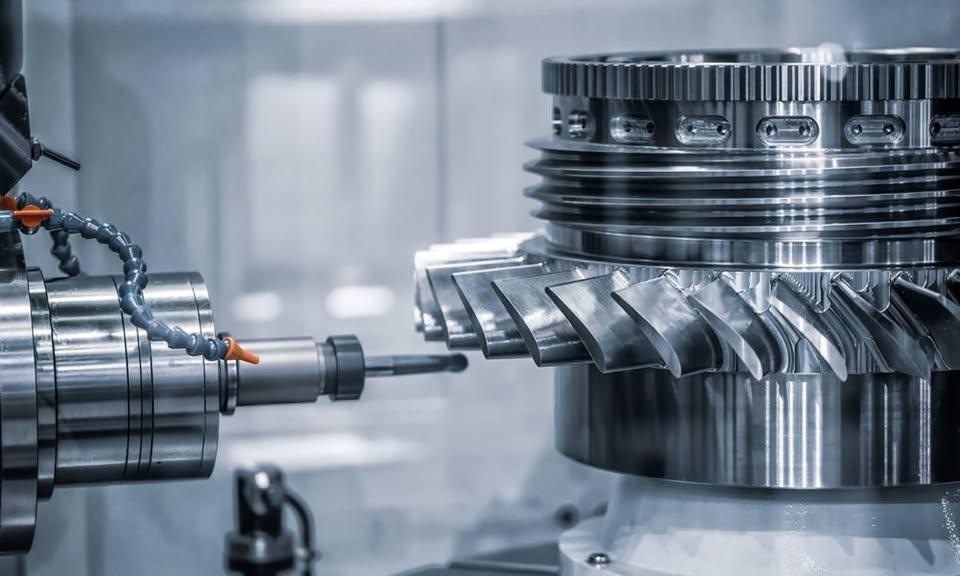
A Canadian aerospace subcontractor recently re-tooled an entire CNC cell with three certified pre-owned vertical machining centers for less than the cost of a single new unit from the OEM. Within 90 days, that cell was producing aerospace-grade aluminum components at full tolerance on machines that cost a fraction of their replacement value. This isn't an edge case. It's the new operational logic driving Canadian manufacturers toward the used VMC market with clear-eyed confidence.
If you're evaluating a used vertical machining center purchase, this guide delivers the technical framework, inspection criteria, and sourcing intelligence to protect your investment and maximize your ROI.
Why Canadian Manufacturers Are Choosing Used VMCs Over New
The case for pre-owned vertical machining centers in 2025 is stronger than at any point in the past decade. Three structural forces are driving it:
1. Premium Inventory Availability Plant consolidations across Ontario's automotive supply chain and British Columbia's aerospace sector continue to release late-model VMCs Mazak, Haas, DMG Mori, Okuma, Fanuc-controlled into the secondary market at 40–65% below new pricing.
2. Control System Longevity Modern CNC control platforms (FANUC 0i, Siemens 840D, Mitsubishi M70) are engineered for 15–20 years of operational life. A 7-year-old VMC with a current-generation control system is not an aging machine it's a mature one with a decade of service remaining.
3. Faster Deployment New VMC lead times from major OEMs ran 20–32 weeks through 2023–2024. A used machine from a reputable Canadian dealer can be inspected, purchased, rigged, and cutting chips within 2–4 weeks a competitive advantage that directly affects contract capacity.
VMC Specifications That Actually Drive Purchasing Decisions
Table Size & Travel Envelope
Before evaluating any other specification, map your largest recurring workpiece to the machine's X/Y/Z travel envelope. Common Canadian job shop configurations:
-
Small VMC (X: 500–650mm): Precision components, medical devices, tooling inserts
-
Mid-range VMC (X: 800–1,050mm): Automotive brackets, hydraulic manifolds, mold bases
-
Large VMC (X: 1,200mm+): Aerospace structural components, heavy industrial fixtures, large die work
A machine with impressive spindle specs but an undersized table is not a bargain it's a bottleneck.
Spindle Speed & Taper
|
Taper |
Typical Application |
Speed Range |
|
CAT40 / BT40 |
General job shop, steel, aluminum |
8,000–15,000 RPM |
|
CAT50 / BT50 |
Heavy cutting, large mold work |
4,000–8,000 RPM |
|
HSK-A63 |
High-speed aluminum, aerospace |
15,000–30,000 RPM |
Verify spindle health before any purchase. A thermal growth test and runout measurement at the spindle nose (acceptable: under 0.002mm TIR) is non-negotiable.
ATC Capacity & Tool Change Time
For production environments, automatic tool changer capacity directly limits cycle efficiency. Evaluate:
-
Magazine capacity (16, 24, 30, 40+ tools)
-
Tool-to-tool change time (target: under 3 seconds for production VMCs)
-
Maximum tool weight and diameter clearance
The 6-Point Technical Inspection Protocol for Used VMCs
Deploying a structured inspection eliminates the majority of post-purchase surprises:
-
Ballbar Test A Renishaw QC20 ballbar test generates a quantified circularity error report. Scores under 15 microns are excellent; 15–30 microns are acceptable with compensation; above 50 microns signals geometric issues requiring re-calibration or repair.
-
Spindle Vibration Analysis Run the spindle through its full speed range and measure vibration with an accelerometer. Elevated vibration above 4,000 RPM suggests bearing degradation.
-
Axis Backlash Check Command each axis through a 100mm move in both directions and measure actual displacement with a dial indicator. Ballscrew backlash above 0.01mm in a production VMC is a negotiating point.
-
CNC Control Diagnostics Pull the alarm history from the controller. Repetitive servo alarms, thermal warnings, or encoder faults reveal systemic issues invisible during a static inspection.
-
Coolant System Integrity Inspect the coolant tank for sludge accumulation, check through-spindle coolant pressure (if equipped), and verify coolant concentration with a refractometer.
-
Way System Condition On box-way machines, inspect for fretting and uneven wear. On linear guide machines, check for play in the guide blocks by applying lateral force to the saddle with the axis locks released.
Total Cost of Ownership: VMC Edition
|
Cost Factor |
New VMC |
Certified Used VMC |
|
Purchase Price |
$120,000 |
$45,000–$65,000 |
|
Installation & Commissioning |
$4,000 |
$4,000 |
|
Year 1 Tooling & Setup |
$8,000 |
$8,000 |
|
Year 1 Depreciation |
20–25% |
7–12% |
|
Parts Availability |
Full OEM |
OEM + Aftermarket |
A certified pre-owned VMC from a dealer with technical validation routinely delivers 50–60% lower capital outlay with identical productive capacity freeing budget for tooling, workholding, and skilled labour that actually drives output quality.
Sourcing Used VMCs in Canada: What the Best Dealers Provide
The difference between a successful used VMC acquisition and an expensive mistake almost always traces to the sourcing channel. Private auction purchases transfer full technical risk to the buyer. Specialized industrial equipment dealers with in-house CNC technicians provide a fundamentally different model: documented inspection reports, control system verification, and post-sale technical support.
Gizmo Machine Tools Inc serves Canadian manufacturers from coast to coast with a curated inventory of pre-owned CNC equipment. Their dedicated page for used vertical machining centers provides full machine specifications, control system details, available tooling packages, and direct access to CNC application engineers who can match the right machine to your specific production requirements whether you're running prototype work, high-mix low-volume job shop cycles, or dedicated production cells.
Installation, Levelling & First-Article Considerations
A used VMC that passes inspection can still underperform if improperly installed. Key commissioning steps:
-
Foundation Assessment: VMCs above 5,000 kg require a reinforced concrete pad. Verify load capacity before delivery.
-
Precision Levelling: Use a precision machinist's level (0.02mm/m sensitivity) at four points. Re-level after 72 hours as the machine settles.
-
Geometric Verification: Post-levelling, re-run squareness checks on all axes. Correct with shim adjustments before cutting.
-
First-Article Protocol: Run a calibrated test piece (typically a Mori Seiki or NIST test block pattern) before committing production material.
Final Verdict: Buying a Used VMC the Right Way
The Canadian market for used vertical machining centers in 2025 offers manufacturing companies a rare alignment of high-quality inventory, compressed pricing, and rapid deployment timelines. The buyers who capture that value consistently are those who:
-
Specify the machine to the workpiece not the workpiece to the machine
-
Apply a structured 6-point technical inspection without compromise
-
Source from dealers who provide documented inspection history and post-sale support
-
Commission properly with precision levelling and geometric verification before production
A used VMC purchased correctly is not a risk, it's a capital efficiency strategy. Bookmark this guide for your next equipment acquisition cycle, and share it with the engineers and procurement leads who make these decisions in your organization.

 English
 Arabic
 French
 Spanish
 Portuguese
 Deutsch
 Dutch
Dutch
 Italiano
 Russian
 Romaian
 Portuguese (Brazil)
 Greek
Greek
