


How Long Does New Siding Last? A Complete Homeowner's Guide
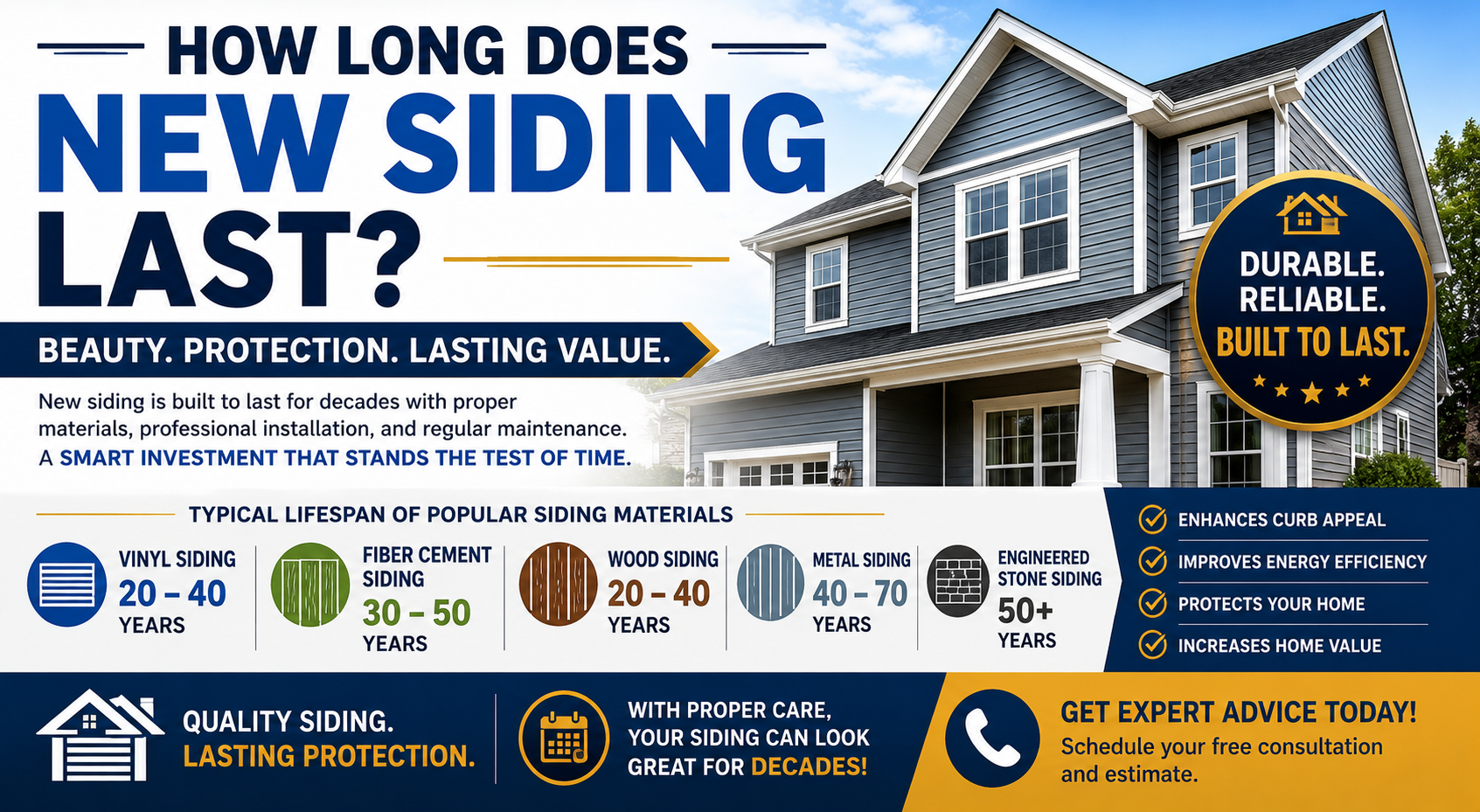
One of the most common questions homeowners ask before investing in exterior renovations is: How long does new siding last? New siding is designed to protect your home from harsh weather, improve curb appeal, increase energy efficiency, and enhance property value. However, the lifespan of siding depends on several factors, including the material used, installation quality, climate conditions, and ongoing maintenance.
Understanding the expected lifespan of different siding materials can help homeowners make informed decisions and maximize their investment.
Why Siding Matters
Siding serves as your home's first line of defense against:
-
Rain and moisture
-
Wind damage
-
Extreme temperatures
-
UV exposure
-
Pests and insects
Quality siding also improves insulation and contributes to the overall appearance of your property.
How Long Does New Siding Last?
The lifespan of new siding varies depending on the material.
Vinyl Siding
Average Lifespan: 20–40 Years
Vinyl siding is one of the most popular choices among homeowners due to its affordability and low maintenance requirements.
Benefits include:
-
Weather resistance
-
Minimal maintenance
-
Variety of colors and styles
-
Cost-effective installation
With proper care, high-quality vinyl siding can last four decades or longer.
Fiber Cement Siding
Average Lifespan: 30–50 Years
Fiber cement siding is known for its exceptional durability and resistance to harsh weather conditions.
Advantages include:
-
Fire resistance
-
Pest resistance
-
Moisture resistance
-
Long-lasting performance
Many homeowners choose fiber cement siding because of its ability to withstand severe weather while maintaining its appearance.
Wood Siding
Average Lifespan: 20–40 Years
Wood siding offers timeless beauty and natural charm.
Factors affecting lifespan include:
-
Wood species
-
Maintenance frequency
-
Climate conditions
Regular painting, staining, and sealing are essential to maximize longevity.
Metal Siding
Average Lifespan: 40–70 Years
Metal siding, including aluminum and steel options, is highly durable and resistant to many environmental factors.
Benefits include:
-
Fire resistance
-
Low maintenance
-
Exceptional durability
-
Weather protection
Metal siding can often last several decades with minimal upkeep.
Engineered Wood Siding
Average Lifespan: 20–30 Years
Engineered wood combines the appearance of natural wood with enhanced durability and moisture resistance.
Brick and Stone Veneer Siding
Average Lifespan: 50+ Years
Brick and stone siding options are among the longest-lasting exterior materials available.
They offer:
-
Superior durability
-
Excellent weather resistance
-
Minimal maintenance
-
Timeless curb appeal
Factors That Affect Siding Lifespan
Several variables can impact how long new siding lasts.
Installation Quality
Even the best siding materials can fail prematurely if installed incorrectly.
Professional installation helps ensure:
-
Proper sealing
-
Moisture protection
-
Structural stability
-
Long-term performance
Climate and Weather
Local weather conditions play a significant role in siding longevity.
Factors include:
-
Heavy rainfall
-
Snow and ice
-
Extreme heat
-
Strong winds
-
Hailstorms
Homes exposed to severe weather may require more frequent inspections and maintenance.
Maintenance Practices
Routine maintenance can significantly extend siding lifespan.
Recommended maintenance includes:
-
Annual inspections
-
Cleaning debris and dirt
-
Prompt repairs
-
Repainting or resealing when necessary
Sun Exposure
Continuous UV exposure can cause fading and deterioration over time, particularly with certain siding materials.
Signs Your Siding May Need Replacement
Even durable siding eventually shows signs of wear.
Common warning signs include:
Cracks and Gaps
Visible cracks can allow moisture infiltration and structural damage.
Warping
Warped siding often indicates moisture problems or installation issues.
Rot and Decay
Wood siding is especially vulnerable to rot when not properly maintained.
Fading
Severe fading may indicate that siding is nearing the end of its lifespan.
Mold and Mildew
Persistent mold growth may signal moisture penetration behind the siding.
Increased Energy Bills
Older or damaged siding can reduce insulation efficiency and increase heating and cooling costs.
Benefits of Replacing Old Siding
When siding reaches the end of its useful life, replacement offers numerous advantages.
Improved Energy Efficiency
Modern siding products help reduce heat transfer and improve insulation.
Enhanced Curb Appeal
New siding dramatically improves a home's appearance.
Increased Home Value
Exterior upgrades are often attractive to potential buyers.
Better Weather Protection
New siding provides superior defense against moisture, wind, and temperature fluctuations.
Lower Maintenance Costs
Modern siding materials require less upkeep than older products.
How to Extend the Life of Your Siding
Homeowners can maximize siding longevity through proper care.
Schedule Annual Inspections
Professional inspections help identify problems early.
Clean Siding Regularly
Removing dirt, mold, and debris prevents premature deterioration.
Address Repairs Promptly
Small issues can quickly become major problems if ignored.
Trim Nearby Vegetation
Trees and shrubs should not remain in constant contact with siding surfaces.
Follow Manufacturer Recommendations
Each siding product may have specific maintenance requirements.
Choosing the Right Siding for Long-Term Value
When selecting new siding, homeowners should consider:
-
Budget
-
Climate
-
Maintenance preferences
-
Desired appearance
-
Expected lifespan
Consulting an experienced siding contractor can help determine the best option for your property.
Professional Installation Makes a Difference
Professional installation plays a major role in siding performance and longevity.
Experienced contractors provide:
-
Accurate measurements
-
Proper moisture barriers
-
Expert installation techniques
-
Manufacturer-compliant workmanship
Quality installation helps ensure your siding reaches its full lifespan potential.
Conclusion
So, how long does new siding last? The answer depends largely on the material, installation quality, environmental conditions, and maintenance practices. Vinyl siding typically lasts 20–40 years, fiber cement siding can last 30–50 years, while metal, brick, and stone options may provide protection for several decades longer.
Investing in high-quality materials and professional installation helps homeowners maximize the lifespan of their siding while improving energy efficiency, curb appeal, and overall property value. With proper care and maintenance, new siding can protect and beautify your home for many years to come.

 English
 Arabic
 French
 Spanish
 Portuguese
 Deutsch
 Turkish
 Italiano
 Russian
 Romaian
 Portuguese (Brazil)
 Greek
Greek
