


Heavy Duty Skates in Structural Moving Projects: How the Right Rolling System Moves Entire Buildings
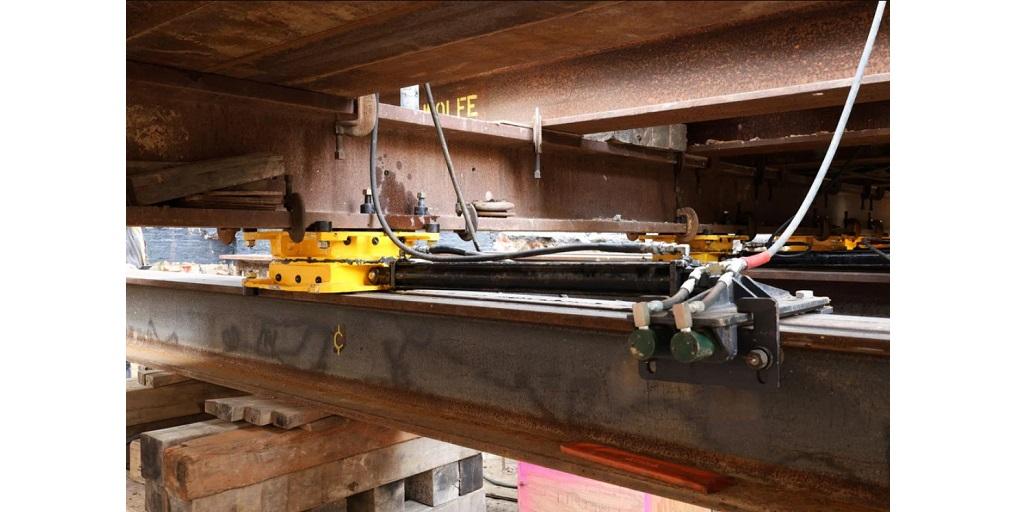
Structural moving is one of the most demanding disciplines in the heavy hauling world. Whether the job involves relocating a century-old farmhouse, repositioning a steel-frame industrial building, or shifting a historic church off its original foundation, the success of the move depends on one critical factor: load distribution and controlled motion. That's where heavy duty skates earn their place as indispensable equipment on every serious structural moving crew.
What Heavy Duty Skates Do in a Structural Move
Heavy duty skates, sometimes called machinery skates or rigging skates, are low-profile load-carrying platforms equipped with hardened steel rollers or polyurethane wheels designed to bear extreme weight while allowing precise, controlled movement. In structural moving, they function as the rolling interface between a temporary support system (typically a network of steel beams, cribbing, and jacks) and the travel surface beneath.
When a building is lifted off its foundation using hydraulic jacks and supported on a unified steel beam system, those beams need to travel. Heavy duty skates provide the rolling motion that allows the entire structure to glide across prepared travel paths, whether that's compacted soil, steel plates, or temporary roadways.
Why Capacity and Build Quality Matter
A modest residential structural move can easily exceed 100,000 pounds. Larger commercial and historic relocations regularly push into the millions of pounds. This is not an environment where general-purpose dollies or warehouse skates belong. Heavy duty skates engineered for structural work feature:
- Forged or heat-treated steel frames that resist deformation under sustained extreme loads
- High-capacity load wheels rated individually so the cumulative skate rating reflects real-world performance
- Swivel and rigid configurations that allow crews to steer multi-point load distributions through turns
- Low deck heights that keep the center of gravity manageable during transit
Buckingham's skates and rollers are built specifically for this kind of work, which is why structural movers, riggers, and millwrights rely on them when failure is not an option.
Coordinating Skates with the Rest of the Moving System
A structural move is a choreographed system. Skates work in concert with unified jacking systems, cribbing stacks, steel beams (often called I-beams or needle beams), and pulling equipment such as winches or tow vehicles. The skates carry the load, but the engineering behind their placement is what prevents catastrophic failure.
Load points must be calculated so that no single skate exceeds its rated capacity. Travel surfaces must be prepared to handle the concentrated pressure transmitted through the rollers. And the entire skate array must be coordinated to move in unison — a leading skate that outpaces the rest can twist a structure and crack masonry, plaster, or framing before anyone notices.
Applications Across the Structural Moving Industry
Heavy duty skates are needed in nearly every structural moving scenario:
Historic preservation moves require gentle, controlled motion to protect irreplaceable architecture. Skates with smooth-rolling polyurethane wheels minimize vibration transmitted into fragile structures.
Industrial relocations — moving large machinery, transformers, or prefabricated modules — demand skates rated for concentrated point loads.
Building elevations that require temporary transport (such as moving a house away from a flood zone or coastal erosion) depend on skates to bridge the gap between the lift and the new foundation site.
Bridge and infrastructure projects sometimes use heavy duty skates to slide prefabricated spans into final position.
Choosing the Right Skate for the Job
Selecting heavy duty skates isn't just about matching tonnage. Crews need to consider deck height, wheel material, swivel versus rigid configurations, travel surface compatibility, and whether the skates will operate as a coordinated set or independently. Underspecifying skates is one of the most common — and costly — mistakes in structural moving. Choosing equipment from a trusted heavy rigging supplier like Buckingham Structural Moving Equipment helps ensure each skate is sized, rated, and built for the realities of the work.
Heavy duty skates aren't mere accessories, they're the foundation of safe, controlled structural movement. Investing in properly engineered skates protects the structure, the crew, and the timeline of every project they touch.
For More Information About Hydraulic Shoring Jacks and Industrial Machine Rigging Dollies Please Visit: Buckingham Structural Moving Equipment, LLC.

 English
 Arabic
 Spanish
 Portuguese
 Deutsch
 Turkish
 Dutch
Dutch
 Italiano
 Russian
 Romaian
 Portuguese (Brazil)
 Greek
Greek
