


Key Elements of Structural Support Jobs: Why Crib Jacks Anchor the Lift
Structural support work is precision under pressure. Whether a crew is leveling a sinking 1920s rowhome, swapping a rotted sill beam, or temporarily holding a commercial floor system while a column is replaced, the job lives and dies by how well loads are controlled, transferred, and held. The margin for error is narrow because the weights are extreme, the geometry is rarely ideal, and the structure is almost never cooperative. Understanding the core elements of a successful structural support job, and the role that crib jacks play in tying them together, is what separates a clean lift from a callback.
Load Assessment Comes First
Every structural support job starts with knowing what you're actually picking up.
That means calculating dead loads (the building itself), live loads (occupants, furnishings, snow), and any concentrated point loads along the lift line. Underestimating tonnage is the fastest way to overrun a jack's capacity or compress cribbing past its safe working limit. Most residential lifts fall within a manageable range per point, but heavier commercial or multi-story structures can demand far more capacity per station — which is why crews need jacks that scale with the work, not just one that fits a single scenario.
Cribbing: The Foundation Under the Lift
Cribbing — those interlocked hardwood timbers stacked log-cabin style — is what actually holds the load between jack strokes. Jacks lift, cribs hold. A crew that doesn't respect this distinction is one bad stroke away from a disaster. Quality cribbing demands solid, dry hardwood, level base preparation, and a build pattern that distributes load across the full footprint of every layer. Cribs and jacks operate as a single system: as the jack extends, fresh cribbing is added; as the jack retracts, the structure rests on the new crib level. This incremental rhythm is how houses, beams, and entire structures get raised safely.
Jacks: The Active Element
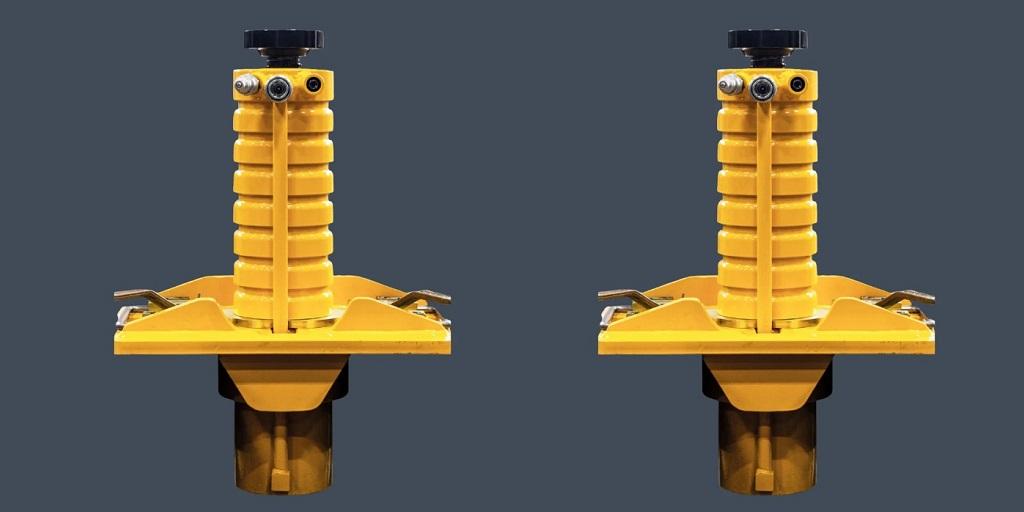
This is where crib jacks earn their name. Designed specifically to work alongside cribbing, Buckingham Structural Moving Equipment's crib jacks are built in the USA for house leveling, beam installs, floor-joist repair, underpinning, and temporary support work.
Their 15-ton model delivers 30,000 lbs of capacity in a footprint that crews can actually handle on-site, with 9" or 17" stroke options to match the lift required. The 30-ton double-acting model pushes 60,000 lbs over a 16" stroke for heavier commercial and residential structures where long, controlled lifts are non-negotiable.
The choice between single-acting and double-acting matters more than newer crews realize. Single-acting jacks rely on the load to push the cylinder back down — simple, reliable, and ideal for straightforward lifts. Double-acting jacks retract under hydraulic pressure, which dramatically speeds up reset times when paired with a jack return plate clamped to the beam. On a multi-point lift where six or eight jacks need to be cycled in coordination, that retract speed translates directly into hours saved and a safer, more controlled descent.
Adjustable Stops and Mechanical Backup
Hydraulic pressure alone should never be the only thing holding a structure. Buckingham's adjustable screw tops and drop-stops provide a mechanical safety layer, locking the extended cylinder in place so the load isn't relying on seals or fluid pressure to stay put. Combined with proper cribbing under the base, this gives crews redundant support at every stage of the lift, exactly what insurance carriers, inspectors, and crew leads want to see.
Hoses, Fittings, and System Integrity
A jack is only as good as the hydraulics feeding it. 3/8" 10,000 PSI jack hoses with high-nitrile inner tubes and dual steel braids resist the abuse of jobsite conditions, while quick-connect fittings let crews reconfigure multi-jack setups quickly. Tee hoses make it straightforward to run multiple jacks from a single pump, which is how synchronized lifts get done.
The best structural support jobs aren't won on lift day, they're won in planning. Accurate load math, properly built cribbing, the right jack capacity and stroke length, mechanical lock stops, and a clean hydraulic system all have to come together.
Crib jacks sit at the center of that system because they're the component crews touch most: every stroke, every reset, every adjustment. Spec them right, pair them with disciplined cribbing practice, and even the most demanding lift becomes a sequence of controlled, repeatable moves.
For More Information About Foundation Repair Hydraulic Jacks and Machinery Moving Skates Rental Please Visit: Buckingham Structural Moving Equipment, LLC.

 English
 Arabic
 Spanish
 Portuguese
 Deutsch
 Turkish
 Dutch
Dutch
 Italiano
 Russian
 Romaian
 Portuguese (Brazil)
 Greek
Greek
