


Market Forecast: Enterprise Information Archiving
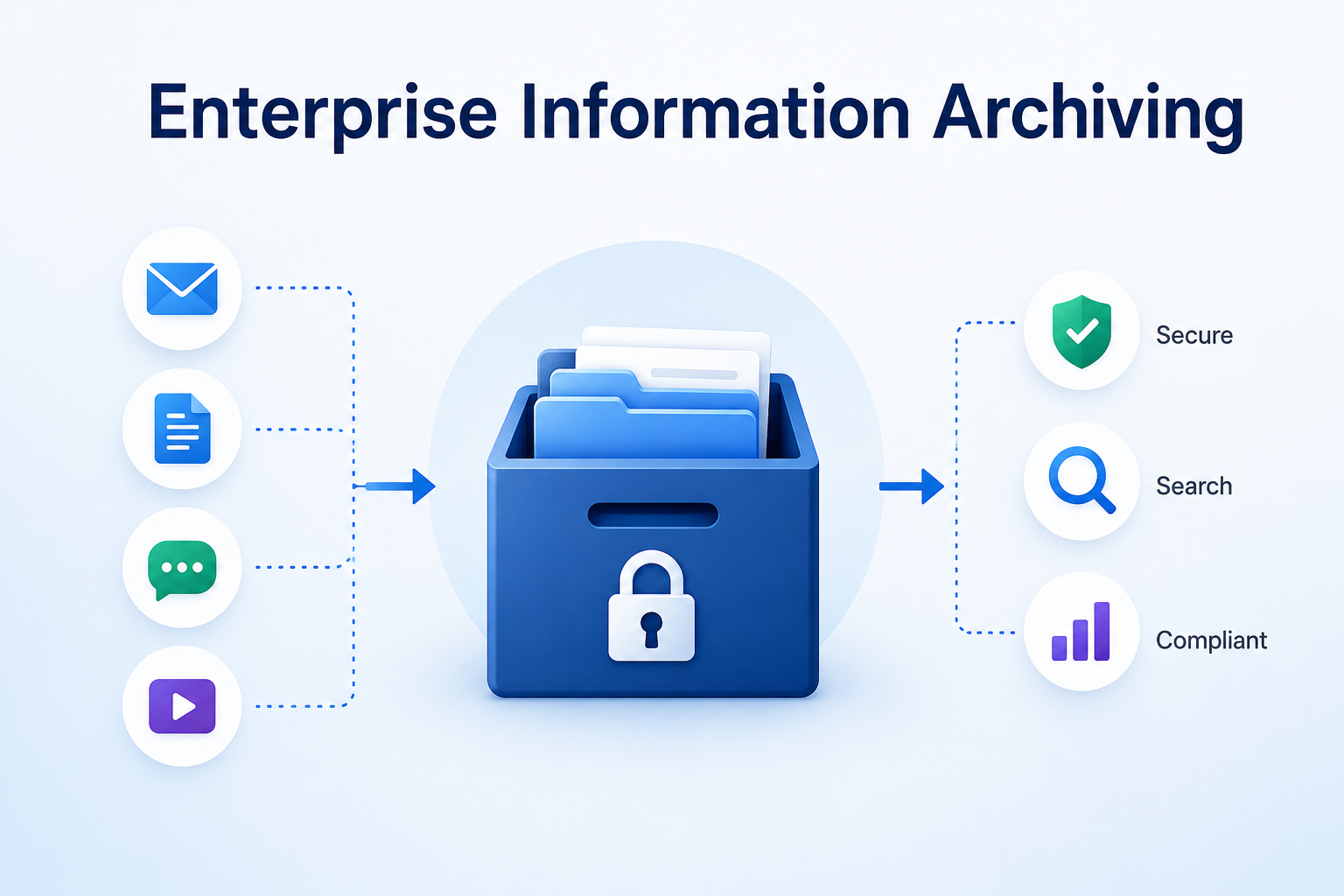
Enterprise Information Archiving is a comprehensive data management strategy designed to systematically capture, store, retain, and retrieve digital information from multiple enterprise sources. Modern EIA solutions help organizations maintain regulatory compliance, reduce storage costs, improve cybersecurity, and simplify eDiscovery processes. As businesses increasingly rely on digital transformation initiatives, enterprise archiving solutions have become indispensable for secure and compliant information governance.
What is Enterprise Information Archiving?
Enterprise Information Archiving refers to the centralized process of preserving business-critical information in a secure and searchable repository for long-term retention and compliance purposes. EIA solutions archive data from diverse sources such as:
- Emails and email attachments
- Documents and spreadsheets
- Instant messaging platforms
- Social media communications
The primary goal of enterprise archiving is to ensure that valuable organizational information remains accessible, protected, and compliant with industry regulations while reducing the burden on primary storage systems.
Importance of Enterprise Information Archiving
As data volumes continue to increase, organizations face growing challenges related to data governance, cybersecurity threats, and compliance requirements. Enterprise Information Archiving addresses these concerns by offering a structured and scalable approach to data retention and management.
1. Regulatory Compliance
Many industries such as healthcare, banking, legal, and government sectors are governed by strict data retention regulations. Enterprise archiving solutions help organizations comply with standards such as GDPR, HIPAA, SOX, and FINRA by securely storing information and maintaining audit trails.
2. Reduced Storage Costs
Storing inactive or historical data on expensive production systems can significantly increase operational costs. EIA solutions optimize storage infrastructure by moving less frequently accessed data to cost-effective archival storage systems while keeping it easily retrievable.
3. Enhanced Cybersecurity
Cybersecurity threats such as ransomware attacks and data breaches continue to rise globally. Enterprise Information Archiving enhances data protection by implementing encryption, role-based access controls, immutable storage, and backup capabilities to safeguard archived information.
4. Improved Data Governance
A robust EIA framework ensures that organizations maintain complete visibility and control over enterprise data. This helps improve transparency, accountability, and consistency in information management practices.
Key Features of Modern Enterprise Information Archiving Solutions
Modern enterprise information archiving platforms leverage advanced technologies such as Artificial Intelligence (AI) and Machine Learning (ML) to automate data classification, retention policies, and risk analysis. Some essential features include:
Centralized Data Repository
EIA systems consolidate information from multiple communication channels and enterprise applications into a unified archive for easier management and accessibility.
Intelligent Search and Analytics
Advanced indexing and AI-powered analytics allow organizations to extract valuable insights from archived data, supporting strategic decision-making and operational efficiency.
Automated Retention Policies
Organizations can define customized retention schedules to automatically archive, retain, or delete data based on regulatory and business requirements.
Secure Data Encryption
Encryption technologies ensure that archived data remains protected both during transmission and while at rest.
Benefits of Enterprise Information Archiving
Implementing an effective Enterprise Information Archiving strategy delivers several long-term business benefits:
- Improved compliance management
- Reduced legal and operational risks
- Lower infrastructure and storage costs
- Faster data retrieval and eDiscovery
- Better operational efficiency
- Stronger cybersecurity posture
By integrating intelligent archiving technologies into their data management frameworks, organizations can transform archived information into a strategic business asset.
Future Trends in Enterprise Information Archiving
The future of Enterprise Information Archiving is being shaped by advancements in cloud computing, AI-driven automation, and data analytics. Emerging trends include:
- AI-powered predictive analytics for archived data
- Cloud-native archiving platforms
- Enhanced ransomware protection
- Automated compliance monitoring
As organizations continue to embrace digital transformation, the demand for scalable and intelligent archiving solutions will continue to grow.
Conclusion
Enterprise Information Archiving has become a critical component of modern data management strategies. With rising data volumes, evolving compliance regulations, and increasing cybersecurity threats, organizations must adopt reliable archiving solutions to protect and manage their digital information effectively.

 Arabic
 French
 Spanish
 Portuguese
 Deutsch
 Turkish
 Dutch
Dutch
 Italiano
 Russian
 Romaian
 Portuguese (Brazil)
 Greek
Greek
