


Market Forecast: Identity as a Service (IDaaS)
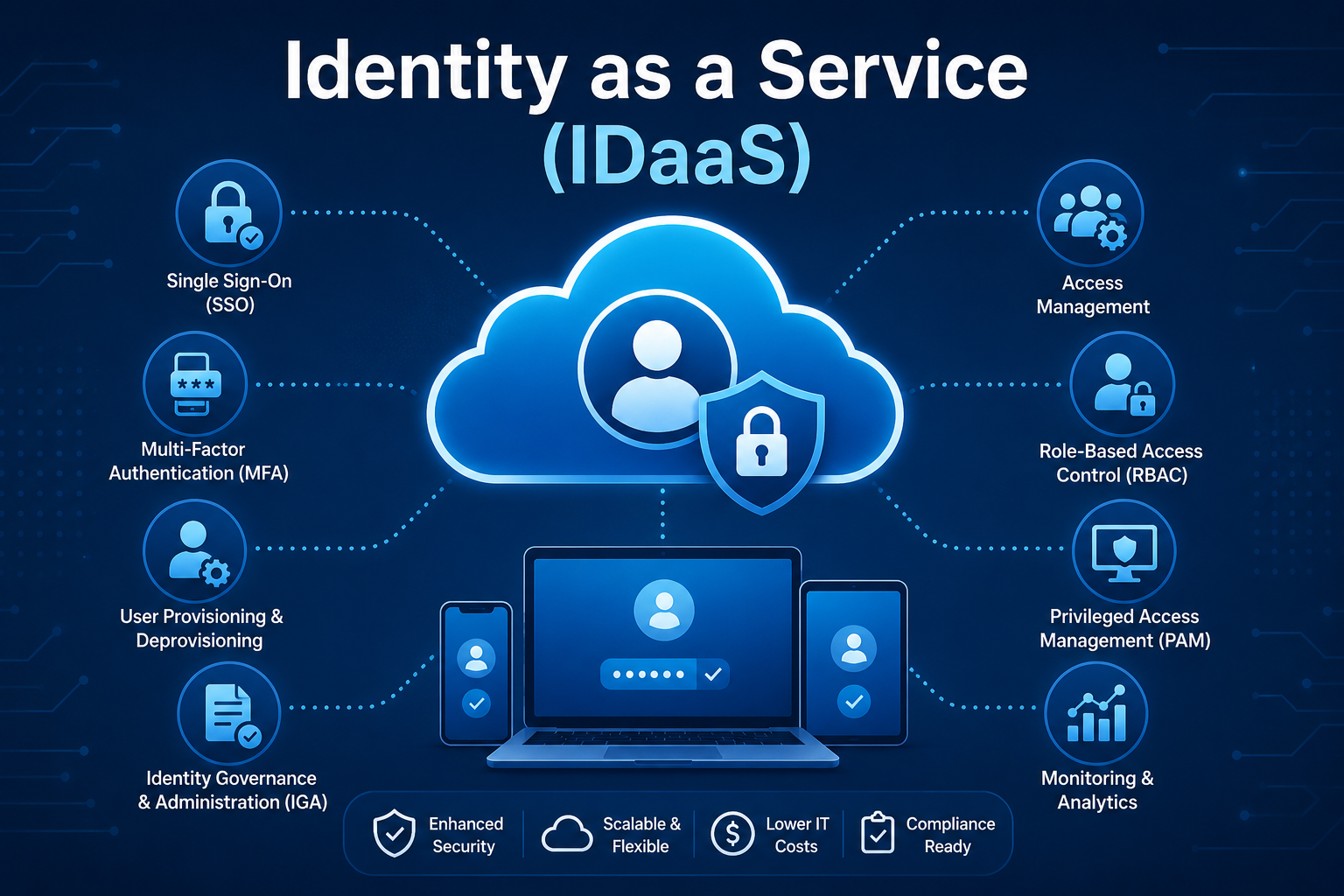
Identity as a Service (IDaaS) provides a cloud-based approach to Identity and Access Management (IAM), enabling organizations to securely manage users, applications, devices, and access permissions from a centralized platform. By eliminating the need for heavy infrastructure investments, IDaaS helps businesses improve security, simplify compliance, and streamline identity lifecycle management.
What is Identity as a Service (IDaaS)?
Identity as a Service (IDaaS) is a cloud-delivered identity and access management solution that provides authentication, authorization, identity governance, and user management services. It allows organizations to manage digital identities securely across cloud, on-premises, and hybrid environments.
IDaaS platforms combine several critical IAM functions, including:
- Single Sign-On (SSO)
- Multi-Factor Authentication (MFA)
- Identity Governance and Administration (IGA)
- Privileged Access Management (PAM)
These capabilities enable organizations to create a secure and seamless user experience while maintaining strict control over access to sensitive systems and data.
Growing Importance of IDaaS in Modern Enterprises
Businesses today operate in highly distributed environments where employees, partners, customers, and devices access applications from multiple locations. The rise of Software-as-a-Service (SaaS) applications, remote work models, and bring-your-own-device (BYOD) policies has significantly increased the attack surface for cybercriminals.
How IDaaS Supports Zero-Trust Security
Zero-trust security has become a critical cybersecurity strategy for modern organizations. Unlike traditional perimeter-based security models, zero trust assumes that no user or device should be trusted automatically, even inside the corporate network.
IDaaS platforms play a vital role in implementing zero-trust architecture by continuously verifying user identities, monitoring access behavior, and enforcing adaptive authentication policies.
Key zero-trust capabilities offered by IDaaS include:
Continuous Authentication
IDaaS solutions continuously evaluate user behavior, device health, location, and access patterns to detect suspicious activities in real time.
Multi-Factor Authentication (MFA)
MFA adds an extra layer of security by requiring users to verify their identity through multiple authentication methods such as passwords, biometrics, or OTPs.
Adaptive Access Policies
IDaaS platforms dynamically adjust access permissions based on contextual risk factors, improving security without affecting user experience.
Key Benefits of Identity as a Service
Enhanced Security
Identity as a Service (IDaaS) helps organizations protect sensitive business data through centralized identity controls, MFA, threat analytics, and automated policy enforcement.
Scalability and Flexibility
Cloud-based IDaaS platforms easily scale with organizational growth, making them ideal for businesses with expanding workforces and global operations.
Reduced Infrastructure Costs
Organizations can eliminate expensive on-premises identity management hardware and reduce maintenance costs through cloud-delivered IAM services.
Automated Identity Lifecycle Management
Automated provisioning and deprovisioning ensure employees receive appropriate access when joining, changing roles, or leaving the organization.
Role of Identity Governance and Administration (IGA)
Identity Governance and Administration is a critical component of modern IDaaS solutions. IGA ensures that access rights align with organizational policies, security standards, and compliance requirements.
IGA capabilities include:
- Access certification
- Role management
- Segregation of duties
By integrating IGA with IAM, organizations gain greater visibility and control over user access across all systems and applications.
IDaaS Use Cases Across Industries
Healthcare
Healthcare organizations use IDaaS to secure patient records, support remote healthcare access, and comply with HIPAA regulations.
Banking and Financial Services
Financial institutions leverage IDaaS to protect customer accounts, prevent fraud, and meet strict regulatory requirements.
Retail and E-commerce
Retail businesses use IDaaS to secure online transactions, manage customer identities, and protect payment systems.
Future Trends in Identity as a Service
The future of Identity as a Service is being shaped by advancements in artificial intelligence, machine learning, and behavioral analytics. Emerging trends include:
- Passwordless authentication
- AI-driven identity threat detection
- Decentralized identity management
- Biometric authentication
As cyber threats continue to evolve, organizations will increasingly rely on intelligent IDaaS platforms to strengthen security and improve operational resilience.
Conclusion
Identity as a Service has become an essential component of modern cybersecurity and digital transformation strategies. By delivering cloud-based identity management, access control, and governance capabilities, IDaaS enables organizations to secure users, applications, and sensitive data across complex IT environments.
With growing compliance demands, increasing cyber threats, and the expansion of remote work, businesses are rapidly adopting IDaaS solutions to implement zero-trust security frameworks, improve operational efficiency, and reduce infrastructure costs.

 English
 French
 Spanish
 Portuguese
 Deutsch
 Turkish
 Dutch
Dutch
 Italiano
 Russian
 Romaian
 Portuguese (Brazil)
 Greek
Greek
