


Real Estate Asset Tokenization Innovations That Could Transform Smart Cities
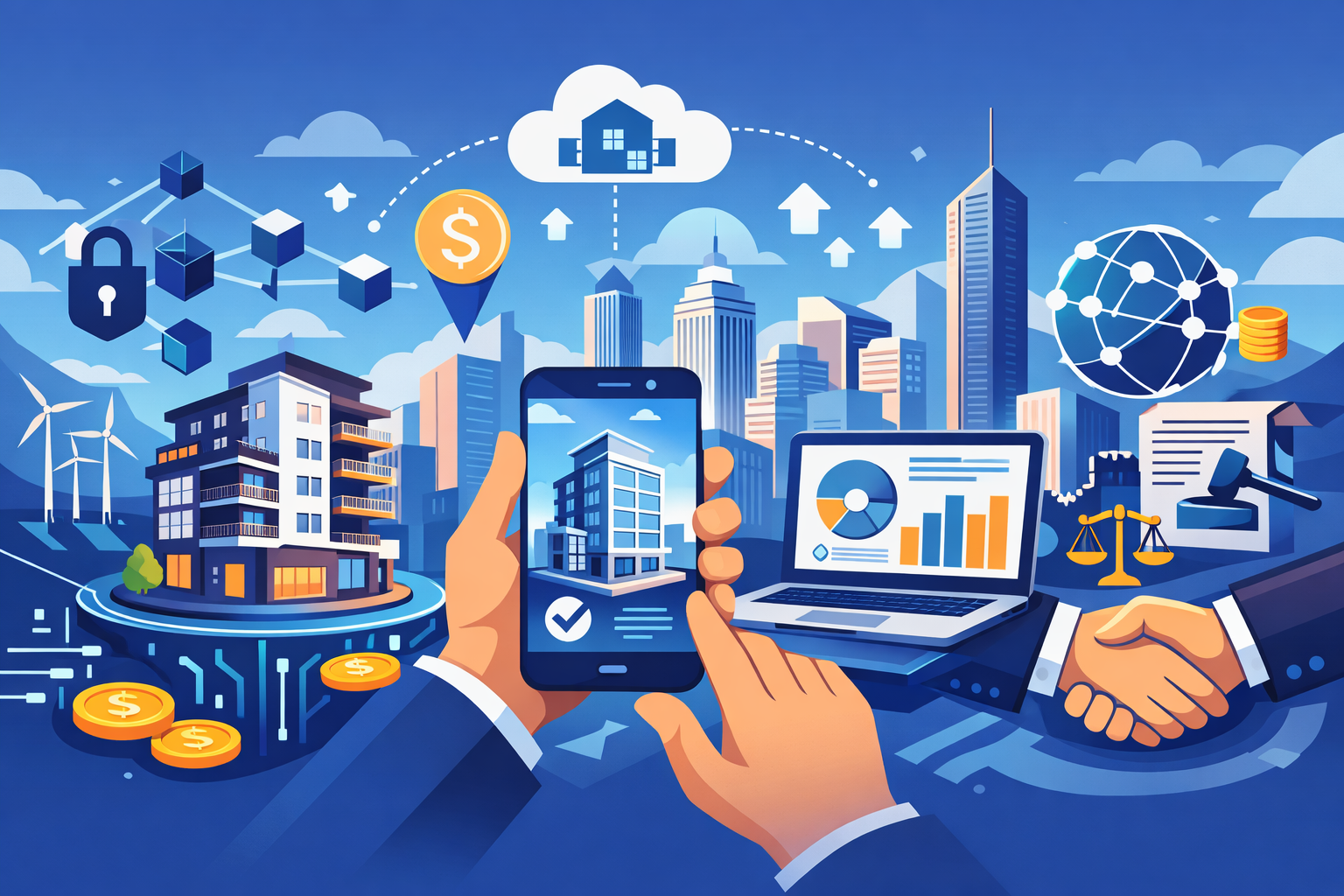
Urban development is entering a different phase as cities adopt connected infrastructure, digital public systems, renewable energy programs, and data-driven governance. Smart cities are no longer limited to traffic sensors and smart lighting. They now involve digital finance, automated property management, and blockchain-based ownership structures that influence how people invest in urban infrastructure.
One area receiving attention is real estate asset tokenization. Property ownership has traditionally involved paperwork, intermediaries, lengthy approvals, and high investment requirements. Digital token models introduce a different method where real estate ownership can be divided into blockchain-based units representing fractional ownership. This approach changes how investors participate in commercial towers, residential projects, smart housing communities, industrial parks, and public infrastructure developments.
As smart cities continue expanding across countries such as the UAE, Singapore, South Korea, the United States, and India, urban planners and property firms are evaluating how blockchain systems fit into future city ecosystems. Real Estate Tokenization is gradually becoming part of discussions around digital land registries, automated rental systems, urban crowdfunding, and smart infrastructure financing.
The rise of connected cities also creates demand for faster capital circulation. Large urban projects often require participation from institutional investors, developers, governments, and private stakeholders. Through real estate asset tokenization, these projects may attract wider participation without relying only on traditional investment channels.
This article examines innovations connected to tokenized property ecosystems and how they may influence smart city development over the coming years.
Understanding Real Estate Asset Tokenization
Real estate asset tokenization refers to the conversion of ownership rights in a property into digital blockchain-based tokens. These tokens represent fractional ownership or investment participation in real estate assets.
Instead of purchasing an entire building or property unit, investors can purchase smaller portions represented digitally on a blockchain network. Each token may carry rights related to ownership, profit distribution, rental income, governance voting, or asset appreciation depending on the platform structure.
Real Estate Tokenization is gaining attention because it introduces alternative investment access for individuals who previously could not participate in high-value property markets.
In smart cities, tokenization may apply to:
- Residential apartment complexes
- Commercial office towers
- Smart parking infrastructure
- Data centers
- Renewable energy buildings
- Logistics hubs
- Co-working spaces
- Public utility projects
- Mixed-use urban communities
Many organizations now work with a Real Estate Tokenization company to digitize property assets and attract global investors.
Why Smart Cities Are Looking at Tokenized Real Estate
Smart cities operate through interconnected digital systems. Property infrastructure inside these cities increasingly depends on automation, IoT devices, cloud systems, AI analytics, and digital governance.
Traditional property financing models sometimes move slowly when compared to the pace of smart infrastructure expansion. Urban projects often require quicker funding cycles and broader participation.
real estate tokenization development introduces digital investment models that may align better with technology-focused city ecosystems.
Several factors explain this growing interest.
Increased Access to Urban Investments
High-value urban projects usually remain accessible only to large investors or institutions. Tokenized ownership allows smaller participants to enter premium property markets with reduced capital requirements.
This may increase investment participation in smart housing communities and sustainable infrastructure projects.
Faster Capital Distribution
Blockchain-based settlement systems can reduce delays associated with conventional cross-border investment processes. Smart cities dealing with continuous infrastructure expansion may benefit from quicker funding circulation.
Digital Ownership Records
Blockchain ledgers maintain immutable ownership records. Smart city administrations considering digital land registries may find compatibility with tokenized property systems.
Improved Liquidity Possibilities
Traditional real estate investments often involve long holding periods. Tokenized property markets may introduce secondary trading opportunities depending on regional regulations.
Global Investment Participation
Urban development projects may attract overseas investors through digital ownership systems without requiring complicated traditional property transfer procedures.
Innovation 1: Fractional Ownership in Smart Housing Communities
Smart residential communities are becoming common in urban regions. These developments integrate digital access systems, energy monitoring, smart security, automated parking, and connected appliances.
Funding these large-scale residential ecosystems can be difficult due to infrastructure expenses.
real estate asset tokenization introduces fractional ownership structures where multiple investors participate in residential developments.
For example, a smart housing project worth $100 million may be divided into digital ownership units. Investors can purchase small portions of the property instead of financing an entire building.
This method may influence:
- Affordable housing projects
- Senior living communities
- Green residential zones
- Student accommodation systems
- Mixed-income smart housing developments
Real Estate Tokenization Platform Development firms are increasingly working on investor dashboards, digital ownership tracking systems, and automated rental distribution frameworks for such projects.
Innovation 2: Tokenized Smart Infrastructure Financing
Smart cities require extensive infrastructure investment. Roads, public transportation, renewable energy grids, surveillance systems, waste management networks, and water monitoring systems involve massive funding requirements.
Governments and developers are examining whether tokenized funding models can support infrastructure financing.
Examples include:
- Tokenized solar energy buildings
- Blockchain-funded EV charging networks
- Smart parking systems
- Digital transportation hubs
- Public Wi-Fi infrastructure
Through Real Estate Tokenization Development Services, infrastructure assets may become investment opportunities for both institutional and retail participants.
This introduces an alternative financing structure where urban citizens themselves may participate financially in the infrastructure they use daily.
Innovation 3: Integration With Smart Contracts for Rental Automation
Rental systems inside smart cities are gradually moving toward automation.
Smart contracts can automate:
- Rental payments
- Security deposit releases
- Revenue distribution
- Ownership transfers
- Lease renewals
- Property maintenance agreements
When integrated into Real Estate Tokenization systems, these automated agreements reduce paperwork and manual coordination.
For example, token holders owning fractional shares in a smart apartment tower may automatically receive rental distributions based on occupancy revenue.
A Real Estate Tokenization Development company may create blockchain frameworks that connect payment gateways, IoT property devices, and investor management systems into one digital environment.
Innovation 4: Digital Land Registry Systems
Land ownership disputes remain a challenge in several regions. Smart cities attempting to digitize governance systems are evaluating blockchain-based registries to improve record maintenance.
real estate tokenization development may work alongside digital land registry systems by storing ownership records on distributed ledgers.
Possible advantages include:
- Reduced duplication risks
- Faster ownership verification
- Digital transaction history
- Lower administrative dependency
- Simplified property audits
Several governments are already testing blockchain land registry systems in pilot programs.
Real Estate Tokenization Services may eventually integrate with municipal property databases to create digitally verified ownership ecosystems.
Innovation 5: Smart Commercial Real Estate Investment Models
Commercial buildings in smart cities increasingly rely on data-driven operations. Offices now include automated energy systems, occupancy analytics, smart climate management, and digital access infrastructure.
Tokenized ownership structures may change how commercial real estate investment operates.
Instead of relying entirely on institutional property groups, developers can distribute ownership across broader investor communities.
Examples include:
- Smart office towers
- Co-working ecosystems
- Retail complexes
- Innovation hubs
- Technology parks
- AI-powered industrial facilities
This may increase investment diversity while giving developers alternative fundraising methods.
A Real Estate Tokenization company working with commercial developers may create platforms for digital share allocation, rental revenue tracking, and asset performance analytics.
Innovation 6: Urban Crowdfunding Through Tokenized Assets
Urban projects often struggle to secure funding during early development stages.
Tokenized crowdfunding introduces a different participation model.
Citizens may invest in:
- Community recreation centers
- Green infrastructure projects
- Public smart transportation
- Smart retail districts
- Renewable housing developments
This approach may increase public engagement in urban expansion.
In many smart city discussions, community ownership models are gaining attention because they create financial participation opportunities for local residents.
Real Estate Tokenization Development Services are increasingly being discussed as part of decentralized urban investment systems.
Innovation 7: Sustainable Real Estate Investment Models
Environmental goals are becoming central to modern urban planning. Smart cities increasingly focus on energy-efficient buildings, low-emission infrastructure, and renewable energy integration.
Tokenization may support sustainable real estate financing by widening investment access to green property initiatives.
Examples include:
- Carbon-neutral buildings
- Smart solar-powered communities
- Eco-friendly industrial zones
- Green-certified office parks
- Energy-monitoring apartment systems
Through Real Estate Tokenization Platform Development, developers can create investment ecosystems where sustainability metrics are integrated into asset performance reporting.
This gives investors visibility into energy usage, emissions data, and environmental certifications connected to tokenized assets.
Innovation 8: AI and Data Analytics in Tokenized Property Ecosystems
Artificial intelligence is becoming increasingly connected to property management systems.
AI tools may support:
- Predictive maintenance
- Occupancy forecasting
- Rental pricing analysis
- Investment trend monitoring
- Energy consumption optimization
- Fraud detection
When AI systems integrate with Real Estate Tokenization platforms, investors may receive real-time data insights connected to property performance.
Smart cities rely heavily on data-driven operations, making AI-assisted tokenized real estate ecosystems a logical progression.
A Real Estate Tokenization Development company may combine blockchain infrastructure with AI analytics dashboards to improve investor visibility and operational management.
Innovation 9: Cross-Border Smart City Investments
Global urban investment often faces barriers related to regulations, documentation, banking systems, and ownership transfer procedures.
Tokenized property ecosystems may simplify certain aspects of international participation depending on jurisdictional compliance.
Smart cities seeking overseas capital may attract foreign investors through blockchain-based property offerings.
This is particularly relevant for:
- Tourism infrastructure
- Smart hospitality projects
- International business districts
- Logistics corridors
- Technology campuses
Real Estate Tokenization Services may support digital investor onboarding systems, KYC verification tools, and blockchain-based transaction frameworks for international participation.
Challenges Facing Real Estate Asset Tokenization
Despite growing interest, several concerns remain.
Regulatory Uncertainty
Many countries still lack complete legal frameworks governing tokenized property ownership.
Market Education
Large sections of the population remain unfamiliar with blockchain-based real estate investment models.
Security Risks
Digital asset systems require cybersecurity protections against hacking, wallet theft, and platform vulnerabilities.
Valuation Complexity
Property valuation standards for tokenized assets may vary between jurisdictions.
Liquidity Concerns
Secondary trading markets for tokenized property assets are still developing in many regions.
Technical Integration
Connecting blockchain systems with municipal databases, banking infrastructure, and legal frameworks remains complicated.
These challenges indicate that widespread adoption may take time despite increasing experimentation.
Methods Smart Cities May Use to Adopt Tokenized Real Estate
Several practical approaches may influence adoption over the next decade.
Pilot Urban Investment Programs
Governments may begin with limited tokenized infrastructure projects before wider implementation.
Public-Private Partnerships
Municipal authorities and private blockchain firms may collaborate on smart city property ecosystems.
Regulatory Sandboxes
Some regions may introduce controlled testing environments for digital property investment systems.
Integration With Digital Identity Systems
National digital ID frameworks may support investor verification processes.
Smart Infrastructure Bonds
Cities may issue tokenized infrastructure investment products linked to public development projects.
A Few Important Areas for Future Growth
The future of real estate asset tokenization inside smart cities may involve multiple emerging sectors.
Smart Healthcare Infrastructure
Hospitals and digital healthcare campuses may use tokenized investment models.
Education Technology Campuses
Smart universities and research parks may attract global investors through blockchain ownership systems.
Logistics and Warehousing
Automated logistics hubs connected to e-commerce networks may adopt tokenized property financing.
Digital Twin Integration
Virtual smart city replicas may eventually connect with blockchain property ownership records for urban planning analysis.
Metaverse Real Estate Expansion
Although still experimental, some developers are linking physical real estate assets with digital metaverse representations.
The Role of Real Estate Tokenization Development Companies
Technology providers play a significant role in this evolving sector.
A Real Estate Tokenization Development company may assist with:
- Blockchain infrastructure setup
- Smart contract creation
- Investor management systems
- Property digitization frameworks
- Compliance integration
- Asset token issuance
- Secondary marketplace integration
- Digital wallet systems
As cities continue adopting digital governance systems, demand for real estate tokenization development may increase across commercial, residential, and infrastructure sectors.
Organizations offering Real Estate Tokenization Development Services are also focusing on interoperability between blockchain networks, financial systems, and urban digital platforms.
Smart Cities and the Future of Digital Property Ownership
The concept of property ownership is gradually changing as cities become more digital. Traditional paper-based systems may eventually coexist with blockchain-led ownership records, digital investment ecosystems, and tokenized infrastructure participation.
Smart cities aim to improve efficiency across transportation, utilities, communication systems, governance, and urban finance. Real Estate Tokenization fits into this broader movement toward digitized urban economies.
The future may include:
- Digitally tradable property shares
- Blockchain-linked urban infrastructure investments
- Automated municipal property systems
- AI-assisted property management
- Fractional ownership communities
- Global real estate participation networks
While adoption rates will differ across regions, real estate asset tokenization is becoming part of conversations surrounding modern urban finance.
Conclusion
Smart cities continue evolving beyond connected infrastructure into digitally managed economic ecosystems where investment participation, ownership management, and urban financing are increasingly influenced by blockchain technology. real estate asset tokenization introduces alternative approaches for funding residential communities, commercial districts, smart infrastructure, and sustainable urban developments while giving investors broader access to property markets. Although regulatory concerns, technical integration challenges, and market education remain ongoing issues, interest in Real Estate Tokenization continues expanding across governments, developers, and financial institutions. Businesses entering this sector are also seeking support from a Real Estate Tokenization company capable of handling blockchain integration, compliance systems, and digital asset frameworks. As adoption increases, Real Estate Tokenization Platform Development and Real Estate Tokenization Development Services may become an important part of future smart city planning strategies. Blockchain App Factory provides Real Estate Tokenization Services for businesses looking to participate in this growing digital property ecosystem.

 English
 Arabic
 Spanish
 Portuguese
 Deutsch
 Turkish
 Dutch
Dutch
 Italiano
 Russian
 Romaian
 Portuguese (Brazil)
 Greek
Greek
