


Ganesh Bhagwan: The Powerful Story, Significance & Timeless Wisdom of the Remover of All Obstacles
Introduction
Before any prayer begins, before any journey starts, before any new chapter unfolds — Ganesh Bhagwan is invoked first. Across Hindu households in India and around the world, the image of the elephant-headed god is not just a symbol of faith. It is a living presence that reminds us: wisdom clears every path.
Whether you call Him Ganapati, Vinayaka, Vighnaharta, or Ganpati Bappa — Ganesh Bhagwan holds a singular place in Hinduism that no other deity does. He is the first to be worshipped. He is the master of intellect, the guardian of beginnings, and the destroyer of obstacles.
In this complete guide, we explore who Ganesh Bhagwan truly is, the sacred stories behind His form, the meaning of His symbols, how to worship Him, and why His devotion continues to grow stronger with every generation.
The Story of Ganesh Bhagwan's Birth
The story of Ganesh Bhagwan's birth is very famous. It starts with Goddess Parvati. One day Lord Shiva went away. Parvati made a boy from the turmeric paste she used to clean herself. She gave him life. Told him to guard the door while she took a bath.
When Lord Shiva came back the boy did not know him. Did not let him in. They had an argument. Lord Shiva got very angry and cut off the boy's head. Parvati was very sad. To make her feel better Lord Shiva told his helpers to bring the head of the animal they found facing north. They brought the head of an elephant and Lord Shiva put it on the boy's body, making him alive again.
Lord Shiva said the boy was his son and gave him a title, Prathamapujya, which means he should be worshipped before all other gods.
Some people who study Hindu philosophy say this story is not a myth it is a lesson. The elephant head represents being wise and not thinking much about yourself. The boys death and rebirth show what happens when you let go of your ego and become one with the universe.
What Does Ganesh Bhagwan Look Like
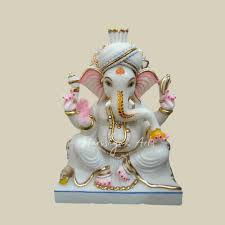
Every part of Ganesh Bhagwan's body has a meaning. Nothing is there by chance. If you understand what each part means you will worship him in a way.
Here is what each part means:
*Elephant Head: This means he is very wise and never forgets anything. Like elephants he guides us through tough times.
Big Ears: This means he listens more than he talks. To be truly wise you need to listen a lot.
Small Eyes: This means he can focus and see the truth even if it is hidden.
One Broken Tusk: This means he is willing to sacrifice things for knowledge. He broke his tusk to write the Mahabharata, which teaches us that knowledge is more important than anything.
Big Belly: This means he can handle all of life's experiences, bad and stay calm.
Mouse: The mouse is his vehicle, which means the mind. Like a mouse can go anywhere our mind can wander.. Ganesh Bhagwan controls the mouse, which means he has control over his mind.
Modak: This is a treat that represents the happiness of being free spiritually.
Rope: This is used to pull people to God.
How to Worship Ganesh Bhagwan
Worshipping Ganesh Bhagwan at home is a personal and fulfilling experience. Here are the steps to follow:
1 Clean yourself: Take a bath. Wear clean clothes, preferably yellow or red.
2. Set up the idol: Place the Ganesh idol or picture on a surface facing east or north.
3. Light a lamp: Use. Sesame oil and light incense sticks.
4. Offer flowers and grass: Ganesh Bhagwan loves hibiscus flowers and durva grass. Offer them with a heart.
5. Offer modak: This is his sweet treat.
6. Chant the mantra: Say "Om Gan Ganapataye Namah" 108 times.
7. Sing a song: Sing the Ganesh aarti while moving around the lamp.
8. Meditate: Close your eyes, focus on your breath. Imagine Ganesh Bhagwan removing all obstacles from your path.
Some people make a mistake by offering tulsi to Ganesh Bhagwan.. According to tradition he should be offered durva grass and red flowers instead.
Ganesh Bhagwan Mantras
Mantras are sounds that connect us with God. These Ganesh mantras are chanted for success, wisdom and removing obstacles.
Ganesh Beej Mantra: "Om Gam Ganapataye Namah". Chant this 108 times every day on Wednesdays or before starting something new.
Vakratunda Mahakaya Shloka: "Vakratunda Mahakaya Suryakoti Samaprabha, Nirvighnam Kuru Me Deva Sarva-Karyeshu Sarvada." This means, "Oh Lord with a trunk please remove all obstacles from my path always."
Ganesh Chaturthi
Ganesh Chaturthi is a festival to celebrate Ganesh Bhagwan. It happens on the day of the Bhadrapada month and lasts for 10 days. People celebrate it with a lot of devotion.
The History of Public Ganesh Chaturthi
Ganesh Chaturthi was always celebrated at home. The public festival was started by Lokmanya Bal Gangadhar Tilak in 1893. He wanted to use the festival to bring people and fight against British rule.
Benefits of Worshipping Ganesh Bhagwan
* Removes obstacles from your life
* Makes you smarter and better, at making decisions
* Brings success to things you start
* Gives you peace and emotional stability
* Helps you overcome fear and self-doubt
* Encourages discipline through worship
Ganesh Bhagwan in Different Traditions
Ganesh Bhagwan is not just worshipped in Hinduism but also in:
* Buddhism: He is known as Kangiten or Vinayaka
* Jainism: He is a guardian deity
* Bali, Indonesia: There are Ganesha temples
* Thailand: He is known as Phra Pikanet and is revered by Buddhists and Hindus
Ganesh Bhagwan is More Than a God
Ganesh Bhagwan is not a statue or a picture. He is a way of life. His body teaches us to think deeply, sacrifice for knowledge, control our mind and handle life's experiences with calmness.
When you pray to Ganesh Bhagwan you are not just asking for help. You are connecting with the power of wisdom which removes all obstacles. Start today, light a lamp Om Gam Ganapataye Namah" and move forward with clarity and courage.

 English
 Arabic
 French
 Spanish
 Portuguese
 Deutsch
 Turkish
 Dutch
Dutch
 Russian
 Romaian
 Portuguese (Brazil)
 Greek
Greek
